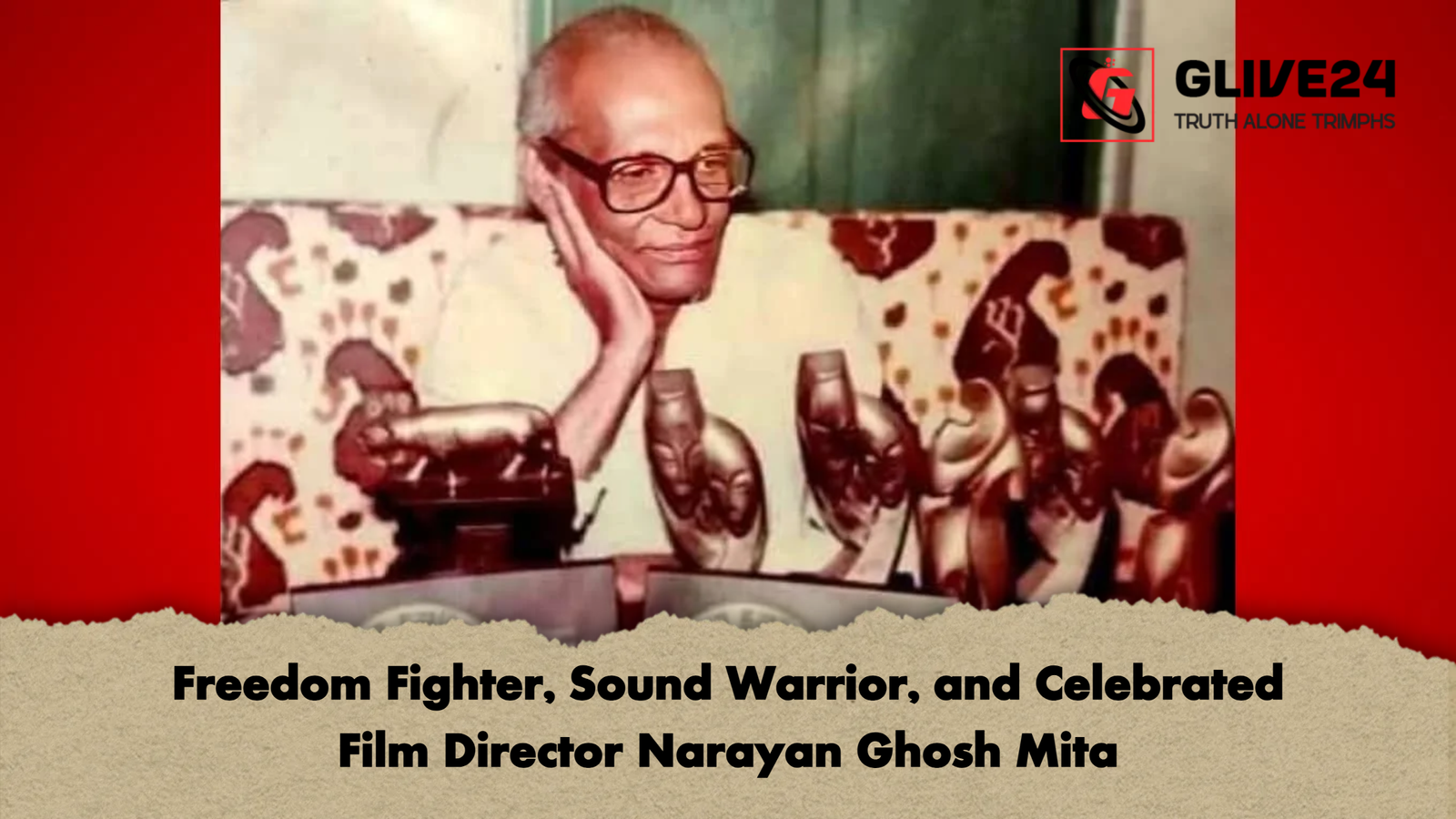
Narayan Ghosh Mita stands as one of the most distinguished and multidimensional figures in the cultural history of Bangladesh. His life embodied a rare convergence of artistic excellence, patriotic duty, and moral conviction. Far beyond the identity of a film director alone, he was a producer, screenwriter, actor, theatre performer, valiant freedom fighter, and a committed “sound warrior” of the Swadhin Bangla Betar Kendra during the Liberation War of 1971. Across cinema, culture, and the struggle for independence, his contributions were equally luminous and enduring.
Born on 22 December 1932 into a culturally conscious family in Old Dhaka, Narayan Ghosh Mita grew up surrounded by literature, music, and artistic discourse. This environment shaped his refined sensibility and deep humanistic outlook. From an early age, he developed an acute awareness of emotional nuance and social complexity—traits that later became hallmarks of his cinematic storytelling. He entered the Bangladeshi film industry in the 1960s, a period of experimentation and transition, and soon distinguished himself as a director of sensitivity and depth.
His breakthrough came with Ettuku Asha (1968), a film that delicately explored family tensions, emotional restraint, and the fragility of human relationships. The film firmly established him as a director capable of translating inner conflicts onto the screen with restraint and compassion. Prior to this, he directed Chawa Pawa, starring Golam Mustafa and Suchanda, a film remembered for introducing Shubra as a child artiste—who would later emerge as a celebrated actress and renowned classical dancer.
In Neel Akasher Nichey (1969), Narayan Ghosh Mita portrayed familial bonds, moral responsibility, and social values with warmth and empathy. His post-Liberation masterpiece Alor Michhil (1974) remains one of the most courageous cinematic reflections of post-war Bangladesh, confronting corruption, disorder, and collective disillusionment with rare honesty and social awareness.
He was equally memorable as an actor. His restrained yet powerful performance in Kancher Shwargo continues to resonate with audiences, standing as a testament to his versatility and emotional intelligence.
A historic achievement came in 1975, when at the inaugural National Film Awards, his film Lathial earned him both Best Director and Best Producer—an extraordinary double honour that underscored his creative authority and leadership in Bangladeshi cinema.
Later, Narayan Ghosh Mita relocated to West Bengal, where he continued to create intellectually refined and aesthetically disciplined films. His presence in theatre was also widely admired, particularly his acclaimed performance in Jallader Darbar, alongside Raju Ahmed, Azmal Huda Mithu, and Kalyan Mitra.
Above all professional distinctions, his most honourable identity remained that of a freedom fighter and sound warrior of the Swadhin Bangla Betar Kendra, where he used voice, language, and creativity as weapons of resistance. Carrying quiet sorrow and unspoken pain, he eventually left his homeland, yet his emotional and cultural roots remained firmly anchored in Bangladesh.
He was the father of three sons and one daughter. On 1 December 2002, Narayan Ghosh Mita passed away, leaving behind a legacy that transcends cinema and continues to inspire generations.