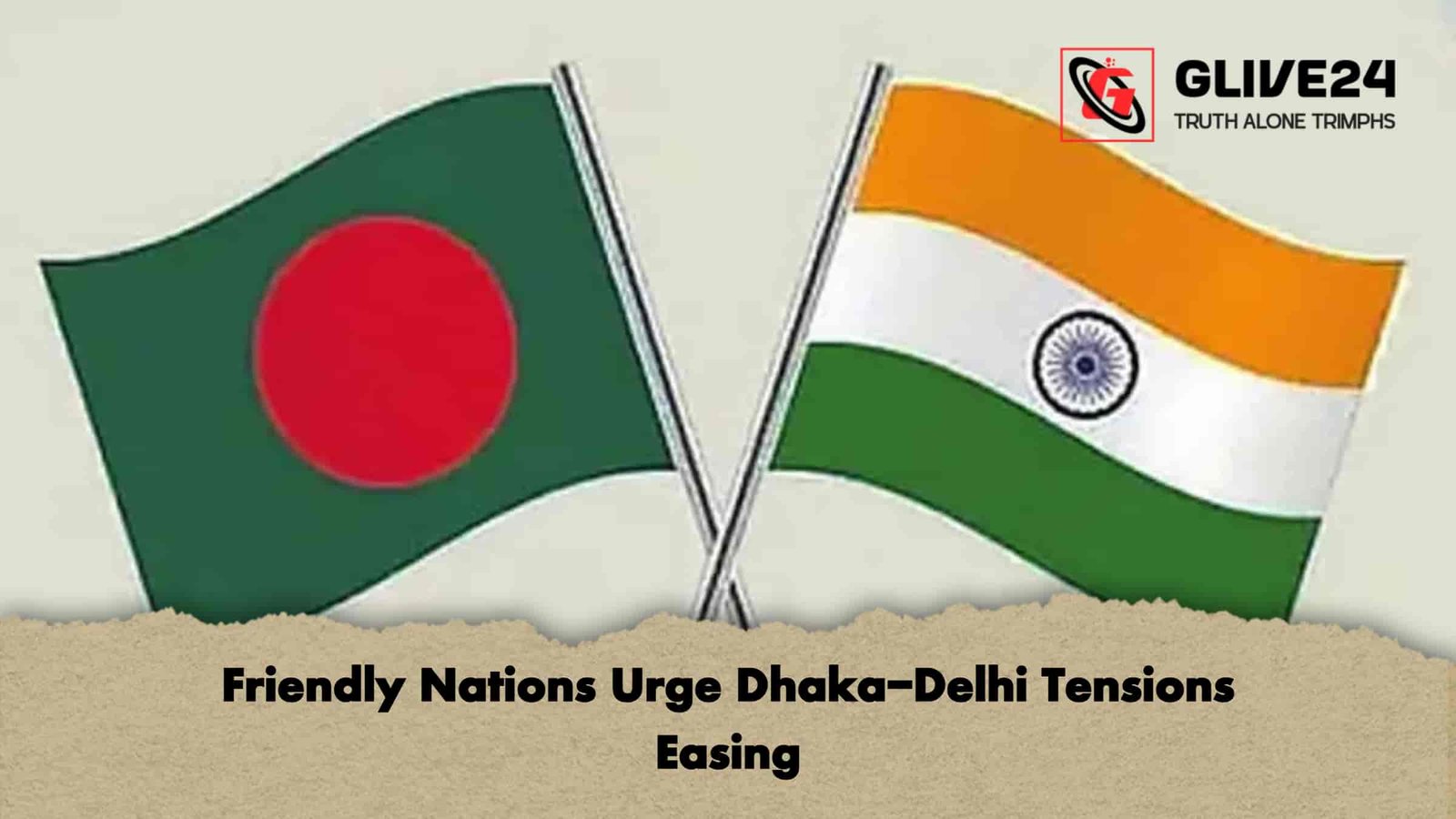
The ongoing diplomatic friction between Bangladesh and India has increasingly drawn the concern of friendly nations. Since Professor Dr. Muhammad Yunus assumed office as the head of Bangladesh’s caretaker government, relations between the two South Asian neighbours have noticeably deteriorated, reaching what experts describe as one of the most critical phases in recent history. International observers are urging both sides to pursue dialogue and restore cordial ties.
Japan and Russia have already voiced their apprehension publicly. On 22 December 2024, Japan’s then-ambassador to Dhaka, Iwama Kiminori, emphasised the strategic importance of trust between the two countries, stating: “Regional connectivity and economic prosperity cannot be achieved without mutual confidence and understanding. The Matarbari deep-sea port is designed not only to strengthen bilateral relations but also to integrate Bangladesh into regional and global supply chains.”
More recently, Russian Ambassador Alexander Khozin in Dhaka remarked, “Any escalation between Dhaka and Delhi must be swiftly defused. The stability of South Asia depends on it.” He noted that at a ministerial-level meeting between Russian and Indian foreign ministers, issues concerning Bangladesh, Sri Lanka, and Myanmar were discussed, with both sides advocating for reduced tensions between Dhaka and Delhi.
Bilateral relations have been further strained by trade disputes, border incidents, misleading reports in Indian media, and an attack on the Bangladesh High Commission in Agartala. While diplomatic initiatives—including the visit of India’s Foreign Secretary to Dhaka—have sought to normalise relations, Dr. Yunus’s recent visit to China and domestic political considerations have maintained a degree of distance.
Former diplomats highlight that friendly nations have a shared interest in Bangladesh-India stability, as regional instability could impact the broader Indo-Pacific’s political and economic landscape. A report from the International Crisis Group notes that part of the current tension stems from Dr. Yunus’s pro-Western approach and scepticism towards India.
A Western diplomat in Dhaka remarked: “Hostile relations between the two countries affect not only regional dynamics but also economic flows and European trade. Foreign investment in Bangladesh and raw material imports from India have been disrupted.”
At the governmental level, Bangladesh has emphasised it seeks no acrimony with its neighbour. Economic Adviser Salahuddin Ahmed stated, “We are attempting to separate political and economic relations. Dr. Yunus is maintaining communication with the Indian High Commission and both sides are working to improve ties.”
Key Friendly Nations’ Concerns and Recommendations
| Country | Comment / Recommendation | Date | Context |
|---|---|---|---|
| Japan | Strengthen relations to enhance trust and connectivity | 22 Dec 2024 | Matarbari deep-sea port project |
| Russia | Urgent de-escalation necessary | 2025 | Stability in South Asia |
| United States | Regional stability and economic prosperity essential | 2025 | Post-Trump administration policy shift |
| Various EU countries | Support peaceful and stable Bangladesh-India ties | 2025 | Electoral impact and investment climate |
Experts stress that restoring bilateral relations requires political responsibility, careful diplomacy, and avoidance of provocative actions. Friendly nations continue to encourage open dialogue between Dhaka and Delhi to mitigate the influence of extremist groups and electoral instability in the future.