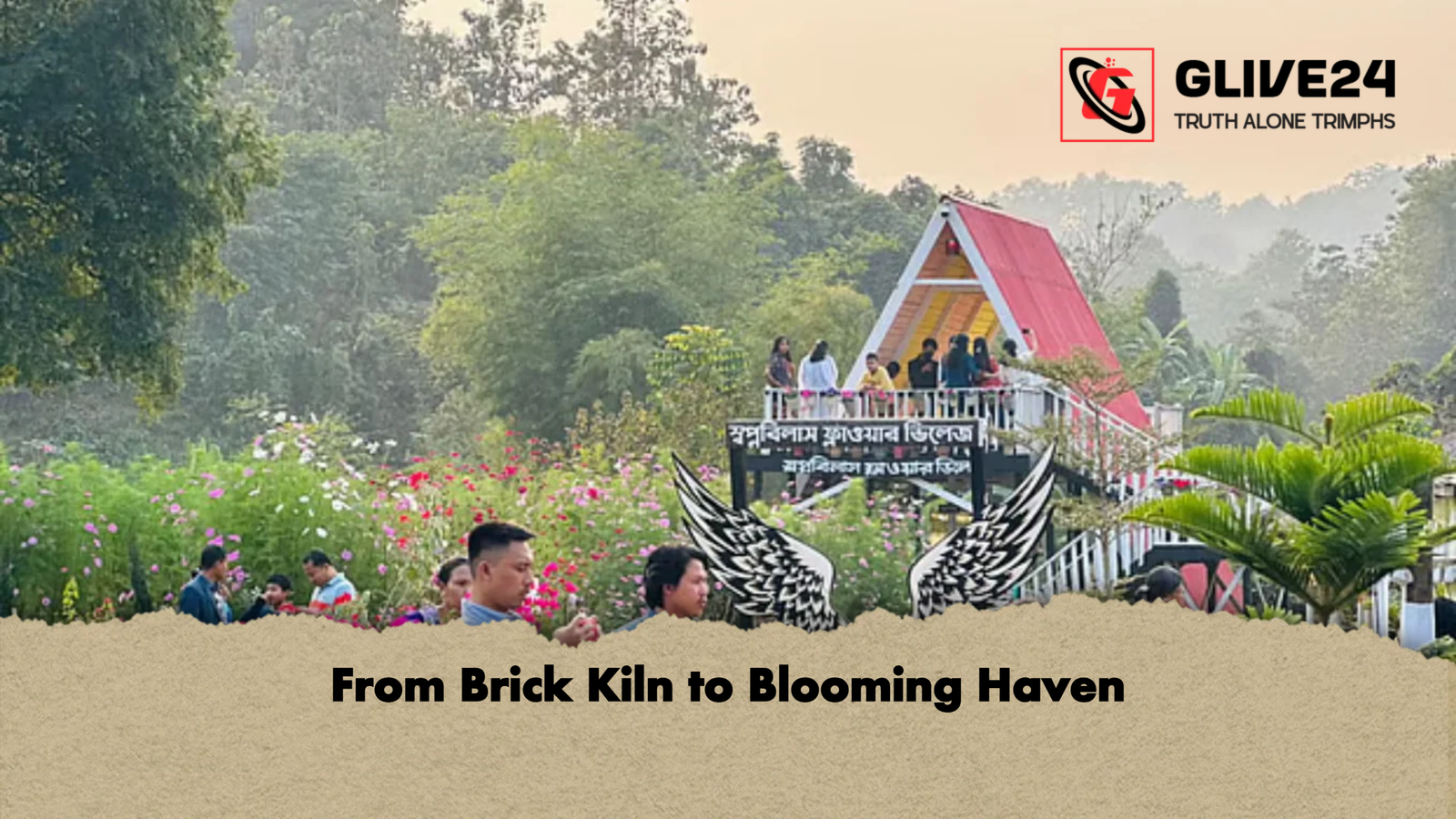
Where the acrid stench of fired clay and the haze of black smoke once hung heavy in the air, the fragrance of fresh blossoms now drifts freely. In Murapara of Mahalchhari upazila, Khagrachhari, a derelict brick kiln has been transformed into a vibrant flower garden, setting a rare example of ecological restoration and rural entrepreneurship. The project, aptly named Swapnobilash Flower Village, is the vision of young entrepreneur Khaled Masud Sagar and stands today as a symbol of how abandoned industrial land can be reclaimed for sustainable, community-oriented use.
Located about 24 kilometres from Khagrachhari town along the Rangamati–Khagrachhari road, the two-acre flower village immediately captivates visitors. Neatly arranged flower beds stretch across the land, interspersed with planned walkways, benches, and carefully designed photo corners. For a modest entry fee of 30 taka, visitors are welcomed into a space where colourful blooms contrast beautifully with the surrounding green hills, creating a seamless blend of human care and natural harmony.
Despite holding a degree in law, Sagar chose not to pursue a conventional career. Instead, he set out to build something that would generate income while also creating employment for others. Having a family home in Mahalchhari, he regularly passed the abandoned brick kiln and began to imagine its potential. With a lifelong fondness for flowers, he leased the kiln and adjacent land in late 2023, investing approximately 500,000 taka to bring his idea to life.
The transformation was far from simple. Months were spent clearing debris, restoring soil fertility damaged by years of brick production, and developing basic infrastructure. By 2024, flower cultivation began in earnest. Today, the garden hosts nearly 200 types of flowers, encompassing more than 400 varieties. Marigold, rose, hibiscus, chrysanthemum, dahlia, sunflower, orchid, shiuli, hasnahena, frangipani, aparajita and dolonchapa bloom throughout the year, with the cooler winter months offering particularly striking displays due to the hill soil and climate.
Beyond its visual appeal, the initiative has delivered tangible benefits to the local community. Fifteen workers are employed on a regular basis, with an additional five hired seasonally. Local residents are increasingly purchasing saplings and experimenting with flower cultivation themselves, spreading the impact beyond the garden’s boundaries. A small coffee corner and restaurant have also been introduced to accommodate visitors, designed carefully to maintain environmental balance and safety.
Gradually, Swapnobilash Flower Village is emerging as a new tourist attraction in Khagrachhari. For students, families and nature lovers alike, it offers recreation as well as inspiration. Financially, the venture is moving towards stability, generating a net monthly income of around 45,000 to 50,000 taka during peak flower seasons. Looking ahead, Sagar plans to expand into fish farming, further diversifying the site’s sustainable potential.
Swapnobilash Flower Village at a Glance
| Aspect | Details |
|---|---|
| Location | Murapara, Mahalchhari, Khagrachhari |
| Total Area | Approximately 2 acres |
| Initial Investment | Late 2023 |
| Flower Types | Around 200 |
| Total Varieties | More than 400 |
| Permanent Employment | 15 workers |
| Visitor Entry Fee | 30 taka |
The journey from abandoned brick kiln to flourishing flower village demonstrates that with vision, courage and sustained effort, economic development and environmental renewal can advance hand in hand.