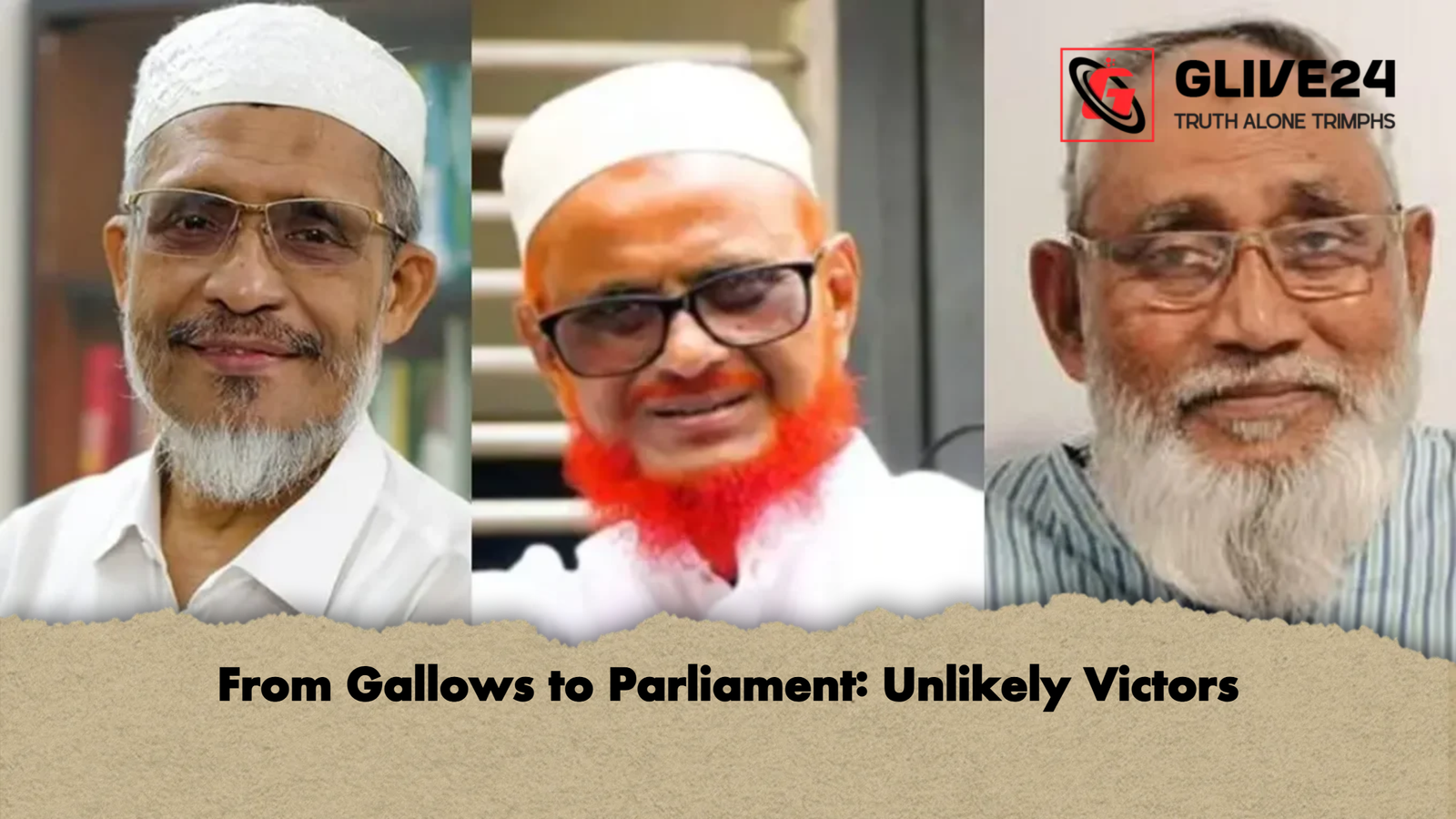
The shadow of the gallows once loomed over them. Yet, fate had other plans. Amid the turbulent aftermath of July’s bloody political upheavals, three controversial figures emerged from the darkness of imprisonment to claim victory in the country’s highly anticipated elections. BNP leaders Lutfozzaman Babar and Abdus Salam Pintu, alongside Jamaat-e-Islami’s ATM Azharul Islam, won their constituencies by overwhelming margins. In a rare political twist, these men transitioned directly from the brink of execution to the halls of Parliament.
Background and Electoral Triumphs
| Leader | Party | Crime / Case | Years in Prison | Release Date | Constituency | Symbol | Vote Margin |
|---|---|---|---|---|---|---|---|
| Lutfozzaman Babar | BNP | 2004 grenade attack on Awami League rally | 18 years | 16 Jan 2025 | Netrokona | Paddy Sheaf | 120,000+ |
| Abdus Salam Pintu | BNP | 21 August grenade attack | 17 years | 24 Dec 2024 | Gopalpur-Bhuniapara, Tangail | Paddy Sheaf | ~200,000 |
| ATM Azharul Islam | Jamaat-e-Islami | Crimes against humanity | 13 years | 28 May 2025 | Rangpur-2 (Taraganj-Badarganj) | N/A | Significant majority |
Lutfozzaman Babar was arrested in 2007 in connection with the 2004 grenade attack targeting an Awami League rally. He never secured bail, spending eighteen long years in the shadowed confines of prison. Following a political change in August, Babar was cleared of all charges through legal proceedings. Upon his release on 16 January 2025, he returned to his native Netrokona and contested the election under the BNP’s ‘Paddy Sheaf’ symbol, defeating his nearest rival by more than 120,000 votes.
Similarly, Abdus Salam Pintu had been sentenced to death for his involvement in the 21 August grenade attack. After seventeen years behind bars, his release on 24 December 2024 allowed him to return to his birthplace in Tangail. Contesting the local Gopalpur-Bhuniapara constituency under the same symbol, he won by nearly 200,000 votes.
ATM Azharul Islam’s path was equally dramatic. Arrested in 2009 for crimes against humanity and sentenced to death, he had been in custody since 2012. On 28 May 2025, he was released and subsequently won the parliamentary seat for Rangpur-2 (Taraganj-Badarganj) by a large margin. For him, the gallows and the ballot box had been separated by only a few short years.
These victories are emblematic not only of political resilience but also of the profound complexities of Bangladesh’s electoral landscape. The journey from death row to parliamentary chambers highlights the enduring influence of historical political conflicts and the continuing evolution of democratic participation in the country. Observers note that the extraordinary circumstances surrounding these elections are likely to shape national politics for years to come.