
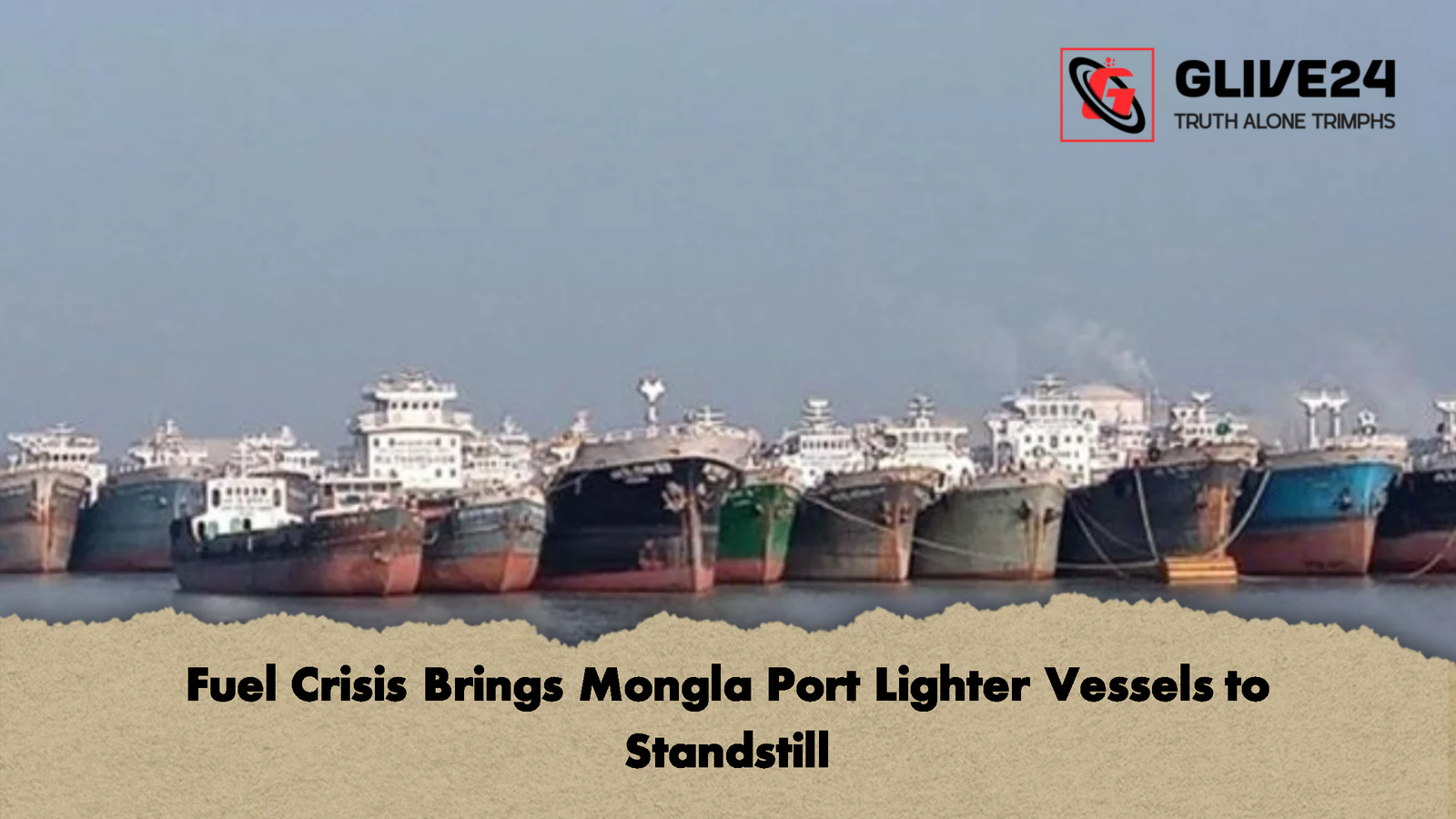
A severe shortage of fuel oil has brought lighter vessel operations to a near standstill at Mongla Port, severely disrupting cargo unloading and inland transportation activities. Hundreds of lighter vessels are reportedly lying idle due to the unavailability of diesel, causing significant delays in transferring goods from mother vessels anchored at the outer port.
The situation has created a cascading logistical crisis, with importers facing rising costs, extended vessel turnaround times, and mounting demurrage charges. Imports of essential commodities such as food grains, fertilisers, and industrial raw materials have been particularly affected, raising concerns over supply chain stability in the southern region.
Table of Contents
Hundreds of vessels stranded
A field visit to the Pashur Channel in Mongla revealed that more than a hundred empty lighter vessels have remained anchored for several days without the fuel required to transport cargo. A similar situation was observed at Rূপসা River’s Ghats 4 and 5 in Khulna, where another large cluster of idle vessels was seen awaiting fuel supplies.
Operators say the shortage has effectively paralysed riverine freight movement, which is a critical link between Mongla Port and inland destinations across Bangladesh.
The master of one lighter vessel, MV R Rashid-1, Mohammad Rezaul Islam, said his vessel had been left idle for nearly a week due to fuel shortages. He noted that despite being ready for cargo operations, they were unable to proceed because diesel supplies were unavailable.
Importers face rising demurrage costs
Industrial stakeholders have expressed deep concern over the disruption. According to officials from a cement manufacturing facility, Seven Circle Cement, delays in cargo unloading from mother vessels are leading to demurrage charges of approximately USD 17,000 per day per vessel.
A production official, Md Mamun, said that the shortage of lighter vessels has made it impossible to clear imported raw materials on schedule. As a result, factories are now facing shortages of essential inputs, while finished cement products are also unable to be transported efficiently to distribution centres across the country.
He warned that continued disruption could further destabilise industrial production and supply chains, particularly in construction-related sectors.
Operators cite fuel distribution failure
Lighter vessel owner Md Khokon, who operates MV Momtaz, said vessel operators have repeatedly approached local fuel suppliers, including SK Enterprise, but have been told that depot-level shortages are preventing adequate supply distribution.
“We have been requesting fuel repeatedly, but suppliers say they are not receiving enough allocation from depots. This is affecting all lighter vessels in the region,” he said.
He added that without diesel, vessels remain immobilised, unable to proceed for loading or unloading operations, effectively halting river transport activity.
Fuel supply constraints and rising demand
According to HM Dulal, proprietor of Nur & Sons, a marine fuel dealership for Meghna Oil Company in Mongla, rising demand combined with constrained supply is at the root of the crisis.
He said that increased port activity, agricultural expansion, dredging projects, and higher import-export volumes have significantly raised fuel consumption in recent months. As a result, more vessels are arriving at Mongla to collect fuel, intensifying pressure on already limited stocks.
“The depot is not supplying fuel in line with demand. That is why we are unable to distribute diesel to vessels or coastal users,” he said.
He further noted that the shortage is also affecting coastal fishing operations, with many fishing activities reportedly slowing or halting due to lack of fuel.
Limited supply amid global pressures
A senior official at Meghna Petroleum Limited in Mongla, Manager (Operations) Probir Hira, acknowledged the difficulties in meeting demand, stating that supply is being rationed in line with government directives.
He said that global geopolitical instability and supply chain disruptions have contributed to reduced fuel availability, forcing authorities to regulate distribution carefully.
“We are trying to supply fuel to dealers and agents, but due to global disruptions and limited availability, distribution is being carried out under government allocation policies,” he explained.
Economic impact intensifies
The prolonged fuel shortage has created a ripple effect across multiple sectors, including shipping, manufacturing, construction, and fisheries. Importers warn that continued delays could increase the cost of essential goods and slow down industrial production nationwide.
With hundreds of vessels stranded and key cargo operations stalled, stakeholders are urging urgent intervention to stabilise fuel distribution and restore normal port activity at Mongla.