
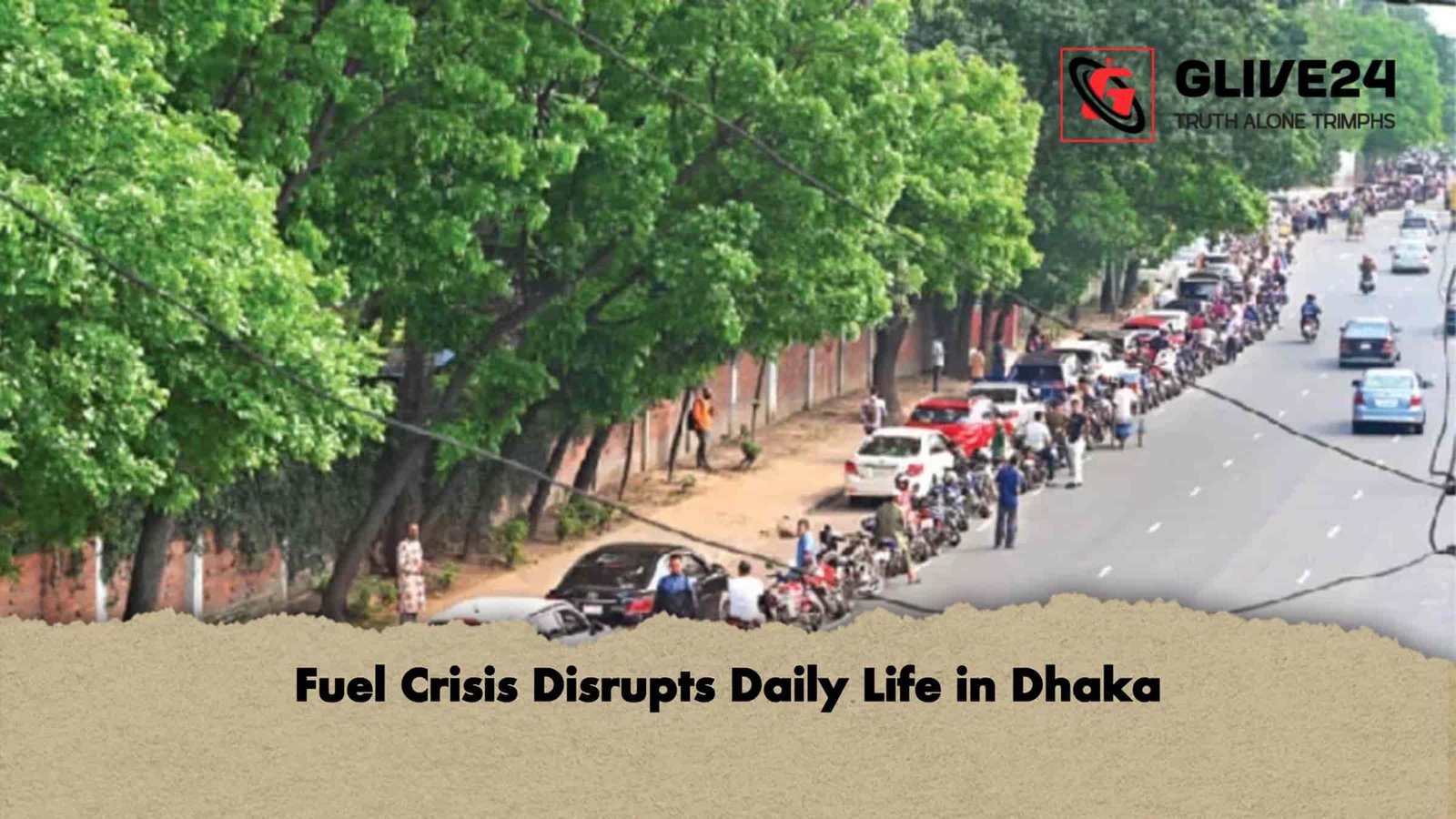
The ongoing fuel shortage in the capital is profoundly affecting the daily routines of drivers, commuters, and residents alike. For , a microbus driver for a Dhaka-based contractor, a simple trip to the fuel station has become an ordeal. On Saturday, he queued at Meghna Filling Station in Poribagh at 11 a.m., but it was past 4:30 p.m. when his vehicle reached Shahbagh Mor near the metro station. “It will take another hour to reach the pump. Life doesn’t feel sustainable like this,” he lamented, exhausted and frustrated.
Sattar’s plight mirrors that of most drivers. Waiting times for fuel now range from five to seven hours, forcing some vehicle owners to cancel weekly rest days. Drivers report losing sleep and resting time, while ride-share operators face heightened pressure, often extending their work hours to offset financial losses. Several drivers even reported falling ill due to stress and fatigue.
Talking to drivers at multiple filling stations across Dhaka reveals a uniform story: the fuel crisis has upended normal schedules, with little predictability in daily routines.
Experiences from the Queue
- , who drives for a medical professional, described having to stay in line without leaving his vehicle. “We could only move a few yards every minute, and I had to eat lunch on the pavement from a nearby shop,” he said. He also alleged seeing fuel being sold illicitly at 200 Taka per litre in Narayanganj, suspecting collusion with pumps.
- Private car driver explained that reaching the pump required starting and stopping the engine hundreds of times, consuming extra fuel in the process.
- Jeep driver added that weekly rest days were cancelled, and his vehicle cannot run on CNG. Despite paying for fuel one day, it runs out the next, forcing reliance on alternative arrangements.
Observations Across Seven Stations
visited seven stations expecting shorter queues due to office closures. Instead, he found long lines everywhere and only obtained fuel after waiting at City Filling Station until late afternoon.
Motorbike ride-share drivers report even more significant hardship. spends two hours daily securing fuel, reducing earning opportunities. waits up to two hours every one or two days.
City Filling Station has become a preferred choice due to relatively shorter waiting times. travelled from Old Dhaka after learning via social media that fuel was available more quickly there.
Impact on Public Transport
The crisis is affecting transport sector operations. Bus services are reduced, with fewer trips on busy routes. For example, reported waiting two hours for fuel at City Filling Station, reducing his daily Chandpur–Gulistan trips from four to two, directly impacting income. Similar reductions are reported in Chittagong and other divisional towns.
| Driver Type | Average Waiting Time | Additional Daily Hours | Observations |
|---|---|---|---|
| Microbus | 5–7 hours | 2–3 hours | Weekly rest days cancelled |
| Private Car | 1–1.5 hours | 1–2 hours | Engine start-stop repeatedly |
| Jeep | 2–4 hours | 2–3 hours | CNG alternative unavailable |
| Motorbike (Ride-Share) | 1–2 hours | 2–4 hours | Reduced earning & fatigue |
| Bus | 2 hours | 2–3 hours | Trips halved, income affected |
The fuel shortage is clearly more than an inconvenience—it is disrupting livelihoods, altering commuting patterns, and placing immense strain on both individuals and the transport sector. Authorities have yet to announce measures to ease the crisis, leaving many drivers struggling to adapt to these unprecedented challenges.