
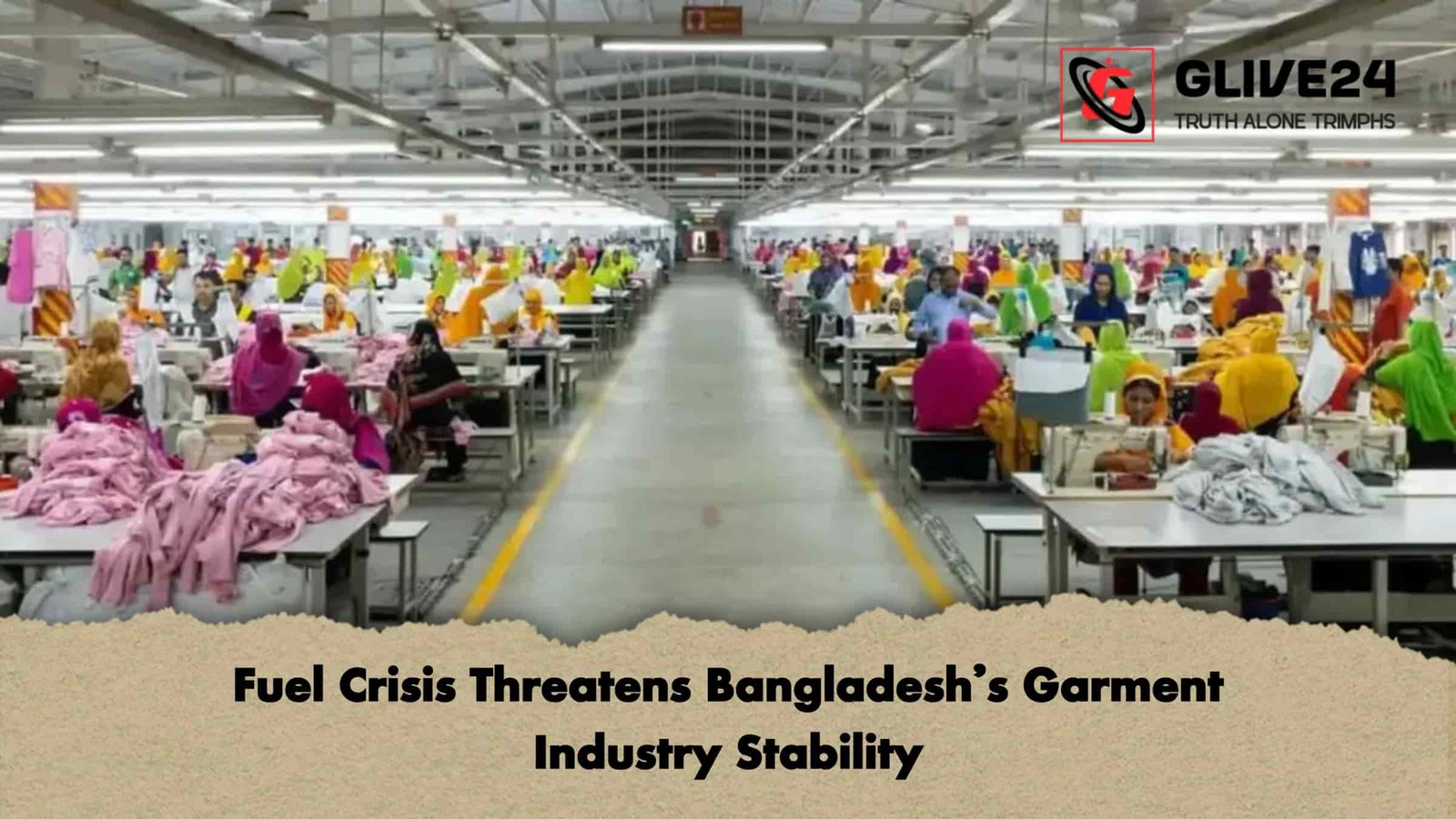
Bangladesh’s ready-made garment sector, a cornerstone of the nation’s economy, is facing a mounting crisis as fuel shortages compound ongoing global market challenges. For the first time in the country’s history, export earnings have declined for eight consecutive months, largely due to the sector failing to meet its targeted revenues. Analysts warn that the situation could deteriorate further if the ongoing energy disruption continues.
Industry insiders identify the ongoing conflict between Israel, the United States, and Iran as a significant contributor to the current fuel scarcity. While the war’s effects have not yet fully permeated the domestic market, prolonged hostilities threaten to exacerbate shortages of diesel, furnace oil, natural gas, and LNG—essential inputs for garment factories. Several business owners report that fuel suppliers are either unable or unwilling to provide adequate supplies, often forcing factories to pay inflated prices for limited quantities.
Many factories have already reduced production due to insufficient gas pressure, operating at less than half capacity. Attempts to switch to diesel-powered generators have doubled production costs, prompting urgent calls for government intervention to ensure uninterrupted energy supply.
Export Performance Overview
According to the Export Promotion Bureau (EPB), the garment sector’s export earnings for the first nine months of the 2025–26 fiscal year are as follows:
| Month/Period | Net Garment Export ($ Billion) | Year-on-Year Change (%) | Woven Garment Export ($ Billion) | Year-on-Year Change (%) |
|---|---|---|---|---|
| March 2026 | 1.42 | -21.20 | 1.36 | -17.32 |
| July–March 2025–26 | 28.57 | -5.51 | – | – |
| July–March 2024–25 | 30.24 | – | – | – |
The figures highlight a sustained downturn, with March 2026 alone recording a 19.35% fall in overall garment exports compared to the previous year.
Industry Leaders Urge Swift Action
Mohammad Hatem, President of the Bangladesh Knitwear Manufacturers and Exporters Association (BKMEA), told reporters: “Despite some easing of global inflation, the Middle East conflict has disrupted fuel supplies. Diesel scarcity is now directly affecting production.” BKMEA Executive Vice-President Md Fazle Shamim Ehsan added that strict action against illegal fuel hoarding and the development of alternative import channels are essential to prevent further disruption.
Bangladesh Garment Manufacturers and Exporters Association (BGMEA) President Mahmud Hasan Khan warned: “Rising global fuel prices not only increase production costs but also reduce purchasing power abroad, threatening future orders. Prolonged energy shortages could place the entire garment sector at serious risk.”
Experts recommend accelerating the adoption of renewable energy and reducing dependence on fossil fuels to build a more sustainable, climate-friendly, and resilient garment industry.
As the nation’s primary export sector navigates this dual challenge of geopolitical tension and energy scarcity, urgent policy support and uninterrupted fuel access are now critical to safeguarding both production and economic stability.