
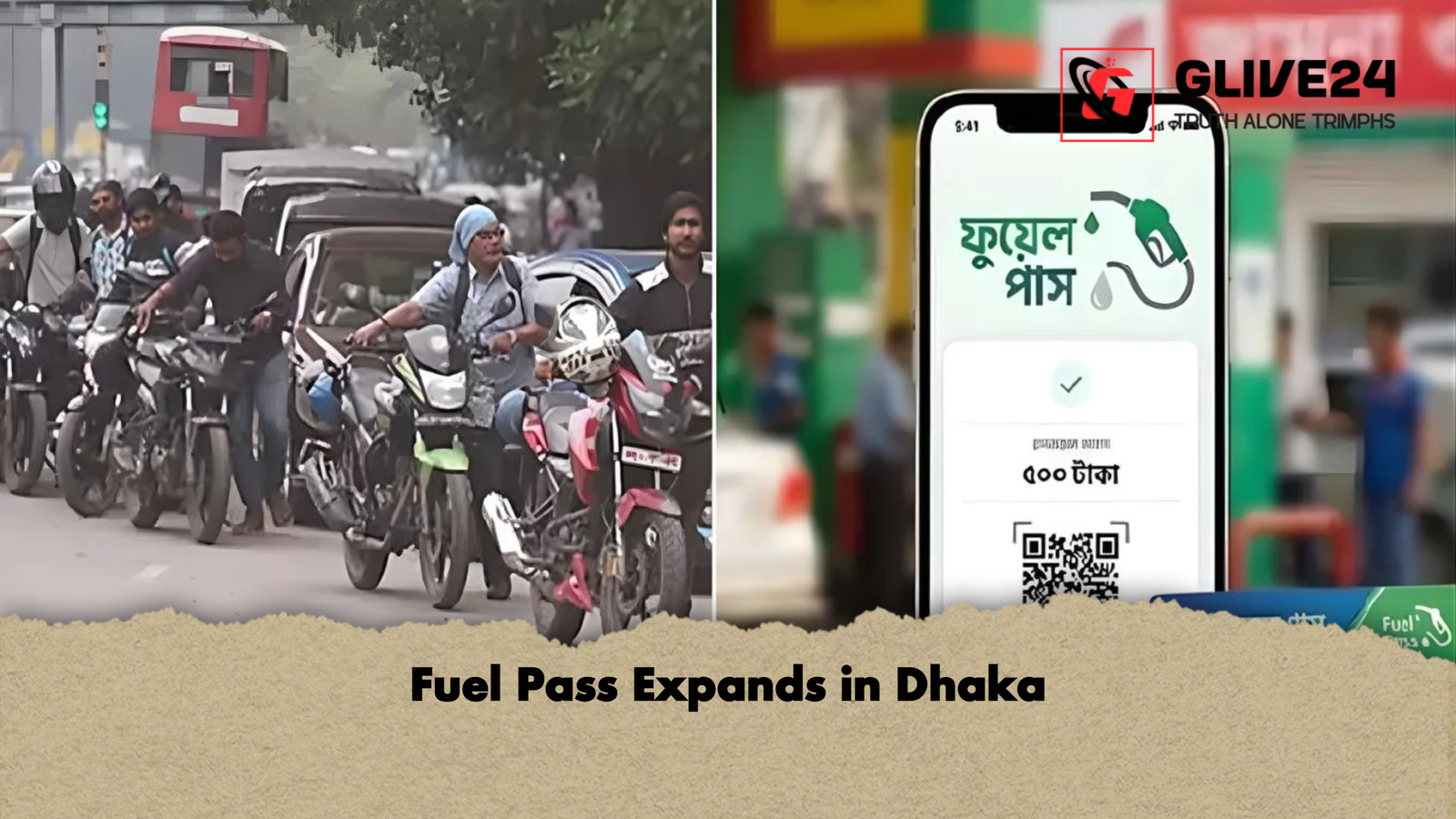
The government has significantly expanded the use of its QR code–based mobile application, “Fuel Pass”, in an effort to enhance transparency in fuel distribution and reduce long-standing congestion at petrol stations in the capital. From Sunday, motorcyclists in Dhaka Metropolitan City are now required to use the app when purchasing petrol or octane from seven designated filling stations.
According to the Ministry of Power, Energy and Mineral Resources, the digital system—developed under the initiative of the Bangladesh Petroleum Corporation—is being introduced in phases and will eventually be rolled out nationwide. Following a limited pilot phase, additional stations have been integrated, bringing the total number of operational sites in the capital to seven.
The Bangladesh Road Transport Authority is linked to the central verification system, ensuring that vehicle and user data are authenticated before fuel is issued. Officials say this integration is intended to eliminate irregularities and improve accountability in the distribution chain.
Table of Contents
Designated filling stations in Dhaka
The following table lists the seven fuel stations currently operating under the Fuel Pass system:
| No. | Filling Station | Area |
|---|---|---|
| 1 | Trust Filling Station | Tejgaon |
| 2 | Sonar Bangla Filling Station | Asadgate |
| 3 | Talukdar Filling Station | Asadgate |
| 4 | Gulshan Service Station | Mohakhali |
| 5 | Meghna Model Pump | Shahbagh |
| 6 | Nikunj Model Service Centre | Nikunja |
| 7 | Khalek Service Station | Kallyanpur |
Purpose and policy rationale
Officials state that the introduction of Fuel Pass is designed to address persistent inefficiencies in the manual fuel distribution system. Despite adequate fuel reserves, many stations have historically experienced long queues due to high demand and manual verification processes.
Another concern has been the practice of repeated queuing by individuals, allowing some users to collect more fuel than permitted. Authorities believe this has contributed to artificial shortages and occasional market instability.
The new digital mechanism is expected to streamline distribution by ensuring that each registered user receives a controlled allocation based on verified data. Every transaction is authenticated through a QR code scan linked to a central database, reducing the scope for duplication or fraud.
Key features of the system
Under the new framework, customer data is integrated with the central database of the Bangladesh Road Transport Authority. Fuel entitlements are assigned within defined limits and verified in real time at the point of sale.
Users without smartphones are not excluded from the system. They may register online and obtain a printable QR code for use at fuel stations. Station operators are required to verify the code digitally before dispensing fuel.
Registration requirements
To access the service, users must complete registration through the official mobile application. The process includes mobile number verification, submission of national identity information, vehicle registration details, relevant documentation, and a passport-sized photograph.
Outlook
Authorities believe the Fuel Pass initiative marks a significant shift towards a fully digitised fuel distribution system in Bangladesh. By enabling real-time monitoring of supply and demand, the government expects improved efficiency, reduced wastage, and stronger control during periods of fuel stress.
The system is also expected to strengthen emergency fuel management capabilities, ensuring more stable supply chains and reducing the likelihood of artificial crises in the future.