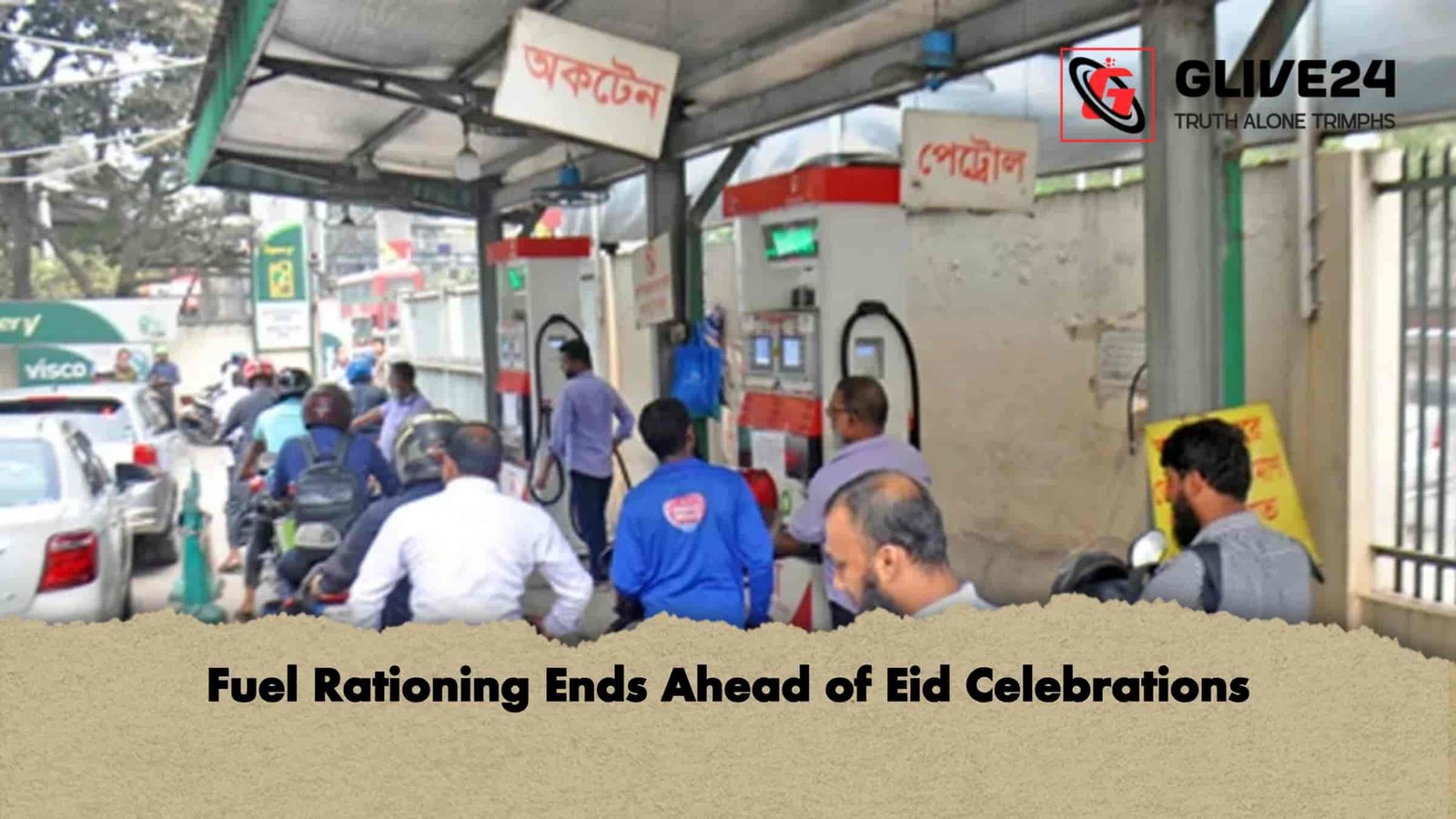
The government has announced the complete withdrawal of fuel rationing across the country, allowing diesel, petrol, and octane to be sold freely at all filling stations in response to demand. The decision, effective from Sunday, will remain in place until further notice.
According to a statement from the Energy and Mineral Resources Division of the Ministry of Power, Energy and Mineral Resources, temporary rationing had been introduced due to disruptions in the international fuel supply linked to the ongoing conflict between Iran and Israel. Recent arrivals of imported fuel shipments at the Port of Chattogram have now stabilised domestic supply, enabling authorities to lift restrictions.
Officials stressed that the measure aims to facilitate smooth travel during Eid‑ul‑Fitr and to ensure uninterrupted irrigation for farmers cultivating the Boro rice crop. “From 15 March, all distribution points will supply fuel according to actual demand, without any limits,” the statement said.
Rationing History and Adjustments
Fuel rationing had initially been imposed on 6 March to manage potential shortages. The previous daily limits were:
| Vehicle Type | Daily Limit (litres) |
|---|---|
| Motorcycle | 2 |
| SUV / Microbus | 20–25 |
| Pickup / Local Bus | 70–80 |
| Long-distance Bus / Truck / Covered Van | 200–220 |
Later, limits for motorcycles were increased to 5 litres, and overall rationing was reduced from 25% to 15%. With Eid approaching, all such restrictions have now been removed entirely.
Industry insiders reported that the rationing system had caused long queues at fuel stations and temporary supply interruptions in some districts, creating concern among transport operators and consumers. Leaders of petrol pump associations welcomed the decision, saying it would ease operational difficulties and stabilise the market ahead of the festival.
Energy authorities cautioned that international fuel markets remain unstable, and domestic supply will continue to be closely monitored. New policy decisions may be implemented if conditions change.
Officials also highlighted that the decision takes into account the seasonal rise in diesel demand for irrigation during the Boro rice season, as well as increased private travel during Eid. The move is intended to balance both transport and agricultural needs while maintaining supply security.