
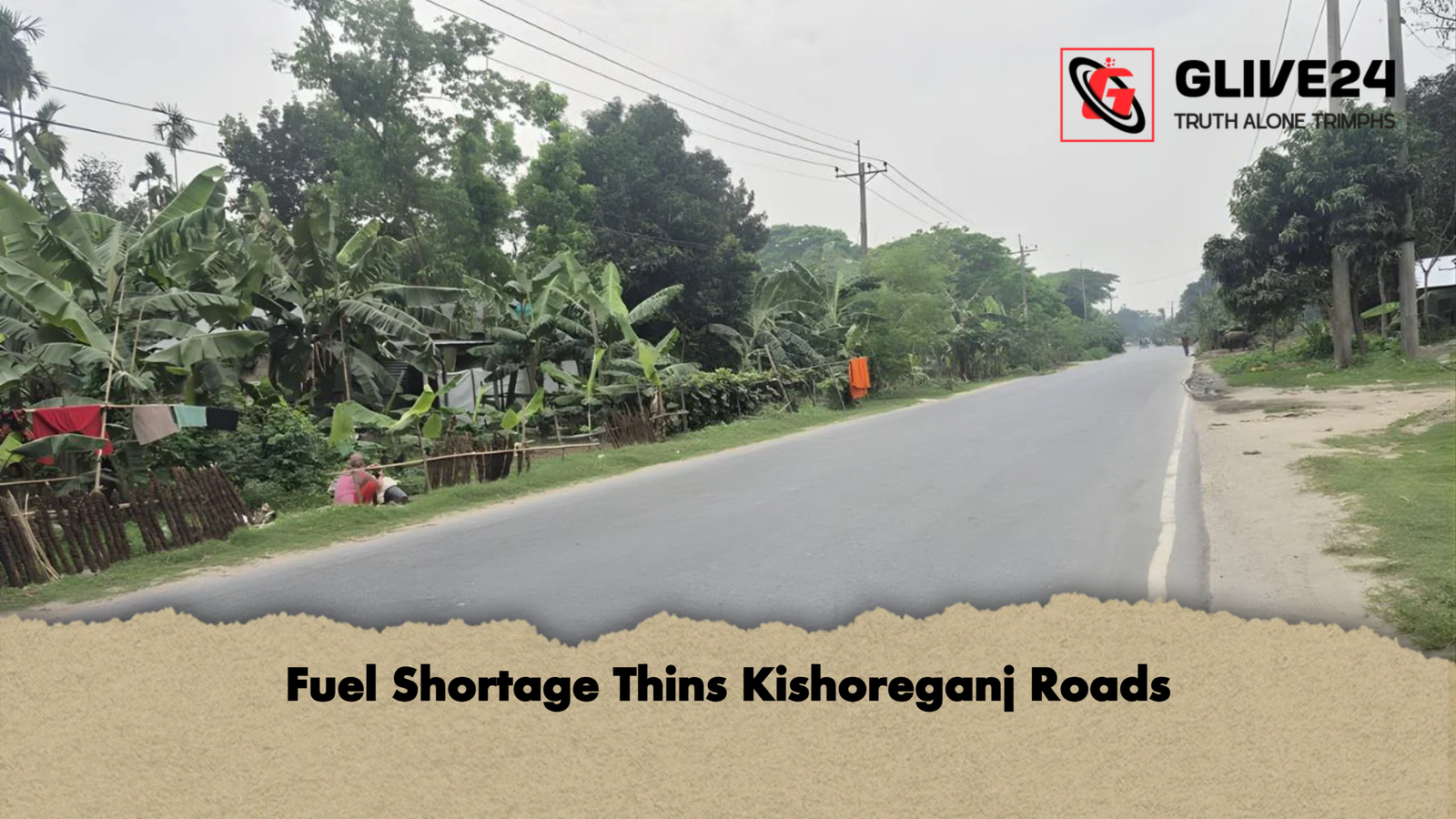
The once bustling Katiadi–Bhairab–Kishoreganj regional highway in northern Bangladesh has undergone a striking transformation in recent days, with traffic levels dropping sharply amid an ongoing fuel shortage. What was previously a heavily congested route, often jammed with buses, trucks, motorcycles and three-wheelers, now appears unusually quiet and largely dominated by small local transport.
Local sources indicate that the disruption in fuel supply has significantly affected the operation of diesel, petrol and octane-dependent vehicles. As a result, long-distance journeys have been largely curtailed, while even short trips are being undertaken sparingly and only when absolutely necessary.
On Wednesday, a field visit along the route in Kishoreganj revealed a visibly reduced flow of traffic. The usual heavy presence of inter-district buses and freight trucks was missing. Instead, the road was primarily occupied by auto-rickshaws and CNG-powered three-wheelers, which are less dependent on scarce petroleum fuels. Motorcycles, once a common sight weaving through congestion, were observed only occasionally and mostly for essential travel.
Transport operators say the situation has created serious operational challenges. Fuel availability has become inconsistent, with drivers reporting long waits and repeated trips to fuel stations without success.
A motorcycle rider, describing the situation, said that fuel is rarely available and can only be purchased when supplies briefly arrive at filling stations. He added that non-essential travel has become almost impossible due to uncertainty over refuelling.
A truck driver operating through the Bhairab–Kishoreganj corridor noted that the shortage has disrupted freight movement, forcing vehicles to remain idle for extended periods. He expressed cautious optimism following reports of a temporary ceasefire involving international tensions linked to oil market instability, suggesting that fuel supply conditions might improve soon.
Pedestrians, meanwhile, have experienced a noticeable change in daily mobility patterns. With fewer vehicles on the road, walking and crossing have become significantly easier, though concerns remain over the economic impact of reduced transport activity.
Traffic Conditions: Before and During Fuel Shortage
| Category | Before Fuel Shortage | During Fuel Shortage |
|---|---|---|
| Private vehicles | High volume, frequent movement | Significantly reduced |
| Heavy trucks | Regular inter-district flow | Mostly suspended or limited |
| Motorcycles | Common on all stretches | Rare, essential use only |
| Three-wheelers (CNG/auto) | Moderate presence | Dominant mode of transport |
| Road congestion | Frequent and severe | Light and manageable |
The current situation reflects how external fuel supply constraints can rapidly reshape regional mobility patterns. While commuters welcome the ease of movement due to reduced congestion, transport workers and businesses remain concerned about economic losses if the shortage persists.