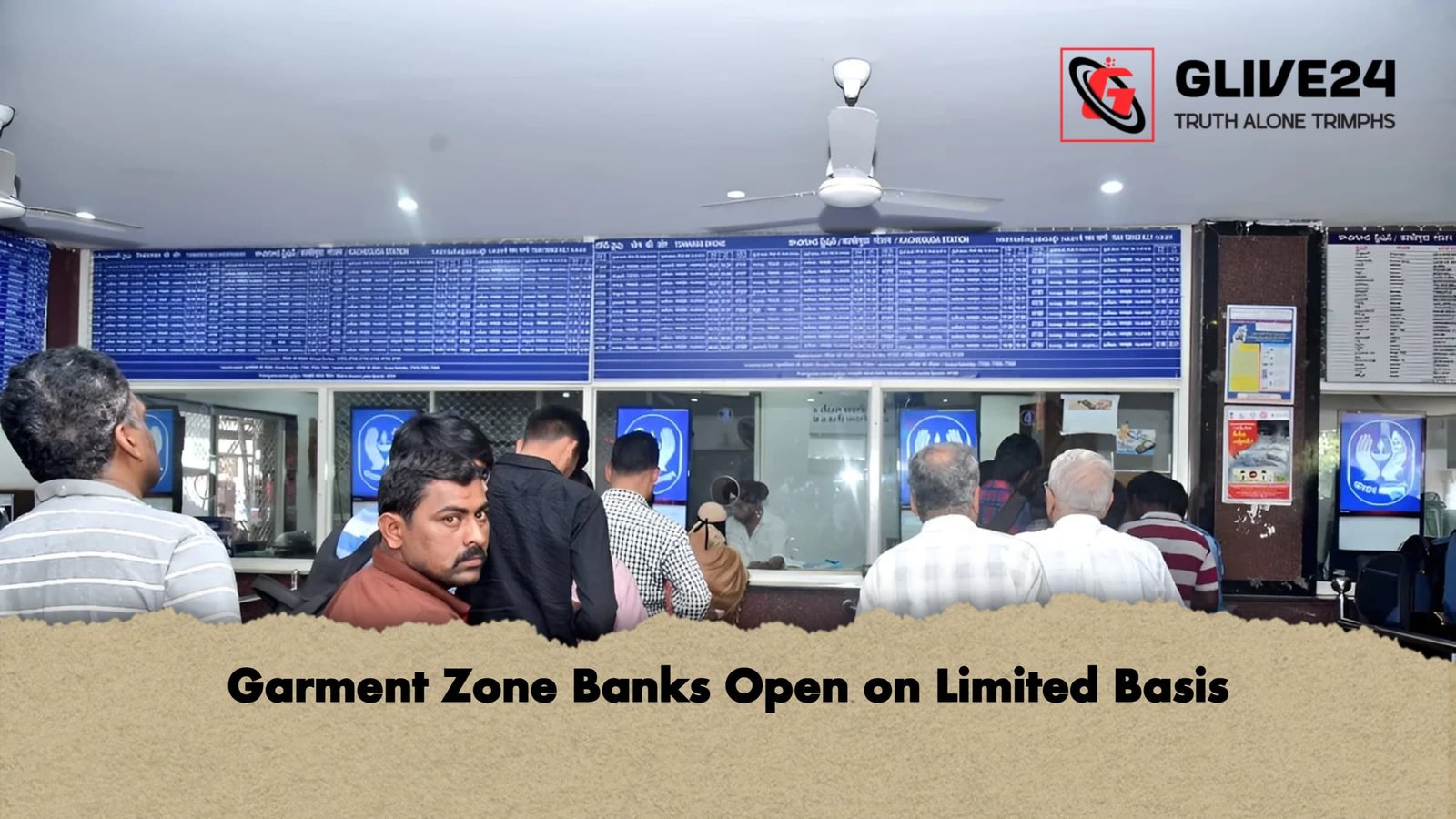
In accordance with directives from the central bank, branches of commercial banks located in areas associated with the garment industry will operate on a limited basis today. The move comes to ensure that workers and staff receive their salaries and allowances and that export-related financial transactions continue smoothly ahead of Eid-ul-Fitr.
The central bank’s Department of Site Supervision issued the instructions on 10 March, specifying that relevant bank branches should remain open on 18 and 19 March, which are official pre-Eid holidays. The directive emphasises that these branches must maintain adequate security measures while remaining operational, and employees on duty will be entitled to allowances in accordance with regulations.
Banking hours and arrangements for today are as follows:
| Details | Information |
|---|---|
| Branches open for transactions | 10:00 AM – 1:00 PM |
| Office hours | Until 2:00 PM |
| Prayer break | 1:15 PM – 1:30 PM (Dhuhr prayer) |
| Areas covered | Dhaka Metropolitan Area, Ashulia, Tongi, Gazipur, Savar, Bhaluka, Narayanganj, Chattogram |
| Purpose | Salary and allowance disbursement; export bill processing |
| Security measures | Adequate security ensured |
| Duty staff | Eligible for standard allowances |
The central bank has stressed that only branches in garment-industry regions will remain open, while other branches across the country will observe the regular holiday schedule. This ensures that financial operations critical to the textile sector proceed without disruption despite the government-declared public holiday.
The government announced the official Eid holiday on Wednesday, 18 March, via executive order. Today, Thursday, 19 March, marks the beginning of the designated Eid leave period. Generally, banks remain closed during public holidays, but the decision to keep garment-industry branches operational reflects the importance of uninterrupted financial support for workers and businesses alike.
This arrangement allows garment workers to receive their salaries and other payments on time, while manufacturers and exporters can settle pending bills and manage financial obligations. By maintaining limited operations, these banks help stabilise the financial workflow within one of the country’s largest economic sectors.
Employees on duty today are expected to follow all official regulations and will receive appropriate allowances for their services. With this system in place, both workers and employers in the garment industry can conduct essential transactions efficiently, mitigating the impact of the holiday period on financial and commercial activities.
Today’s limited banking services exemplify a practical balance between adhering to holiday schedules and supporting key economic sectors during critical periods.