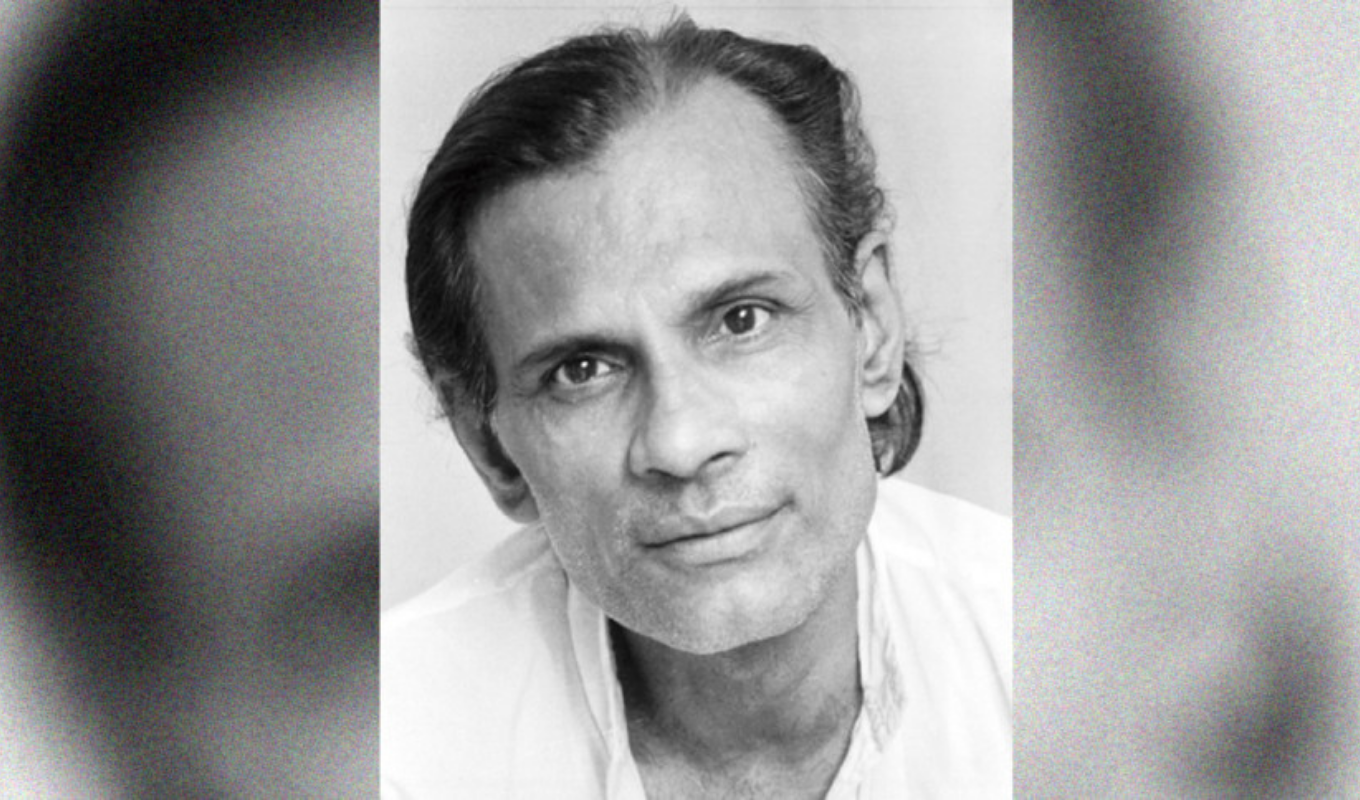
Across decades of Bangla musical heritage, certain songs remain evergreen—still sung, still cherished and still emotionally resonant. Behind the enchanting voices of celebrated singers stood a lyricist whose words shaped these classics: Gauriprasanna Majumdar, a poet whose mastery of language continues to illuminate Bangla music.
Two of his creations—Coffee House-er Sei Adda Ta and Muche Jaowa Dinguli—appear in the list of the greatest Bangla songs ever composed. Trained in English literature, he translated Kalidasa’s Meghaduta into English during his student years, demonstrating early signs of his poetic clarity. Although he once aspired to be a poet, destiny led him into lyric writing, where he left an indelible mark.
His journey began with Agnipariksha (1954), where he crafted ‘Ke Tumi Amare Dako’ and ‘Gane Mor Kon Indradhanur’. His lyrical elegance complemented Anupam Ghatak’s compositions, producing songs that remain beloved even today. Sachin Dev Barman later encouraged him to write more, inspiring timeless pieces such as ‘Banshi Shune Ar Kaj Nai’.
His collaboration with Nachiketa Ghosh yielded several unforgettable songs, including ‘Neer Chhoto Khoti Nei’ and ‘Nishirat Baka Chand Aakashe’. These works showcased his command over emotion, imagery and rhythm—qualities that positioned him among the finest lyricists in Bangla music.
He wrote prolifically for Hemanta Mukherjee, Kishore Kumar, Rahul Dev Burman and Bappi Lahiri. Songs like ‘Ei Path Jodi Na Shesh Hoy’, ‘Ei Raat Tomar Amar’, and ‘Sedino Akashe Chhilo Koto Tara’ highlight his ability to transform human emotions into lyrical poetry. The last of these was spontaneously conceived from a moment spent near a seashore—a memory that blossomed into an entire song.
His lyrical brilliance shone through in films such as Antony Firingee and Chirodiner, where songs like ‘Ami Yamini Tumi Shashi He’ and ‘Manush Khun Hole Pore’ revealed his versatility, from romantic expression to social commentary.
During the Liberation War of Bangladesh, he wrote ‘Shono Ekti Mujiborer Theke’ on a cigarette packet—proof of his instinctive artistic urgency. Near the end of his life, while suffering from cancer, he composed the iconic Coffee House-er Sei Adda Ta, completing the final lines just before leaving for treatment.
Born on 5 December 1925 in Gopalnagar, Pabna, Gauriprasanna Majumdar remains a monumental figure whose legacy continues to guide and inspire Bangla music.