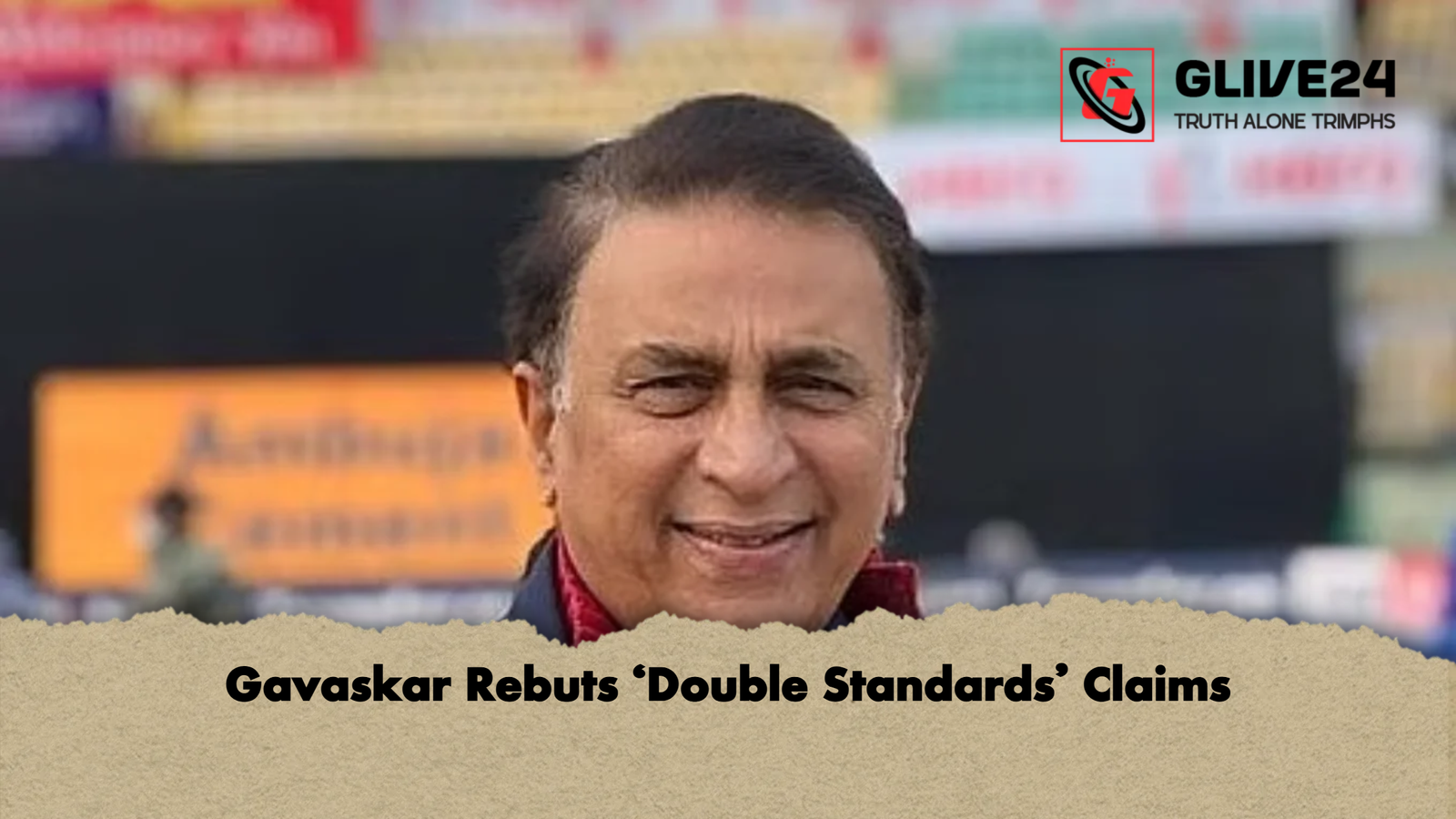
Former India captain Sunil Gavaskar has firmly rejected accusations of hypocrisy after his recent remarks on financial links between Indian franchises and Pakistani cricketers sparked widespread debate. Once renowned for letting his bat do the talking, Gavaskar now finds himself at the centre of a contentious off-field discussion, defending a position he insists is both consistent and principled.
The controversy began during the player auction for The Hundred 2026, where Pakistani spinner Abrar Ahmed was signed by Sunrisers Leeds. The franchise is part of the Chennai-based Sun Group, owned by businessman Kalanithi Maran. His daughter, Kavya Maran, is a co-owner of multiple teams, including Sunrisers Hyderabad and Sunrisers Eastern Cape.
Gavaskar raised concerns that such signings could enable indirect financial flows from Indian-owned entities to Pakistani players. Given the long-standing political tensions between India and Pakistan, he argued that Indian stakeholders should avoid facilitating monetary benefits to Pakistani individuals through franchise leagues. His comments quickly reignited sensitive discussions surrounding the intersection of sport, commerce, and geopolitics.
However, critics were swift to challenge Gavaskar’s stance, accusing him of applying a “double standard”. They pointed out that he has himself been part of international commentary panels for organisations such as the International Cricket Council (ICC) and the Asian Cricket Council (ACC), where revenues are distributed among all participating nations, including Pakistan. Additionally, his appearance on a Dubai-based YouTube programme alongside former Pakistani cricketers Wasim Akram and Waqar Younis further fuelled claims of inconsistency.
Responding to these allegations in an interview with Mid Day, Gavaskar offered a robust defence. He emphasised that his work with international cricket bodies does not equate to directly funding any particular country. “The remuneration I receive comes from global organisations, not from any Indian entity paying a Pakistani player,” he explained. “I do not personally pay anyone—Indian or otherwise—so holding me accountable in this context is misplaced.”
He further clarified that his participation in the Dubai-based programme, titled DP World Dressing Room during the ICC Champions Trophy 2025, involved no financial compensation. According to Gavaskar, he neither sought nor received payment for the appearance, and thus it cannot be construed as contributing economically to Pakistan.
The core of the debate lies in differing interpretations of financial engagement. While Gavaskar advocates for a clear-cut avoidance of direct monetary exchanges involving Indian entities and Pakistani individuals, critics argue that the globalised nature of modern cricket inevitably blurs such boundaries.
The contrasting viewpoints can be summarised as follows:
| Issue | Gavaskar’s Position | Critics’ Argument |
|---|---|---|
| Franchise signings | Opposes Indian-linked payments to Pakistani players | Sees stance as overly rigid |
| ICC/ACC involvement | Global revenue-sharing, not direct payment | Pakistan benefits indirectly |
| Media appearances | No financial transactions involved | Symbolic inconsistency |
| Overall principle | Economic disengagement | Impractical in global sport |
Gavaskar also suggested that financial exchanges between the two cricketing nations have historically been one-sided, claiming there is little evidence of reciprocal flow from Pakistan to India over the decades.
Ultimately, the episode highlights the growing complexity of cricket in an era of global franchise leagues and cross-border collaborations. Gavaskar’s remarks have reignited an old debate: whether sport can—or should—remain insulated from political realities.