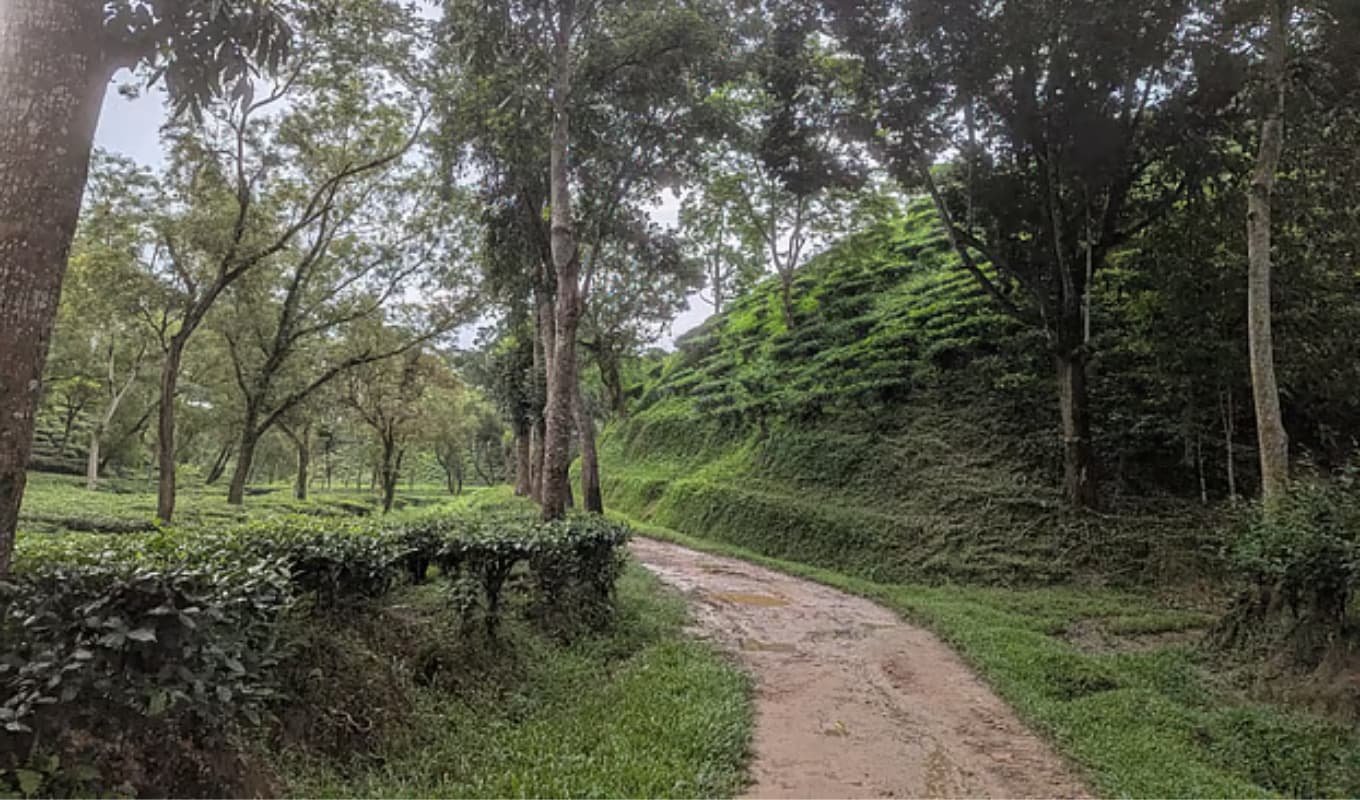
A disturbing irregularity has been uncovered in the government-run tea gardens of Borolekha Upazila, Moulvibazar, where numerous registered workers appear to exist only on paper. Despite being listed for salaries, provident fund contributions, attendance, and rations, many of these workers are either deceased, retired, or entirely fictitious. Yet, over the past five years, they have continued to receive government wages and allowances.
During a field visit to the New Samanbagh Tea Garden on 21 February, local workers revealed that individuals such as Dipnarayan, Sachin, Sujan, and Kabita had passed away several years ago. Nevertheless, their names remain active on official records. Among the four government tea estates in the area, New Samanbagh is the largest, employing 1,820 workers. A recent investigation by the Tea Board identified at least 40 deceased or retired employees and uncovered another 170 receiving salaries under fake identities.
Investigation and Assault
A six-member Tea Board investigative team conducted a nine-day inquiry from 5 January, cross-checking employment records against provident fund and ration lists. Discrepancies were uncovered, revealing systemic mismanagement. On 13 January, the team faced hostility when workers using fraudulent identities attacked them, holding them captive for nearly one and a half hours.
The investigation concluded that of the 1,820 registered workers, only 315 had accurate information. Employment documents for 1,160 workers did not match national ID records, while 80 workers over the age of 60 remained on the list. This irregularity is estimated to cost the government nearly 10 million BDT per month—approximately 120 million BDT annually.
Production and Workforce Comparison
A comparative overview of government and private tea gardens highlights significant productivity gaps:
| Garden Name | Land Area (acres) | Workers | 2024 Tea Production (kg) | Max Auction Price (BDT/kg) | Per Worker Production (kg) |
|---|---|---|---|---|---|
| New Samanbagh | 2,906 | 1,820 | 792,000 | 210 | 435 |
| Madhupur (Private) | 930 | 655 | 887,000 | 277 | 1,353 |
| Karimpur (Private) | 1,302 | 1,792 | 1,564,450 | 220 | 873 |
The table illustrates that private gardens achieve far higher yields with smaller land areas and fewer workers, emphasising inefficiencies in government operations.
Challenges and Potential
Between 2015 and 2025, New Samanbagh received 170 million BDT for new plantings. Yet, 30% of the estate remains uncultivated, and the average tea bush is 45 years old, reducing both quality and output. Irregular electricity supply further compromises tea quality. The Tea Board has demanded the return of funds advanced as permanent deposits in October 2025, noting that a minimum annual return of 10% could have been achieved if properly invested.
Under the National Tea Company, which oversees 12 government estates, New Samanbagh remains the largest. Chairman Mamunur Rashid acknowledged several production bottlenecks and announced the recruitment of 20 trainee assistant managers. The garden is also diversifying into green, white, yellow, and experimental teas aimed at international markets.
Persistent issues in government gardens include financial losses, low worker skill levels, politically motivated appointments, insufficient investment, and high-interest loans. Nevertheless, with targeted reforms, improved management, and workforce training, the financial and operational efficiency of New Samanbagh could be significantly enhanced, reducing government expenditure while improving tea quality and market value.