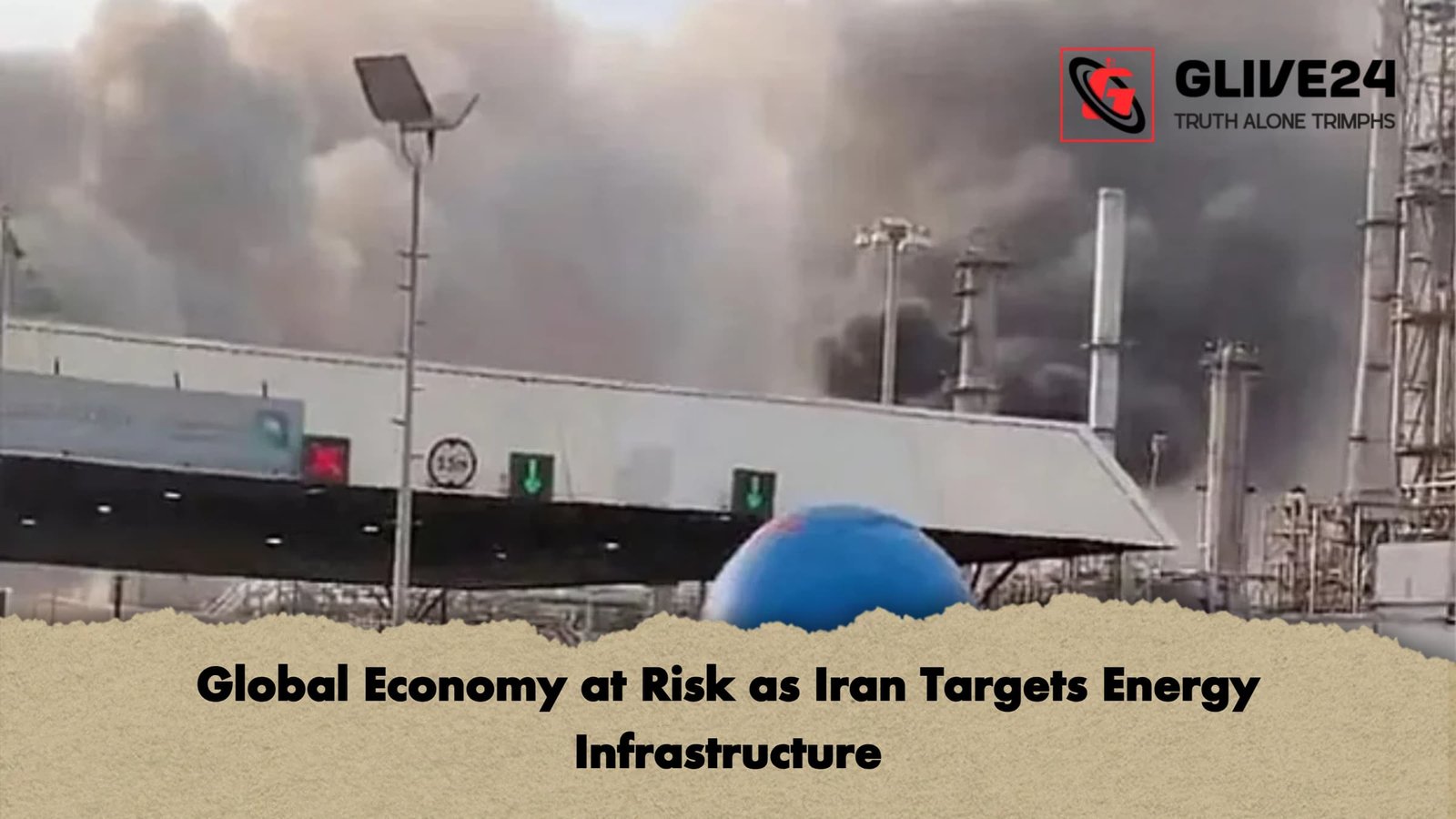
The escalating conflict between the US-Israeli coalition and Iran has moved into a perilous new phase, with Tehran launching systemic strikes against critical energy infrastructure across the Persian Gulf. By Monday, the third day of active hostilities, the “Tanker War” of the 21st century had effectively frozen a significant portion of the world’s oil and gas production, sending shockwaves through international markets and threatening a global recession.
Table of Contents
The Weaponisation of Energy
Analysts suggest that Iran has pivoted its strategy toward the Gulf states—Saudi Arabia, Qatar, Kuwait, and the UAE—not because of direct enmity, but because their energy assets represent the most vulnerable “soft underbelly” of Western economic stability. Unlike Israel’s heavily fortified airspace, the sprawling refineries and LNG terminals of the Gulf have proven difficult to defend against low-cost, high-precision Iranian drone swarms.
On Monday, Saudi Aramco was forced to suspend operations at its Ras Tanura refinery, the kingdom’s largest, following a direct drone strike. The facility possesses a refining capacity of 550,000 barrels per day. Simultaneously, QatarEnergy announced a temporary cessation of Liquefied Natural Gas (LNG) production after two drones impacted a primary processing plant. Given that Qatar supplies 20% of the world’s LNG, the disruption poses an existential threat to energy security in Asia and Europe.
Market Reaction and Economic Fallout
The immediate result of these strikes has been a dramatic surge in commodity prices. With the Strait of Hormuz—the world’s most vital maritime chokepoint—effectively blockaded, oil prices jumped 13% in a single day, reaching $82 per barrel, the highest level since early 2025.
Experts warn that if the strait remains closed, the world will lose access to 10 million barrels of oil per day, representing 10% of total global consumption.
| Energy Asset | Location | Status | Impact/Capacity |
| Ras Tanura Refinery | Saudi Arabia | Shut Down | 550,000 barrels per day |
| QatarEnergy LNG Plant | Qatar | Shut Down | 20% of global LNG supply |
| Ahmadi Refinery | Kuwait | Operational (Damaged) | Two staff injured by drone debris |
| Kurdistan Oil Fields | Iraq | Shut Down | Major regional production halt |
| Strait of Hormuz | Maritime | Blockaded | 10% of global oil transit stalled |
Strategic Intent: Pressuring the West
Sacha Bruchmann, an analyst at the International Institute for Strategic Studies (IISS), argues that Iran’s targeting of energy hubs is a calculated move to exert maximum pressure on US President Donald Trump. By driving up energy costs and disrupting global supply chains, Tehran hopes to ignite domestic discontent in the West and force a cessation of the “Operation Epic Fury” campaign.
However, the human and logistical cost to the Gulf nations is mounting. Professor Arang Keshavarzian of New York University highlights that the blockade of the Strait of Hormuz will soon lead to food and medicine shortages in cities like Dubai, Doha, and Kuwait City, which rely heavily on maritime imports for basic necessities.
A Growing Rift with Washington
The crisis has also strained the relationship between the US and its regional allies. A Saudi official, speaking anonymously to Al Jazeera, expressed frustration that American air defence assets appear prioritised for the protection of Israel, leaving Gulf-based US installations and local infrastructure exposed to Iranian retaliation.
As Jorge Leon of Rystad Energy noted, “We have entered uncharted territory. The longer these strikes continue, the more we will see prices skyrocket, potentially leading to a global economic catastrophe.”