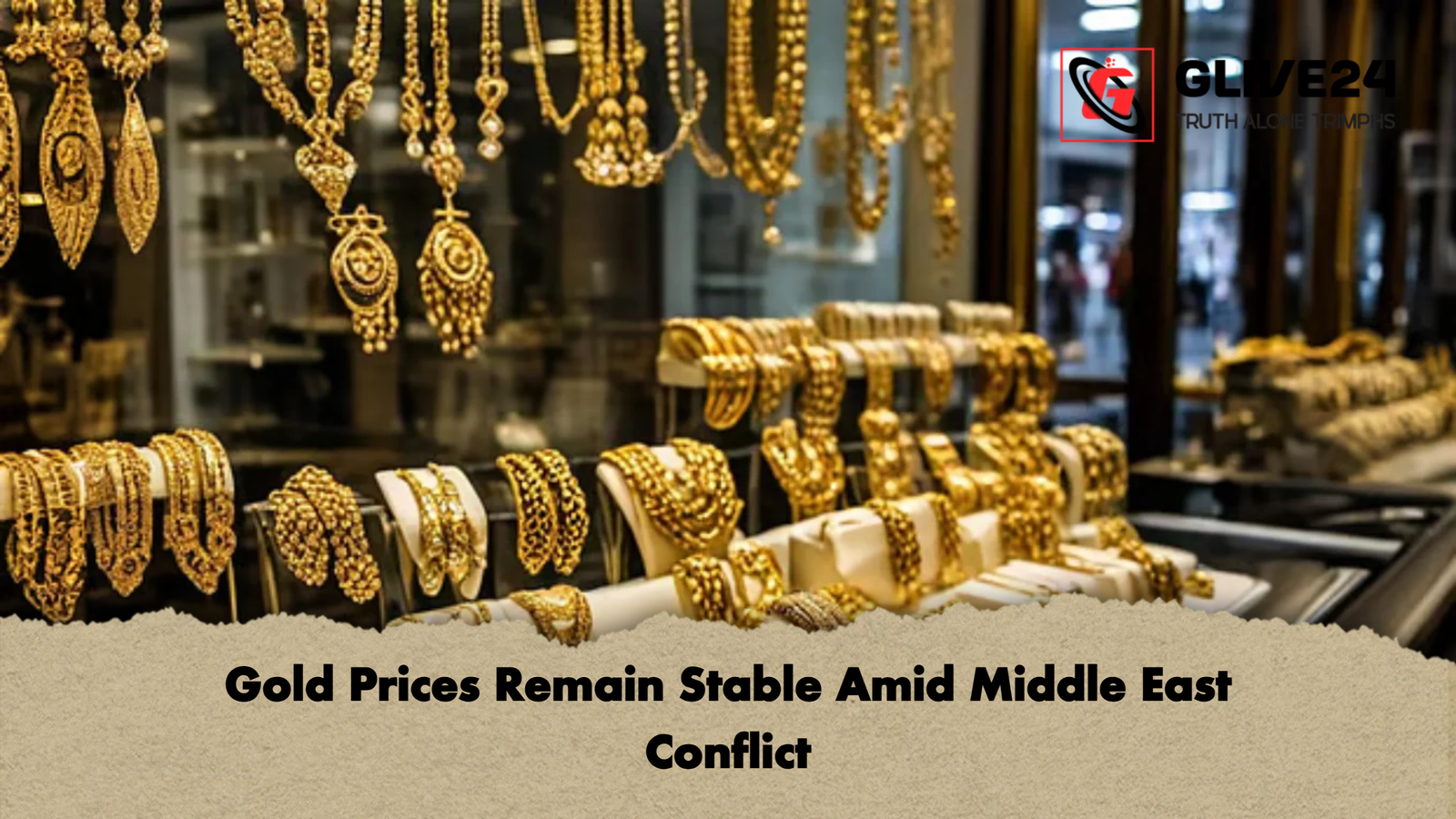
The ongoing military confrontation between Israel, the United States, and Iran has now entered its 19th day as of Wednesday. Despite the heightened uncertainty surrounding the conflict, global gold markets are exhibiting a surprising steadiness. Rather than surging as traditionally expected during crises, gold prices have remained largely stable.
The conflict, which began with the first wave of attacks on Iran on 28 February, has rapidly extended beyond the borders of Israel and Iran, spreading tensions across several Middle Eastern nations. The international community has expressed concern over the potential impact on the global economy.
On 2 March, Ibrahim Jabbari, a senior adviser to Iran’s Islamic Revolutionary Guard Corps (IRGC), announced the closure of the Strait of Hormuz, a crucial maritime corridor through which approximately 20% of the world’s oil and gas shipments pass. The announcement immediately sent crude oil prices soaring above $100 per barrel on international markets.
Despite the economic and geopolitical upheaval, stock markets worldwide have experienced volatility over the past two weeks, yet gold prices have not responded with the same level of increase, prompting analysis from market experts.
Table of Contents
Gold Market Overview
Global gold prices rose more than 70% over the past year, with prices peaking above $5,000 per ounce on 26 January. Since then, prices have fluctuated around this level, already reflecting a high valuation. Analysts had predicted that gold might surpass $6,000 per ounce this year.
As of Wednesday morning, New York’s spot gold price stood at $4,991 per ounce, a decline of roughly $10 compared to the previous session. Spot prices represent the current market price for immediate purchase. Meanwhile, U.S. gold futures for April delivery are priced slightly higher at $4,998 per ounce.
| Indicator | Price (USD per ounce) |
|---|---|
| January 26 Peak | 5,000+ |
| Current Spot Price | 4,991 |
| April Futures Price | 4,998 |
| Annual Growth (2025) | 70%+ |
Typically, in times of economic crisis or global conflict, investors gravitate toward gold as a safe-haven asset, driving prices higher. For example, during the full-scale Russia–Ukraine war, gold prices surged rapidly. French economist Rémi Bourgeaux from the Paris-based International and Strategic Research Institute notes that Western sanctions induced panic among central banks, leading to notable shifts in the gold market.
Countries such as China also began large-scale gold purchases to reduce dependence on the U.S. dollar, further increasing demand. However, the current Iran-focused conflict has produced a contrasting pattern.
Reasons Behind Price Stability
Market analysts attribute the stability to several factors:
Investors anticipate that the U.S. Federal Reserve may restrain or even increase interest rates to counter rising inflation, making dollar-denominated assets more attractive.
Gold is a non-interest-bearing asset; therefore, a stronger dollar reduces the incentive to invest in gold.
Gold prices were already elevated at the start of the year, limiting room for further immediate gains.
Economist James Midway notes, “Gold prices had already risen substantially, so the current conflict has minimal impact on additional price increases.” Rebecca Christie, Senior Fellow at the Bruegel think tank, adds that the historical average for gold is far lower than current levels, and the strong dollar also contributes to price restraint.
Is Gold Still a Safe Haven?
At present, gold is not regarded as the ultimate hedge against uncertainty. Bourgeaux observes that “gold is now considered a speculative rather than a protective asset, with major investors adopting a cautious stance.”
Outlook
Predicting gold’s near-term trajectory is challenging given the Middle East’s instability. Experts suggest that meaningful price shifts would require either a clear signal from the Federal Reserve about interest rate cuts despite inflationary pressures or a significant change in the perceived duration and impact of the conflict. Should the war intensify or extend, gold could regain its appeal as a safe-haven asset. For now, however, there is little indication of a sharp upward movement in global gold prices.