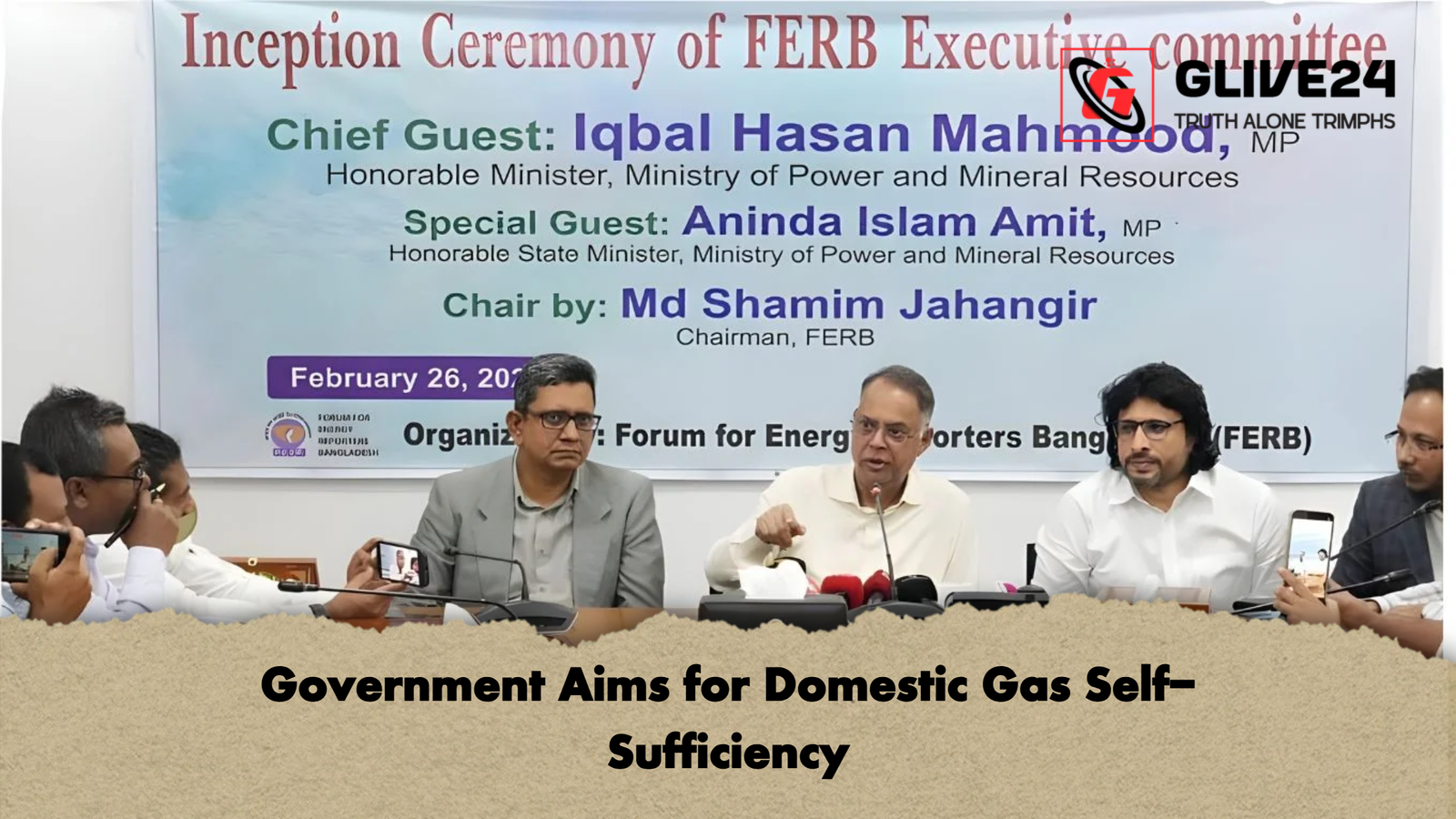
Bangladesh is set to reduce its dependence on imported gas by intensifying exploration and extraction from domestic sources, emphasised Minister of Power, Energy and Mineral Resources Ikbal Hasan Mahmud Tuku. He stressed that long-term reliance on foreign supplies poses risks both to the national economy and the energy sector, making self-reliance a primary government objective.
Speaking on Thursday (26 February) at the handover ceremony of the Energy Reporters Bangladesh (FERB) executive committee, held at the Ministry of Power’s conference room, the minister underscored the importance of proactive management over reactive reporting. The event was chaired by FERB chairman Shamim Jahangir, with newly elected chairman M. Azizur Rahman and executive director Serajul Islam Siraj among the attendees.
Minister Tuku acknowledged that media reports frequently highlight gas shortages but cautioned that mere reporting does not solve the underlying problems. “Management deficiencies must be identified and corrected, but the core challenge remains the insufficient exploration and drilling capacity. We do not wish to remain dependent on foreign imports. Emphasis must be placed on domestic gas exploration,” he said. He further outlined plans to acquire new rigs, incorporate modern technology, and develop skilled manpower to boost local production.
A comprehensive, phased plan is being developed to intensify both shallow and deep-level exploration. This includes geological surveys, seismic data collection, drilling, and increasing production capabilities. The minister emphasised that such projects require time and investment, and must be executed in a stepwise manner.
He added that, given the sensitivity of the energy sector, all potential measures would be reported in detail to the Prime Minister to obtain directives, with transparency and accountability guiding implementation. Drawing from his own political and administrative experience, he stated that he has never engaged in corruption, despite facing political retaliation, imprisonment, and income tax litigation, including the sale of personal assets to meet legal obligations.
Key priorities for accelerating domestic gas exploration are summarised in the table below:
| Priority Area | Planned Action | Expected Outcome |
|---|---|---|
| New Well Drilling | Purchase and deploy modern rigs | Increased production |
| Technology Advancement | Advanced seismic surveys and data analysis | Identification of potential fields |
| Workforce Capacity | Training and specialised team formation | Enhanced operational efficiency |
| Policy Coordination | Integrated central-level planning | Faster decision-making |
Energy experts note that boosting domestic gas exploration could alleviate pressure on foreign currency reserves, ensure stable energy supplies for industry, and ultimately control long-term electricity generation costs. Success depends on sustained investment, consistent policy support, and methodical execution.
Overall, the government aims to achieve energy security through self-sufficiency in the gas sector, providing a stable foundation for sustainable economic growth.