
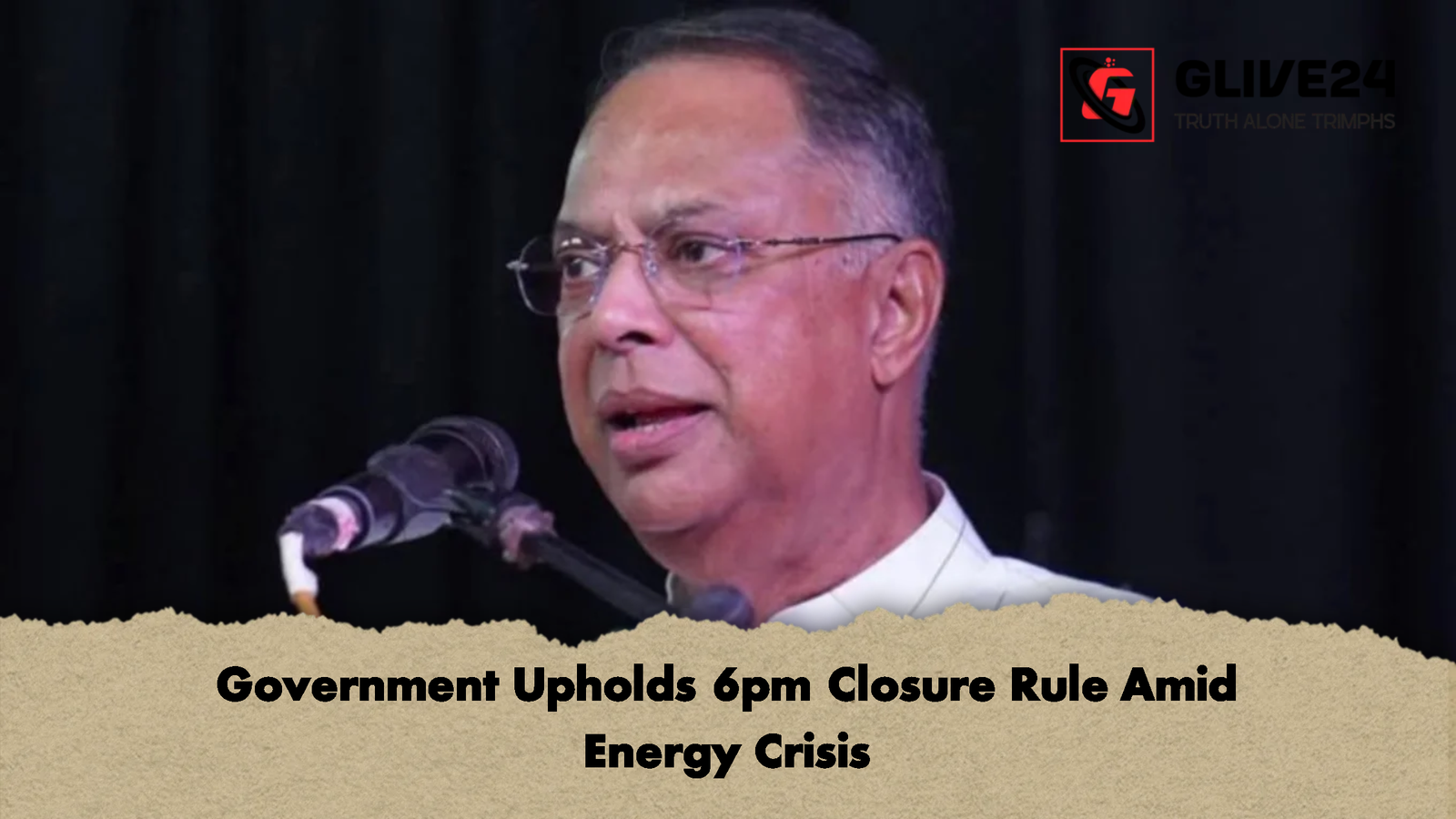
Iqbal Hasan Mahmud Tuku, the Minister of Power, Energy and Mineral Resources, has confirmed that the government’s directive requiring shops and shopping malls to close by 6pm will remain in force, as authorities move to manage mounting energy pressures linked to instability in the Middle East.
The announcement came following a high-level meeting held on Saturday at the Power Building in Dhaka, where the minister met representatives of shop owners’ associations and shopping mall business leaders to discuss the ongoing situation and its impact on the country’s energy supply.
The decision, initially introduced as part of broader measures to reduce electricity consumption and ease pressure on fuel supplies, has become increasingly significant amid concerns over potential disruptions in global energy markets caused by escalating tensions in the Middle East.
Table of Contents
No immediate revision to closure policy
Speaking after the meeting, Minister Iqbal Hasan Mahmud Tuku stated clearly that the 6pm closure policy would remain unchanged for the time being. He emphasised that the measure had been implemented in the national interest and that, under the current circumstances, there was no scope for revising the directive.
He further urged business owners to cooperate fully with government instructions, stressing that collective compliance was essential to maintaining stability in electricity consumption and ensuring uninterrupted supply during peak demand periods.
According to officials, the policy is designed to reduce evening peak-hour electricity usage, which places significant strain on the national grid. Authorities believe that limiting commercial activity during late hours can help conserve fuel used in power generation, thereby easing pressure on imported energy resources.
Business community response
Following the meeting, representatives of the Shop Owners’ Association expressed their support for the government’s position. They acknowledged the challenges posed by the current energy situation and confirmed their willingness to comply with the directive requiring commercial establishments to close by 6pm.
Business leaders also indicated that they would continue to engage with the government in future discussions to ensure that any long-term policy adjustments take into account both energy security concerns and commercial viability.
Key details at a glance
| Category | Details |
|---|---|
| Government decision | Shops and malls must close by 6pm |
| Authority | Ministry of Power, Energy and Mineral Resources |
| Minister | Iqbal Hasan Mahmud Tuku |
| Reason cited | Energy conservation amid Middle East tensions |
| Policy status | No immediate change announced |
| Business response | Support and agreement expressed |
| Meeting location | Power Building, Dhaka |
Energy concerns driving policy
The government’s stance comes amid growing concern over potential disruptions in global fuel supply chains, with officials closely monitoring developments in the Middle East. Energy planners have warned that prolonged instability in the region could affect import costs and availability, placing additional strain on domestic electricity production.
In this context, authorities view demand management measures—such as restricting commercial operating hours—as a necessary short-term strategy to safeguard national energy security.
While the decision has implications for retail activity and consumer behaviour, policymakers argue that such measures are essential to maintaining grid stability and ensuring equitable distribution of electricity across sectors.
The government has indicated that the situation will continue to be reviewed in line with global energy developments, but for now, the 6pm closure directive remains firmly in place as part of Bangladesh’s broader effort to manage a challenging energy environment.