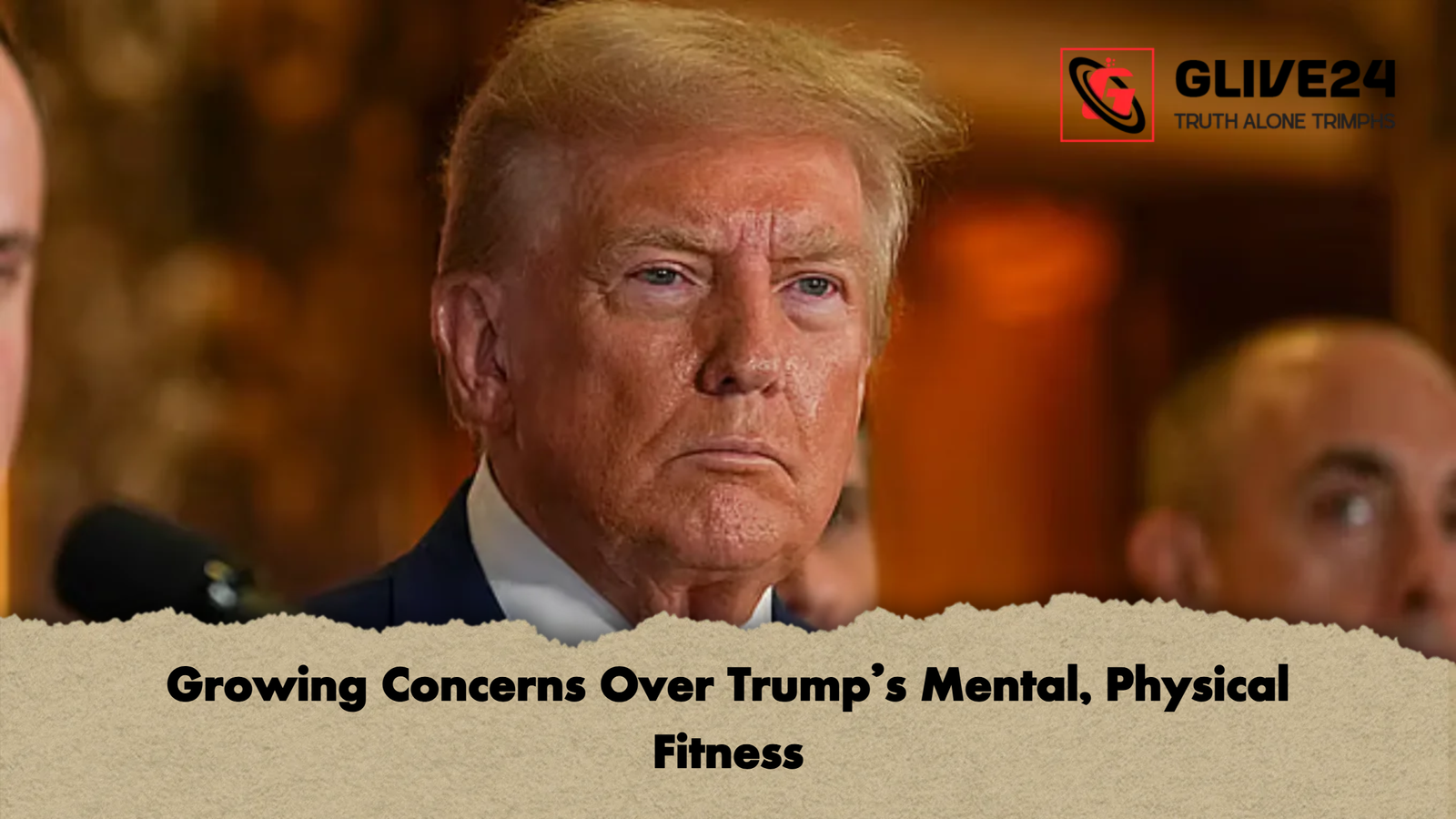
As the United States moves further into Donald Trump’s second term, public concerns over his mental acuity and physical fitness are steadily rising. In the 2024 presidential election, then-President Joe Biden withdrew from the race due to concerns about his age and cognitive ability, paving the way for Vice President Kamala Harris to become the Democratic nominee. Trump, running as the Republican candidate, ultimately won the election.
However, just one year into his second term, multiple polls indicate that Americans are not only dissatisfied with Trump’s performance in office but are increasingly questioning his cognitive and physical capacity. At 79 years old, Trump faces a growing challenge similar, though not as severe, as that which confronted Biden when he withdrew at the age of 81.
Recent polling data highlights broad unease among both Democratic and Republican voters, suggesting that the issue transcends partisan lines. The most notable survey, conducted by Reuters-Ipsos just before Trump’s second-term first State of the Union address, shows that he set a record for the longest speech delivered to Congress at 1 hour 47 minutes, yet concerns remain.
| Poll Metric | Percentage of Concerned Americans | Notes |
|---|---|---|
| “Becoming more erratic with age” | 61% | 30% of Republicans agree |
| Mental sharpness and problem-solving ability | 45% | Down from 54% in Sept 2023 |
| Physical health confidence | 51% suspect decline | Up 23 points since May 2023 |
| Very confident in mental fitness | 32% | Down from 39% a year ago |
| Very confident in physical fitness | 28% | Down from 35% a year ago |
Historical context underscores the significance of these findings. Following the 2021 Capitol attack, a Quinnipiac University survey found nearly 50% of voters questioned Trump’s mental stability, a figure that has now climbed to 61%. Similarly, the proportion of Americans who believe Trump is mentally sharp and capable of handling challenges has decreased from 54% in September 2023 to 45% today.
Even among Trump’s own supporters, confidence has declined sharply. Only 66% now express strong confidence in his mental fitness, down from 75%, and 55% in his physical health, down from 65%. Overall, both Reuters-Ipsos and Pew Research surveys show that more than three in ten of his base are expressing concern over his well-being.
Analysts suggest that diminishing popularity contributes to these figures, as citizens interpret Trump’s occasional verbal slips—such as confusing Iceland with Greenland—alongside publicised health and sleep incidents as signs of decline. Despite performing well in cognitive assessments, these public perceptions continue to cast doubt on his capacity to lead effectively.
In short, Donald Trump, the oldest elected US president in history, is facing challenges similar to those of his predecessor regarding age, cognitive acuity, and physical stamina, with growing sections of the American electorate expressing unease about his ability to govern.