Manchester City face a daunting yet tantalising challenge as they prepare to host Real Madrid in the second leg of their UEFA Champions League last-16 tie at the Etihad Stadium. Trailing 3–0 from the first leg at the Santiago Bernabéu, Pep Guardiola’s side must produce a remarkable turnaround to keep their European ambitions alive.
Despite the heavy deficit, statistical models suggest that City are not without hope—at least on the night. According to Opta’s supercomputer, the English champions have a 58.5 per cent chance of winning the second leg. However, when it comes to progressing to the quarter-finals, their chances drop sharply to just 13.4 per cent, underlining the magnitude of the task ahead.
Match Outlook and Probabilities
| Category | Manchester City |
|---|---|
| First-leg result | Lost 0–3 |
| Second-leg win probability | 58.5% |
| Quarter-final qualification probability | 13.4% |
| Venue (second leg) | Etihad Stadium |
The primary reason behind this pessimistic projection lies in Real Madrid’s formidable history. The Spanish giants have never been eliminated from a European knockout tie after winning the first leg by three or more goals. In fact, across 35 such instances, Madrid have progressed every single time—an extraordinary record that looms large over City’s hopes.
Guardiola’s own record in similar situations offers little encouragement. The last time one of his teams overturned a first-leg deficit in the Champions League knockout rounds was during the 2014–15 season, when he was in charge of Bayern Munich. Since then, his sides have failed to recover on five separate occasions, including three during his tenure at Manchester City.
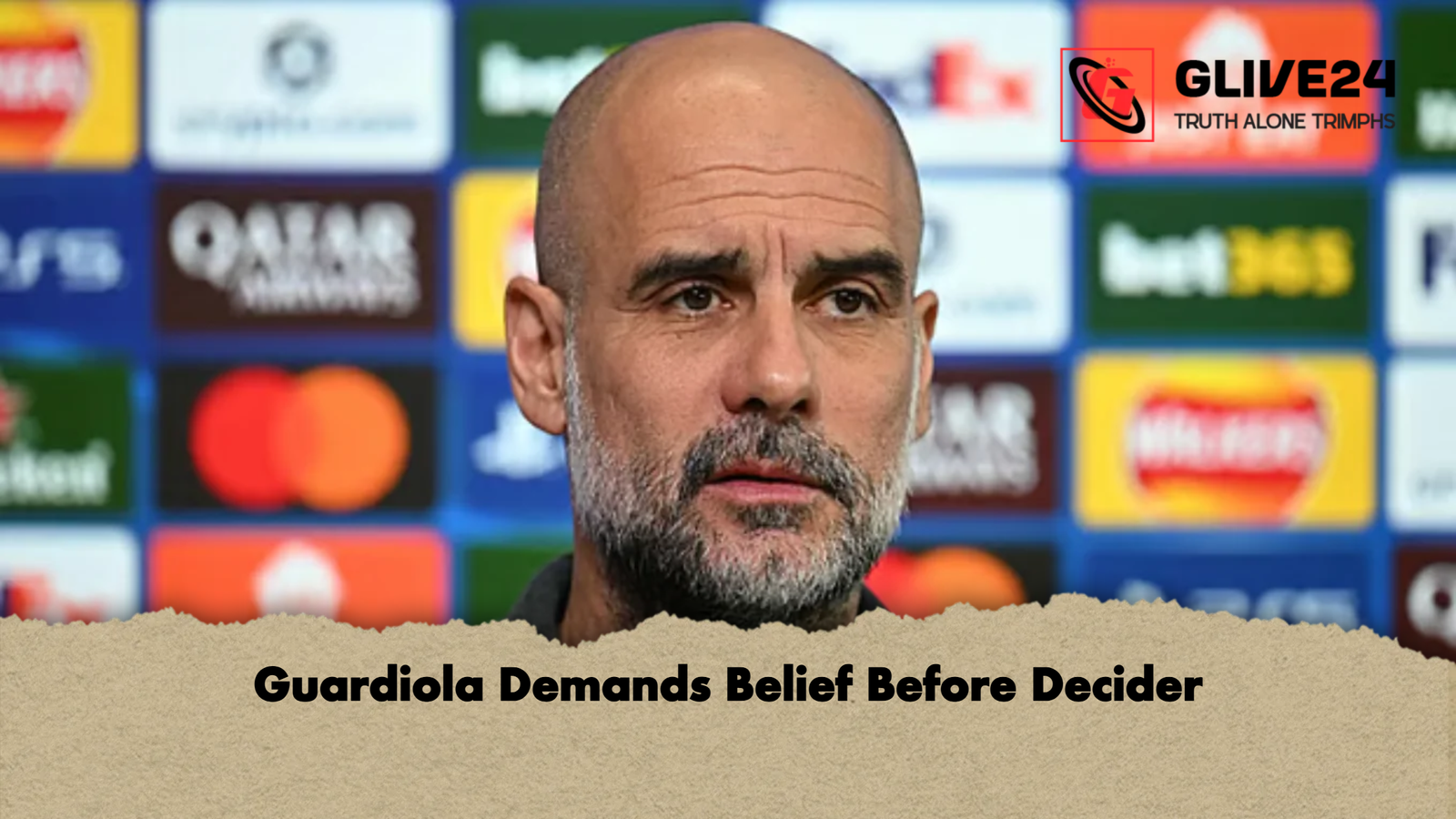
Yet, the City manager has struck a defiant tone in the build-up to the decisive encounter. Immediately after the defeat in Madrid, Guardiola admitted that his side’s chances of progression were “not high”. However, his stance has since shifted. Following a 1–1 Premier League draw against West Ham United, he emphasised the importance of belief within his squad.
“If the players do not believe, then they should not even play,” Guardiola remarked. “They are professionals, they are well paid, and this is the Champions League. If they lack belief, they can stay at home. We must try—what do we have to lose?”
Drawing inspiration from Real Madrid’s own history of comebacks, Guardiola challenged his players to rise to the occasion. “Has Madrid never come back in their history? Of course they have. It is difficult, but we must respect the fans, the club, and our profession by giving everything.”
Interestingly, Guardiola has opted for an unconventional preparation strategy. Instead of intense training sessions, he granted his players a day off to ensure they are mentally refreshed. “There is little time, and training will not change much. I prefer them to be relaxed at home,” he explained.
Ultimately, City’s fate will hinge on their ability to convert chances—an area that proved costly in the first leg. Despite deploying multiple attacking players, they failed to find the net. Much will depend on Erling Haaland, whose recent form has been underwhelming, with just four goals in his last 18 appearances across all competitions.
As the stage is set for a high-stakes encounter, one truth remains constant: in football, improbability does not equate to impossibility. Manchester City must now attempt to defy history—and belief, as Guardiola insists, will be their starting point.