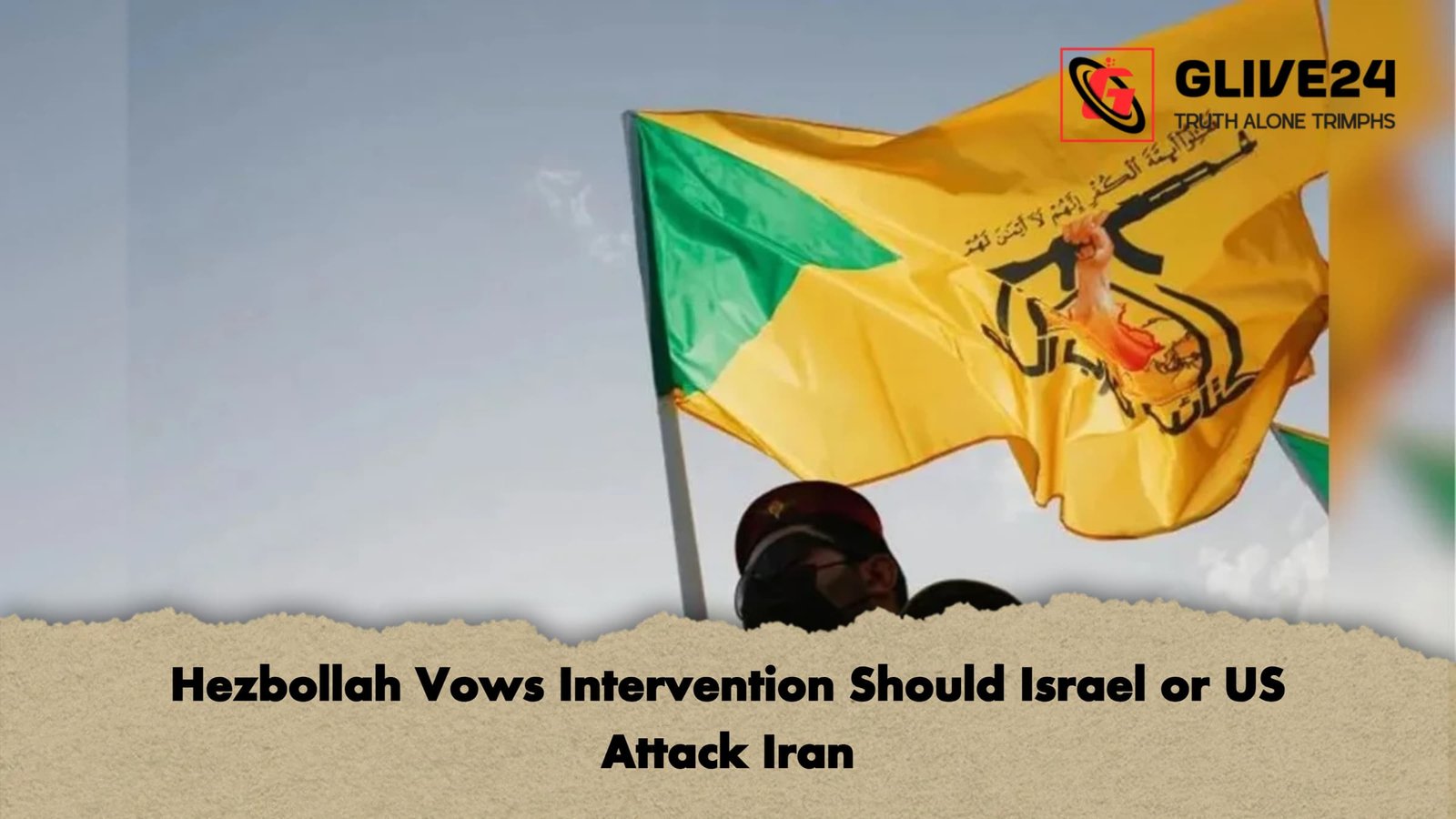
In a defiant declaration that underscores the volatile geopolitical landscape of the Middle East, Hezbollah’s leadership has warned that the Lebanese militant group will not remain a mere spectator should Iran face a military offensive. Naim Qassem, the movement’s Deputy Secretary-General, asserted that any aggression directed at Tehran would be met with a direct response, effectively dismantling any hopes of Hezbollah maintaining neutrality in a wider regional conflict.
Speaking via video link at a solidarity event on Monday, Qassem reaffirmed Hezbollah’s unwavering allegiance to the Islamic Republic and its theological leadership. According to reports from Al-Manar, the group’s affiliated television network, Qassem made it explicitly clear that Hezbollah views any threat against Ayatollah Ali Khamenei, Iran’s Supreme Leader, as a direct and personal threat to its own existence and operations.
A Legacy of Defiance
The rhetoric employed by Qassem leaned heavily on historical grievances, framing the current tensions as a continuation of a decades-long struggle. He argued that the United States has been orchestrating conspiracies against Tehran since the dawn of the 1979 Islamic Revolution. To illustrate this point, he referenced the Iran-Iraq War of the 1980s, claiming that Washington weaponised its then-ally, Iraq, in a failed attempt to dismantle the nascent revolutionary government.
This latest warning signals a tightening of the “Axis of Resistance,” suggesting that the strategic depth between Tehran and its proxies has never been more integrated. For regional analysts, the statement serves as a grim reminder that a strike on Iranian nuclear or military facilities would likely ignite multiple fronts simultaneously, involving Lebanese soil and potentially destabilising the Mediterranean basin.
Regional Military Context
The potential for escalation is underscored by the vast discrepancy in military posturing across the region. While Hezbollah remains a non-state actor, its arsenal is widely considered superior to that of many sovereign militaries.
| Factor | Strategic Implication |
| Hezbollah’s Stance | Committed to total intervention; no neutrality. |
| Primary Target | Any entity threatening the Iranian Supreme Leader. |
| Historical Context | View of US-led “conspiracies” dating back to 1979. |
| Geopolitical Risk | High probability of a multi-front regional war. |
The “Neutrality” Myth
By explicitly rejecting neutrality, Qassem is attempting to deter Israeli or American military planners from considering “surgical strikes” on Iranian soil. The message is clear: the cost of a war with Iran will be paid in the cities of Lebanon and occupied territories alike. This “unified front” strategy aims to complicate the risk-benefit analysis for Western intelligence agencies, as any move against the patron (Iran) will trigger an immediate and perhaps uncontrollable reaction from the protégé (Hezbollah).
As tensions continue to simmer over Iran’s regional influence and its nuclear programme, such declarations ensure that the shadow of a broader conflagration remains at the forefront of international diplomacy.