
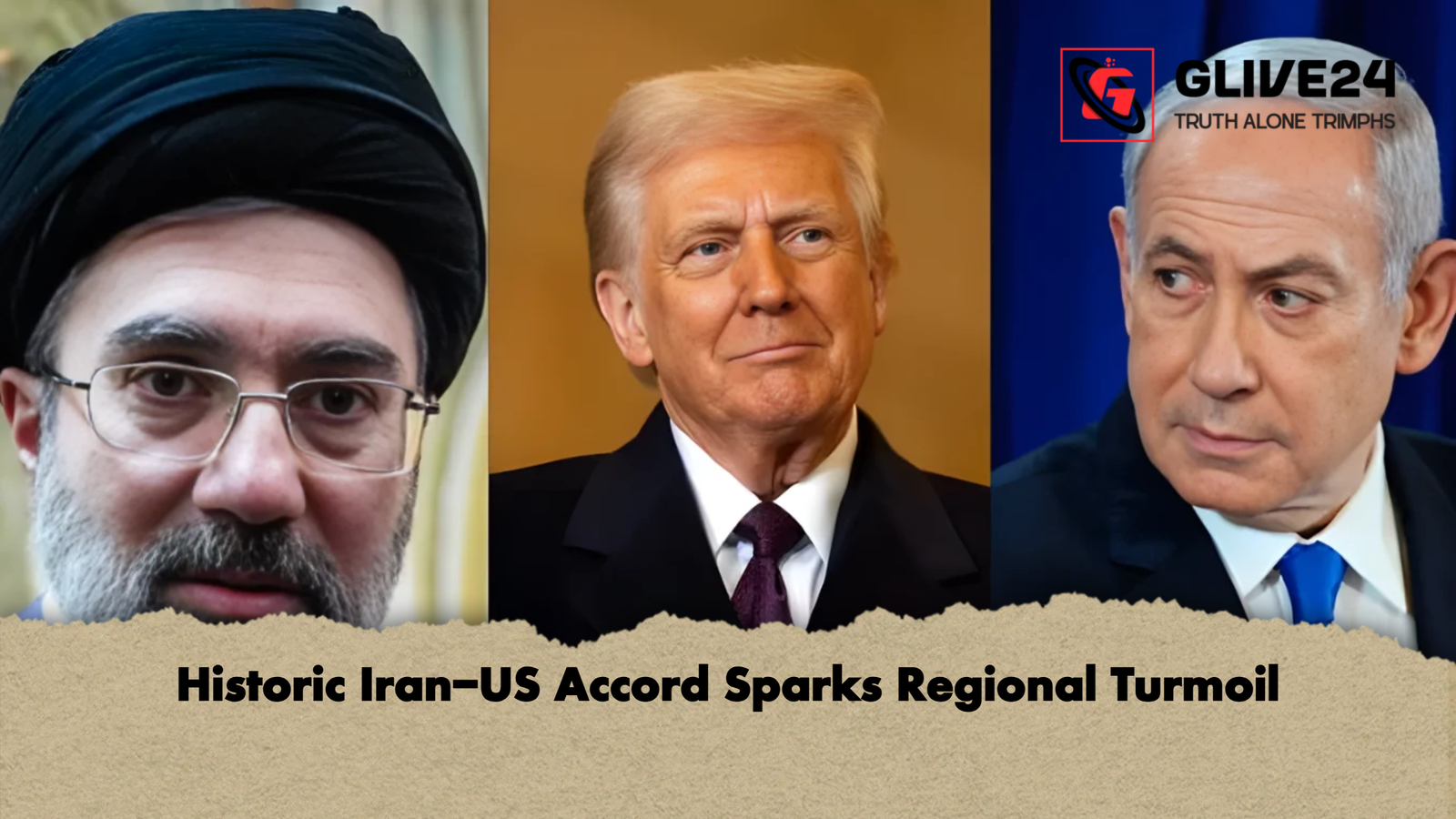
Iran’s Supreme National Security Council announced on Wednesday that it has secured a “historic” victory in the recent conflict with the United States. The council claimed that Washington has been compelled to accept the framework of a ten-point proposal ahead of formal negotiations, marking a significant diplomatic breakthrough.
The proposed terms reportedly include:
- A mutual commitment to refrain from attacks
- Continued Iranian control over the strategically vital Strait of Hormuz
- The lifting of international sanctions
- Withdrawal of US forces from the region
- Compensation for damages caused during the conflict
The council emphasised that the forthcoming talks, scheduled to begin in Islamabad, Pakistan, on Friday, will focus on finalising the details of these measures. However, it was clarified that the negotiations do not signal an immediate end to hostilities.
In an interview with AFP, US President Donald Trump described the two-week ceasefire agreement with Iran as a “complete victory” for the United States. Trump stated that he believes China played a pivotal role in bringing Iran to the negotiating table and assured that Iran’s enriched uranium and nuclear fuel reserves would be “monitored meticulously.”
While the reopening of the Strait of Hormuz for oil tankers remains uncertain, Trump stressed the establishment of a robust framework for a long-term deal. “We have a 15-point plan, and the majority of these points have already been agreed upon. Let’s see how it unfolds,” he said.
Ten-Point Proposal Overview
| No. | Issue | Key Details |
|---|---|---|
| 1 | Non-aggression | Both parties agree to avoid military attacks |
| 2 | Hormuz Strait | Iran retains control over strategic passage |
| 3 | Sanctions | Removal of economic and political restrictions |
| 4 | US Troop Withdrawal | American forces to leave the region |
| 5 | War Compensation | Iran to receive reparations for damages |
| 6 | Nuclear Oversight | Strict monitoring of enriched uranium |
| 7 | Long-term Framework | Establishment of a durable agreement |
| 8 | Security Guarantees | International monitoring mechanisms |
| 9 | Bilateral Negotiations | Finalising detailed terms in talks |
| 10 | Conflict De-escalation | Reducing tensions in the region |
Meanwhile, in Israel, opposition leader Yair Lapid strongly criticised the ceasefire with Iran, accusing Prime Minister Benjamin Netanyahu of failing to achieve military objectives. Posting on X, Lapid stated: “Never before in history has there been such a political disaster. Israel was virtually absent from the negotiating table while key national security decisions were being made.”
Lapid further added, “The armed forces fulfilled all their assigned tasks, and the general population displayed extraordinary resilience. Yet Netanyahu has failed both politically and strategically, achieving none of his stated objectives.”
This latest development underscores a shifting balance in the Middle East, highlighting Iran’s growing diplomatic leverage, a cautiously triumphant United States, and internal political upheaval in Israel, all of which may shape regional dynamics in the months ahead.