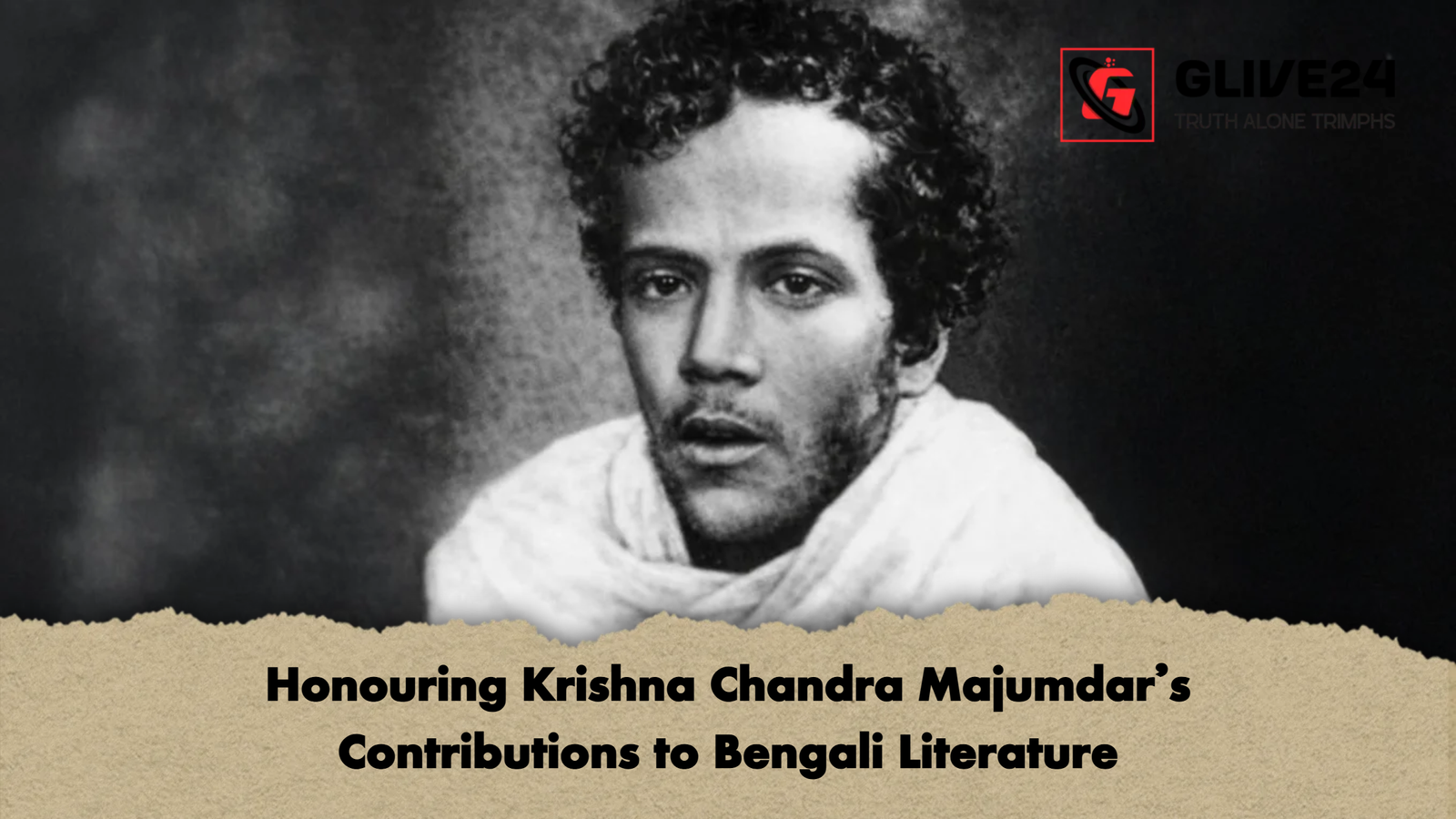
Krishna Chandra Majumdar, a distinguished figure of nineteenth-century Bengali literature, was celebrated for his moral insight, humane philosophy, and lucid, elegant style. As both a poet and a pioneering magazine editor, he combined profound philosophical thought with a simplicity that made his work widely accessible. His poetry reflected deep self-inquiry, human emotion, and a keen observation of life, infused with folk wisdom and ethical reflection.
Born on 10 June 1834 in Senhati village, Dighalia Upazila, Khulna district, Majumdar was the son of Manikya Chandra Majumdar. Financial constraints prevented him from pursuing formal higher education. Much of his early life was spent under the patronage of the Keertipasha Zamindar in Barisal. In recognition of his enduring legacy, the ‘Krishna Chandra Institute’ was established in 1914 in his native village, continuing to preserve his memory to this day.
Majumdar began his professional career in 1854 as head pandit at the Keertipasha Bengali School in Barisal. He later taught at Dhaka Normal School but left in 1860 due to disagreements with the administration, joining Model School thereafter. Over a career spanning nineteen years, he influenced countless students, shaping their intellectual and moral development.
His first and most celebrated poetry collection, Sadbhab Shatak, comprises largely ethical poetry, inspired by Sufi poets and the Persian ghazals of Hafiz. His works combined moral instruction with spiritual insight in an unparalleled harmony. As a child, he used the pseudonym Ramchandra Das, or ‘Ram’; in adulthood, he authored the autobiographical work Ramer Itibritta. Another notable composition, Mohabhog, drew upon the Mahabharata’s narrative of Basab–Nahush. His contributions to philosophical discourse include Kaibalyatattva, while his play Rabanbadh was published posthumously. Scholars estimate that approximately fifteen of his works remain unpublished.
Majumdar’s writings are celebrated for their proverbial quality. Lines such as:
“Chirasukhi jan bhrome ki kokhon bethit bedan bujhte pare”
or
“Kanta heri khanto keno komol tulite, dukkho bina sukh lav hoy ki mohi-te?”
were so influential that some appeared in school textbooks, reflecting his broad cultural impact.
Alongside literature, he played a pivotal role in journalism. In 1860, he became editor of Monoranjika and Kobita Kusumabali magazines. In 1861, he took editorial responsibility for Dhaka Prakash, resigning due to disagreements with its proprietors, before serving in 1865 as editor of Bigyapani. Two years later, he returned to Dhaka Prakash before finally stepping back due to health concerns. In 1886, he published and edited Dwaibhashiki in both Sanskrit and Bengali from Jessore, contributing significantly to contemporary literary and linguistic discourse.
In his later years, Majumdar resided in his native Senhati village, dedicating his time to music composition and literary pursuits. He passed away on 13 January 1907, leaving a legacy of literary excellence and philosophical depth. His works continue to inspire readers and scholars of Bengali literature.
Summary of Krishna Chandra Majumdar’s Life and Contributions
| Category | Details |
|---|---|
| Birth | 10 June 1834, Senhati, Dighalia, Khulna |
| Father | Manikya Chandra Majumdar |
| Early Career | Head Pandit at Keertipasha Bengali School, Dhaka Normal School, Model School |
| Major Literary Works | Sadbhab Shatak, Ramer Itibritta, Mohabhog, Kaibalyatattva, Rabanbadh |
| Journalism | Editor: Monoranjika, Kobita Kusumabali, Dhaka Prakash, Bigyapani, Dwaibhashiki |
| Notable Lines | “Kanta heri khanto keno komol tulite…” |
| Death | 13 January 1907, Senhati, Dighalia, Khulna |
Krishna Chandra Majumdar’s life and oeuvre exemplify a rare synthesis of ethical reflection, poetic beauty, and dedication to literary and educational advancement, rendering him an enduring figure in Bengali cultural history.