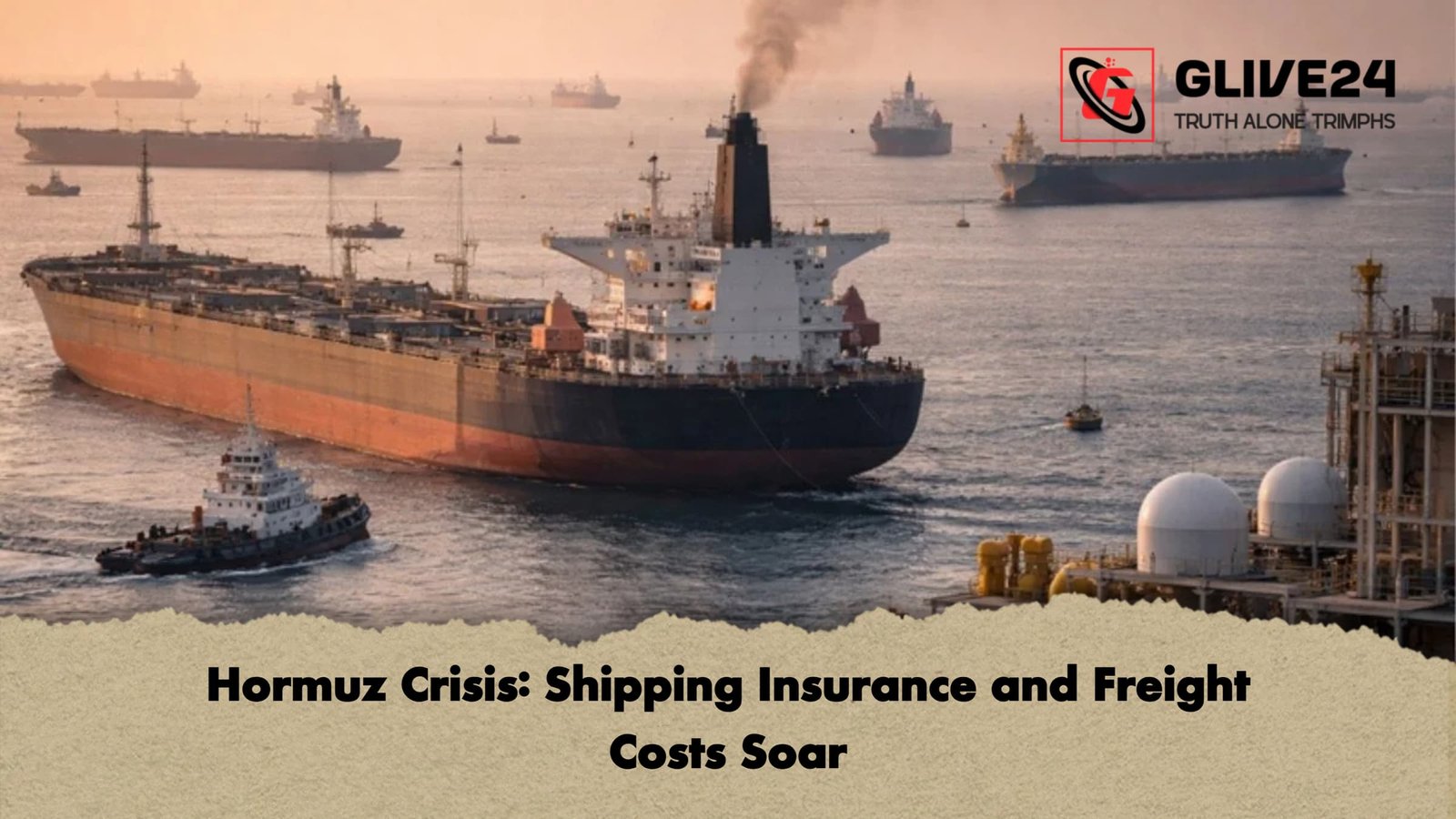
The intensifying military friction within the Strait of Hormuz has cast a long shadow over global maritime commerce, fundamentally altering the economics of energy transport. As the threat of kinetic strikes and vessel seizures looms, the global insurance market has responded with a swift and severe correction. This fiscal volatility is creating a “risk premium” that threatens to destabilise international trade and push global inflation to new heights.
Table of Contents
The Surge in War-Risk Premiums
In the refined world of maritime finance, the War-Risk Insurance market serves as the ultimate barometer for geopolitical stability. Following recent hostilities, underwriters—largely centred around Lloyd’s of London—have aggressively adjusted their exposure to the Persian Gulf.
According to the insurance consultancy Marsh, the “war-risk” premium, which is calculated as a percentage of the ship’s total replacement value for a single transit, has risen by at least 50%. Previously, a vessel might have been insured at a rate of 0.25% of its hull value per voyage. That figure has now climbed toward 0.40%, translating into hundreds of thousands of pounds in additional costs for a single journey through the Strait.
Comparative Costs of Maritime Insurance
The following table illustrates the dramatic escalation in insurance overheads for various high-value vessels currently navigating the regional flashpoint:
| Vessel Category | Estimated Hull Value | Pre-Crisis Premium (0.25%) | Current Premium (~0.40%) | Increase per Transit |
| VLCC (Oil Tanker) | $100,000,000 | $250,000 | $400,000 | +$150,000 |
| LNG Carrier | $200,000,000 | $500,000 | $800,000 | +$300,000 |
| Container Ship | $150,000,000 | $375,000 | $600,000 | +$225,000 |
A Logistical Standoff: 150 Vessels in Limbo
Beyond the financial burden, the physical movement of goods has reached a near-standstill. Maritime monitoring services, including Reuters, report that over 150 tankers—carrying oil and Liquefied Natural Gas (LNG)—are currently anchored at safe distances from the Strait.
Shipmasters are increasingly hesitant to proceed without definitive security guarantees. While the US-led Joint Maritime Information Centre has not officially closed the waterway, they have advised mariners to maintain heightened radio vigilance and prepare for an increased naval presence. This uncertainty has caused a spike in the Worldscale index, the global benchmark for tanker chartering, as the availability of vessels willing to enter the Gulf diminishes.
The Regional Impact: UAE Under Pressure
The United Arab Emirates (UAE), a lynchpin of global transshipment, finds itself particularly exposed. Although the Habshan-Fujairah pipeline allows Abu Dhabi to bypass the Strait for 1.5 million barrels of oil per day, the nation’s broader commercial hubs, such as Jebel Ali, are suffering.
The crisis is not limited to oil; the Strait handles 15% of the world’s aluminium and a vast portion of the global fertiliser trade. If insurance underwriters continue to demand such high premiums, or if they withdraw coverage entirely (invoking “Notice of Cancellation” clauses), the resulting supply chain shock could trigger a global inflationary spiral.