In 1972, as Apollo 17 commander Eugene Cernan left the lunar surface, he remarked, “As I take the last footsteps of man on the Moon and head home, I believe it will not be for too long.” At that moment, his words carried hope for a return. Yet, history took a different course. More than five decades later, humanity has not ventured beyond Earth’s low orbit.
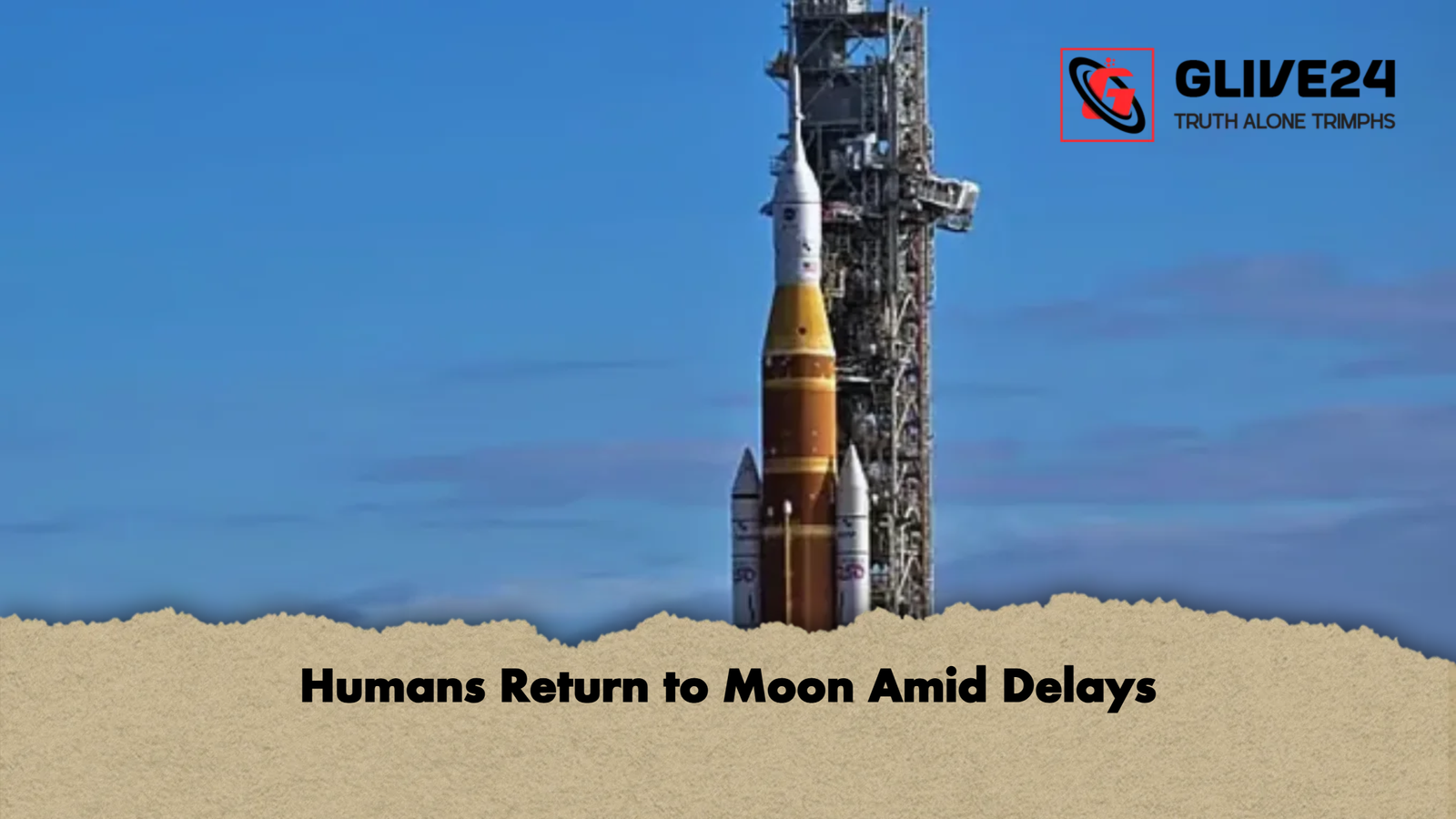
That long wait is finally nearing an end. NASA’s Artemis–II mission will send four astronauts back to lunar space, marking the most ambitious human space endeavour since Apollo. However, the mission has faced multiple setbacks. Initial plans aimed for a March 2026 launch, but last-minute technical issues forced NASA to delay the mission for a second time.
NASA Administrator Jared Isaacman confirmed that no launch will occur this March. Consequently, the four-member crew—Reid Wiseman, Victor Glover, Christina Koch, and Jeremy Hansen—will remain in quarantine in Houston, Mexico, until at least 1 April.
NASA has already contracted SpaceX for $2.9 billion to support a lunar landing by 2027. Yet, repeated delays with the SLS rocket have cast uncertainty over the Artemis programme. Isaacman acknowledged the public’s disappointment but stressed, “No one is more frustrated than the NASA team working day and night.”
The 10-day deep space mission heralds a new era of lunar exploration with advanced spacecraft, international partnerships, and cutting-edge technology. The Apollo era ended due to political pressure, scientific assumptions, and high costs; the Moon was long considered geologically dead. The discovery of water molecules on the Moon by India’s Chandrayaan–1 in 2008 reshaped these perceptions, confirming ice in permanently shadowed regions of the lunar south pole and opening possibilities for long-term human settlement.
Artemis–II will orbit the Moon without landing, but it will set several historical firsts for its astronauts:
| Astronaut | Affiliation | Milestone |
|---|---|---|
| Reid Wiseman | US Navy | Mission Commander |
| Victor Glover | NASA | First African-American to fly to lunar orbit |
| Christina Koch | NASA | First woman on lunar mission; holds longest spaceflight record |
| Jeremy Hansen | Canadian Space Agency | First non-US citizen to fly on a US lunar mission |
The crew will travel aboard the SLS rocket and Orion spacecraft, conducting critical pre-landing rehearsals. Experiments include ARCHER, studying sleep, stress, and crew coordination; radiation effects on immune response; and Organ-on-a-Chip tests assessing radiation impact on bone marrow cells beyond the Van Allen belts.
Technologically, Artemis far surpasses Apollo. Orion is 30% wider than Apollo’s command module, utilises solar panels instead of fuel cells, and its computer systems offer hundreds of times greater processing power. Despite minor mechanical issues delaying the mission to March 2026, Artemis–II promises a successful return to lunar space.
Half a century after Cernan’s farewell, humanity is once again venturing toward the Moon—this time with the aim of long-term presence and preparation for permanent settlement.