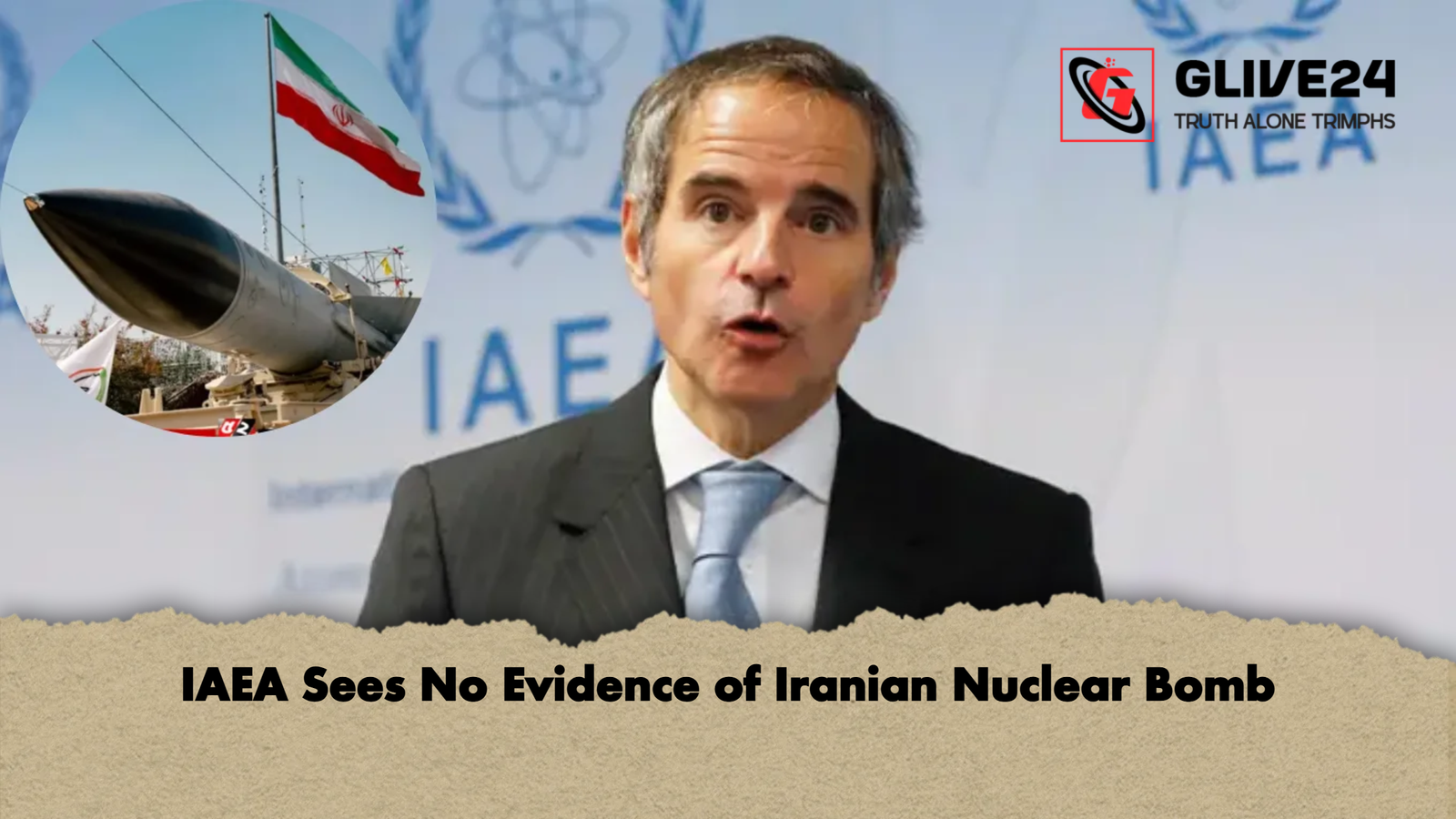
The International Atomic Energy Agency (IAEA) has stated that there is currently no conclusive evidence indicating that Iran is pursuing a nuclear weapons programme, according to its Director General, Rafael Grossi. Speaking in an interview with NBC News, Grossi emphasised that while Iran’s nuclear activities remain under intense international scrutiny, inspectors have not identified a structured or coordinated effort aimed at weaponisation.
“We have not seen indications of an organised weapons programme,” Grossi said, underlining that the IAEA cannot conclude that Iran is actively planning to produce a nuclear bomb. The statement comes amid rising concern from Western governments regarding Tehran’s accelerated uranium enrichment and its potential implications for regional and global security.
Growing Concern Over Uranium Stockpile
While no direct evidence of a weapons programme has been found, Grossi expressed significant concern about the volume and purity of uranium that Iran has accumulated. Tehran has enriched uranium to 60 per cent, a concentration far above the levels required for civilian energy purposes. Only a small number of countries with nuclear weapons have ever maintained uranium enriched to this degree.
Grossi warned, “The amount of enriched uranium is our principal concern. The purpose of stockpiling this uranium is not clear. Theoretically, this quantity could be sufficient for more than ten nuclear warheads. But do they possess such weapons? No, they do not.”
Despite these concerns, the IAEA chief stressed that the stockpile itself does not indicate an immediate shift toward weaponisation. Inspectors continue to monitor Iran’s nuclear facilities closely to ensure compliance with international agreements, although the high enrichment levels have intensified global scrutiny.
Key Facts on Iran’s Uranium Enrichment
| Aspect | Details |
|---|---|
| Enrichment Level | 60% Uranium-235 |
| Comparison | Far above civilian nuclear fuel requirements |
| Potential Yield | Could theoretically produce 10+ nuclear warheads |
| Evidence of Weapons Programme | None detected by IAEA inspectors |
| Main Concern | Accumulation of highly enriched uranium without clear purpose |
| Inspector Assessment | No conclusive indication of bomb development |
Grossi reiterated that the absence of a structured weapons programme remains a critical distinction, even as the unprecedented quantity of enriched uranium raises serious international questions. Analysts warn that the stockpile represents a potential proliferation risk if enrichment continues unchecked.
The remarks come amid heightened tensions between Iran and Western powers, who remain wary of the rapid enrichment process and its potential future military applications. Experts suggest that continued diplomatic engagement, rigorous monitoring, and transparency will be crucial to prevent escalation and ensure that Iran’s nuclear programme remains peaceful.
In conclusion, while Iran has not demonstrated an active nuclear weapons plan, the high levels of enriched uranium stockpiled in the country remain a point of international concern, highlighting the delicate balance between civilian nuclear energy and the risks of proliferation.