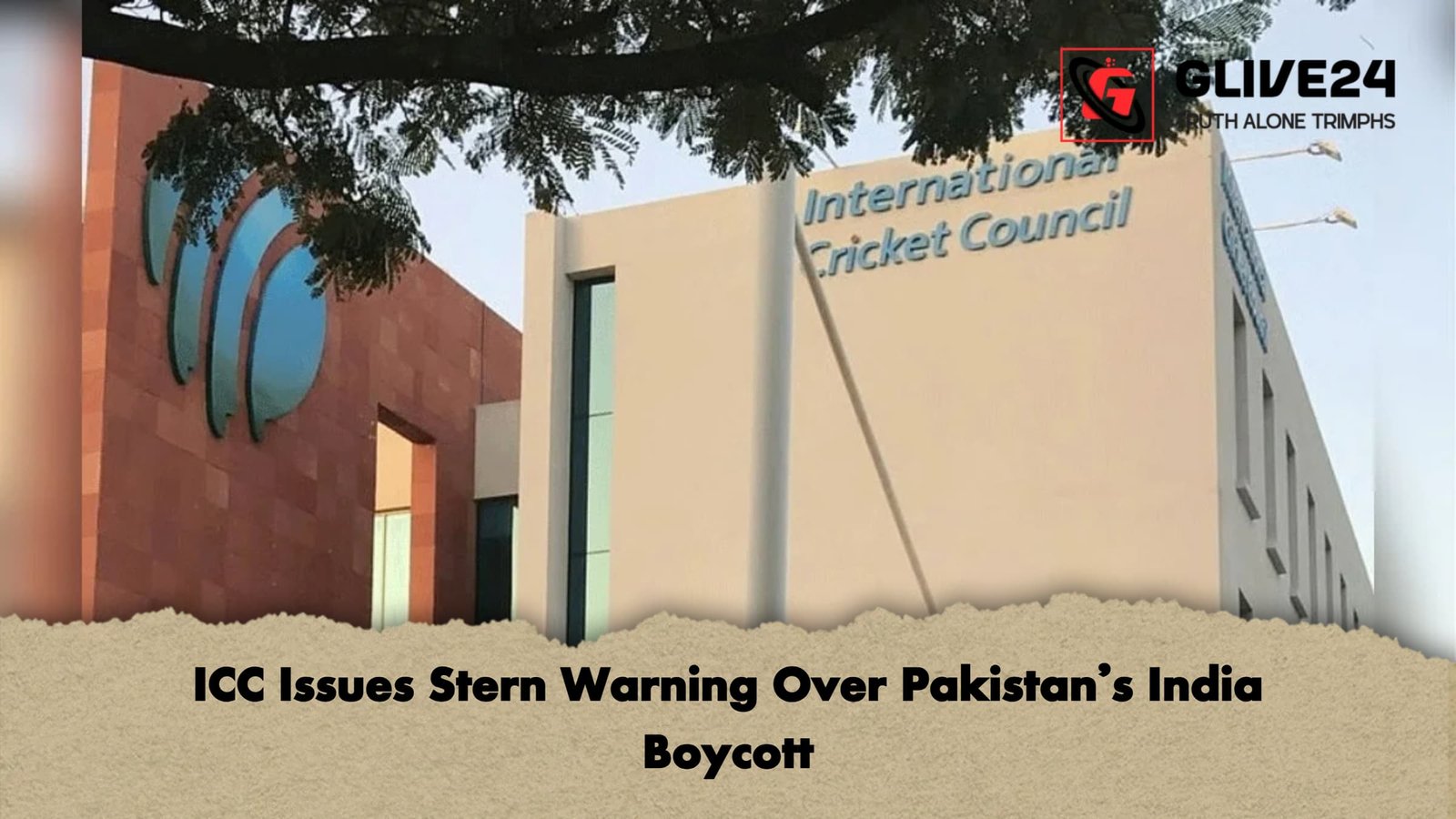
The International Cricket Council (ICC) has formally addressed the escalating crisis surrounding the 2026 T20 World Cup, following the Pakistani government’s dramatic declaration that its national team will refuse to play their scheduled fixture against India on 15 February. While the Pakistan Cricket Board (PCB) has yet to submit a formal letter of withdrawal for the specific match, the governing body has made its profound dissatisfaction clear, signalling a looming confrontation between the sport’s regulators and one of its most influential members.
The Integrity of the Global Tournament
At the heart of the ICC’s grievance is the concept of “selective participation.” The global regulator maintains that for a World Cup to hold sporting legitimacy, all qualifying nations must adhere to the established schedule without exception. By choosing to boycott a single match—ostensibly in solidarity with the excluded Bangladesh team—Pakistan is perceived to be undermining the fundamental spirit of international competition.
An ICC spokesperson noted that while the council respects the sovereign policies of national governments, the decision to “pick and choose” matches sets a dangerous precedent. Such actions, the ICC warns, do not merely affect the logistics of a single day but diminish the prestige of the entire tournament, leaving millions of fans worldwide disillusioned.
Potential Sanctions and Long-term Consequences
The ICC’s rhetoric has taken a notably cautionary tone, reminding the PCB of its position within the global cricketing hierarchy. As a primary beneficiary of the ICC’s revenue-sharing model and a vital pillar of the international structure, Pakistan risks severe long-term repercussions.
| Potential Impact Area | Consequence of Boycott |
| Points Allocation | Immediate forfeit of 2 points to India. |
| Financial Penalty | Possible withholding of tournament participation fees. |
| Ranking & NRR | Severe degradation of Net Run Rate; potential drop in T20I rankings. |
| Future Hosting | Risk to Pakistan’s ability to host future ICC sanctioned events. |
The Search for a Diplomatic Resolution
The ICC remains focused on delivering a successful World Cup and has urged the PCB to find a pragmatic solution that shields the sport from political fallout. The governing body expressed hope that a compromise could be reached before the tournament commences, ensuring that the integrity of the “Home of Cricket” is preserved.
However, with the Pakistani government remaining steadfast in its support for Bangladesh’s cause, the 2026 World Cup stands at a precipice. If the stalemate continues, the tournament may become the first in over a decade to proceed without its most commercially lucrative encounter, fundamentally altering the landscape of the sport.