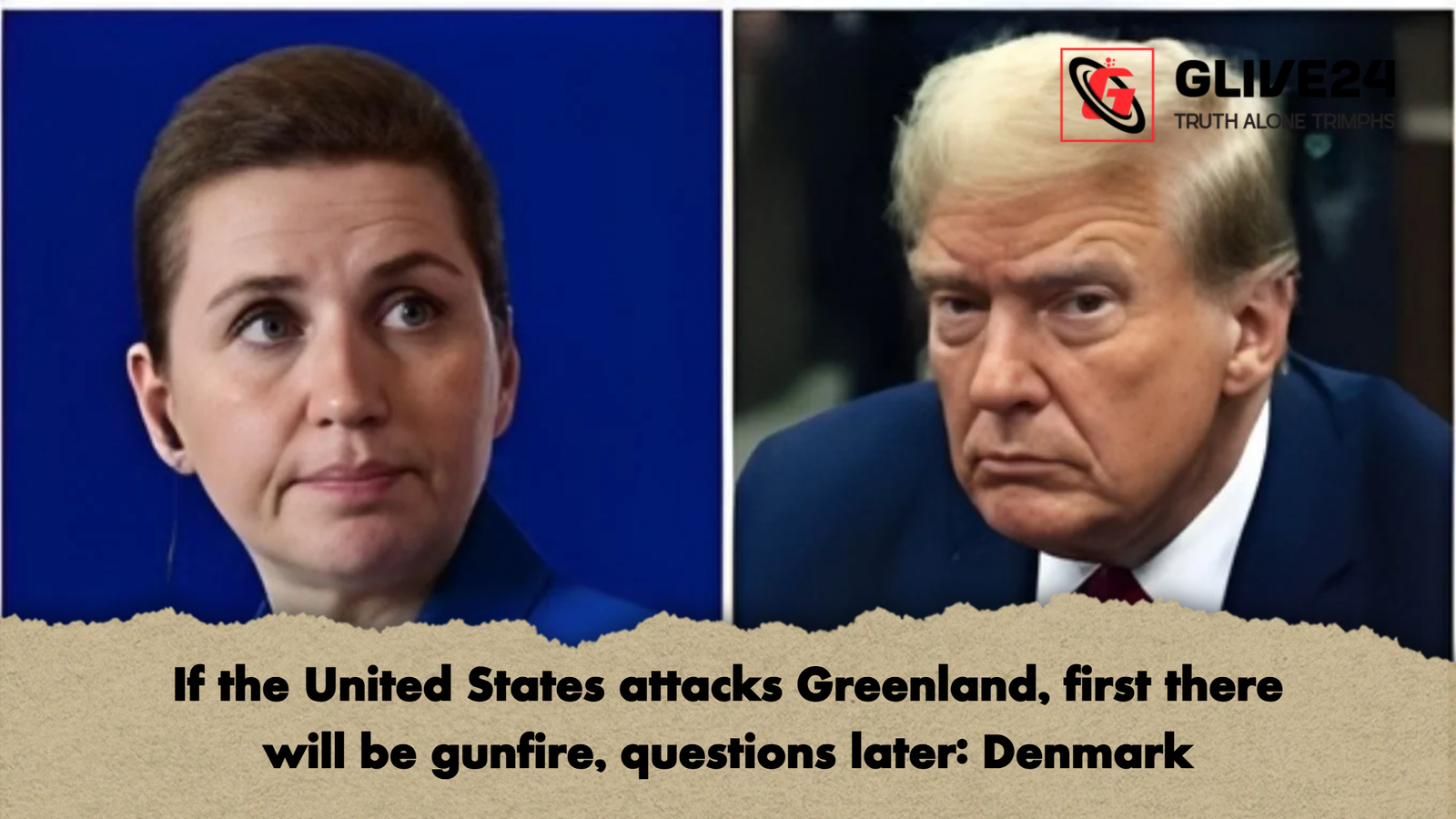
Denmark’s Ministry of Defence has issued a stark warning that if the United States were to attempt an attack on Greenland, Danish forces would “fire first and ask questions later.” This directive reflects a longstanding military protocol established in 1952, which stipulates that soldiers need not await orders from their superiors before repelling any intruder.
When Danish daily Berlingske inquired about the current status of the rule, the Ministry confirmed that it remains fully in effect, underscoring Copenhagen’s uncompromising stance on Greenland’s defence.
The warning comes amid renewed interest from former U.S. President Donald Trump in Greenland, a strategically vital Arctic territory under Danish sovereignty. Trump has reportedly explored several options for asserting American influence over the island, explicitly including the potential use of military force.
According to White House Press Secretary Karoline Leavitt, “President Trump has made clear that acquiring Greenland is a priority for U.S. national security. Controlling this Arctic region is essential to deter adversaries. All options, including the deployment of military forces, remain under consideration.”
U.S. Secretary of State Marco Rubio indicated that he plans to meet with officials from Denmark and Greenland next week to discuss these issues. Reports in The Wall Street Journal suggest that Rubio emphasised a preference for a peaceful acquisition, such as purchase, rather than military action—a position Denmark has described as “a welcome dialogue.”
However, U.S. Vice President JD Vance offered a more aggressive tone on Wednesday, asserting that Denmark has “clearly failed” in safeguarding Greenland. He added that President Trump is “willing to go as far as necessary” to protect U.S. interests in the Arctic.
Copenhagen and European leaders have consistently rejected any notion of selling Greenland. Danish Prime Minister Mette Frederiksen warned last Monday that any U.S. attack on the island would spell the end of NATO as it stands and mark “the collapse of post-World War II security structures.” Meanwhile, a joint statement from European leaders on Tuesday reiterated that Greenland’s territorial integrity must be respected.
Trump’s rationale for pursuing Greenland stems from the Arctic’s increasing geostrategic importance, particularly amid rising Chinese and Russian influence. Analysts suggest that control of Greenland would give the United States unprecedented access to Arctic shipping routes and military positioning.
Summary of Key Positions
| Actor | Position on Greenland | Key Statement |
|---|---|---|
| Denmark (Defence Ministry) | Will defend the island militarily if needed | “Fire first and ask questions later” |
| Denmark (PM Frederiksen) | Rejects sale, warns of NATO consequences | Any attack ends post-WWII security structures |
| U.S. (Trump) | Prioritises acquisition; military option possible | “All options remain under consideration” |
| U.S. (Rubio) | Prefers diplomatic/purchase route | Dialogue with Denmark and Greenland welcomed |
| U.S. (VP Vance) | Advocates assertive measures | Will go as far as necessary to protect Arctic interests |
| European Union | Supports Denmark’s sovereignty | Greenland’s territorial integrity must be respected |
The controversy highlights Greenland’s growing geopolitical significance, as Arctic ice melt opens new shipping lanes and resource opportunities. With multiple actors asserting competing interests, Copenhagen’s warning underscores that Greenland is firmly off-limits to unilateral foreign intervention.