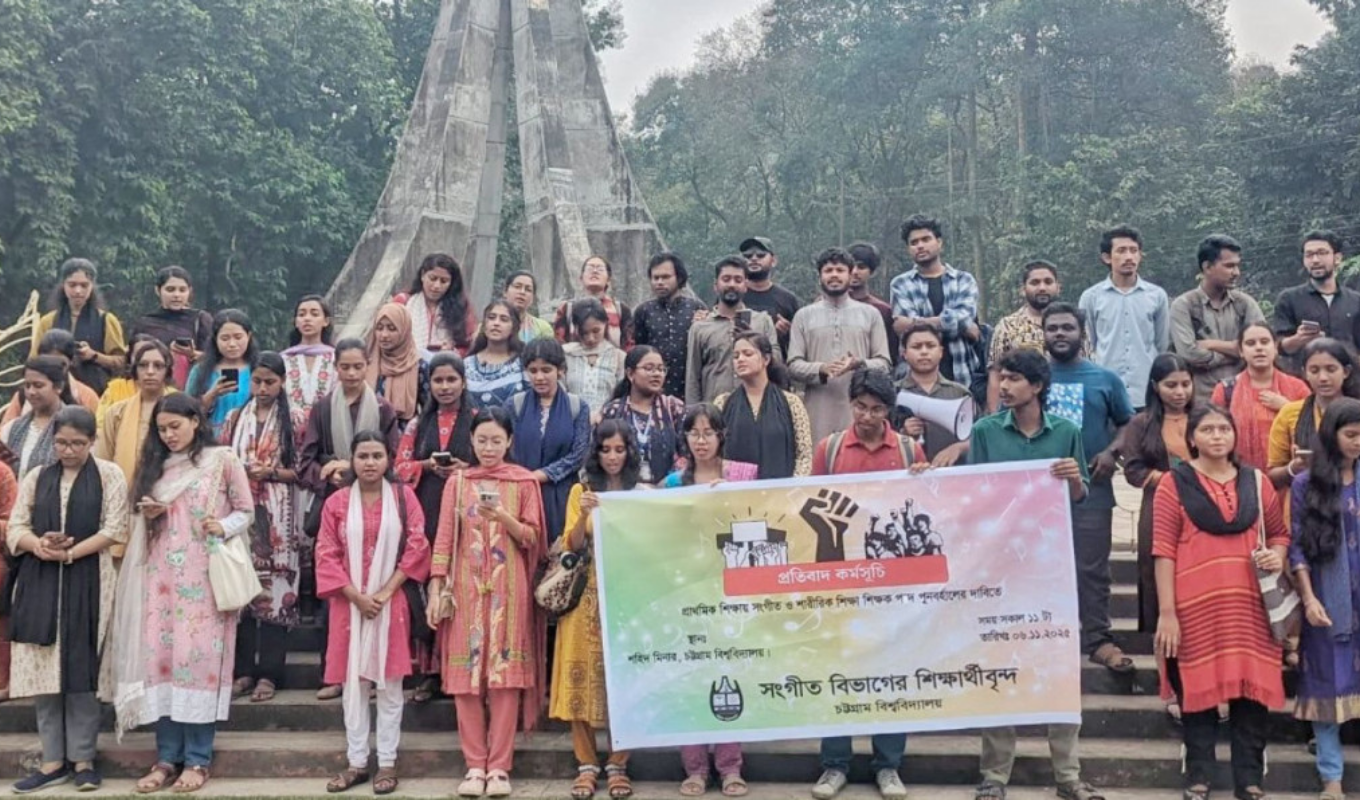
A recent decision by the interim government to halt the recruitment of music and physical education teachers in Bangladesh’s government primary schools has drawn widespread concern. While the country is attempting to reform multiple sectors of public administration, it is crucial to uphold democratic principles and ensure that the welfare of the public remains central to all decisions.
Music and sports are vital components of a balanced school curriculum. They nurture creativity, discipline, cultural awareness, and emotional well-being. At a time when many young people face growing mental health challenges, creative and physical activities can serve as essential outlets, offering relief from academic pressure and supporting healthier development.
Many Muslim-majority countries treat music as an essential part of public education. Kuwait has long required weekly music classes for all students. The country established its Music Education Supervisor Office in 1958 and later introduced a formal school curriculum in music. Turkey also mandates music in primary schools and revised its curriculum in 2007 to incorporate modern methods that enhance creativity.
The standard of public education in Bangladesh is already alarmingly low. Removing subjects that support critical thinking, creativity, and emotional development could worsen the situation by reinforcing dependence on rote memorisation. Such policies may also intensify social inequality. Many lower-middle-class families rely on public schools, and decreasing opportunities for cultural and physical development will further widen the educational divide between wealthy and less privileged children.
Music has always been a core part of Bangladeshi identity. From folk songs to Nazrul, Rabindranath, and other cultural icons, generations have been shaped by music that binds communities together. Songs sung at weddings, festivals, and households play a significant role in daily life. Similarly, sports—especially cricket—have given Bangladesh pride on the global stage. If young children are denied the opportunity to engage in sports at the school level, future talent will struggle to emerge.
Bangladesh is a democracy, where equality and cultural freedom are fundamental rights. A curriculum that suppresses creativity or reduces joyful learning experiences contradicts democratic values. Instead, the curriculum should protect cultural heritage, art, and sports, as these elements create unity among citizens, regardless of socioeconomic differences.
While Muslim-majority nations are enriching their curricula by incorporating music and sports to develop well-rounded future citizens, Bangladesh risks moving backward if it limits these essential subject areas. Reforming the education system does not mean dismantling everything; many subjects have served students well for decades. Removing vital components of learning is not progress. Real improvement lies in modernising curricula through research, training teachers, increasing funding for extracurricular activities, and ensuring fair pay scales.
Table: Status of Music Education in Various Countries
| Country | Characteristics | Policy/Year |
|---|---|---|
| Kuwait | Compulsory weekly music classes | Supervisor Office founded 1958 |
| Turkey | Mandatory music in primary schools | Curriculum revised 2007 |
| Malaysia | Holistic curriculum with music | KSSR national framework |