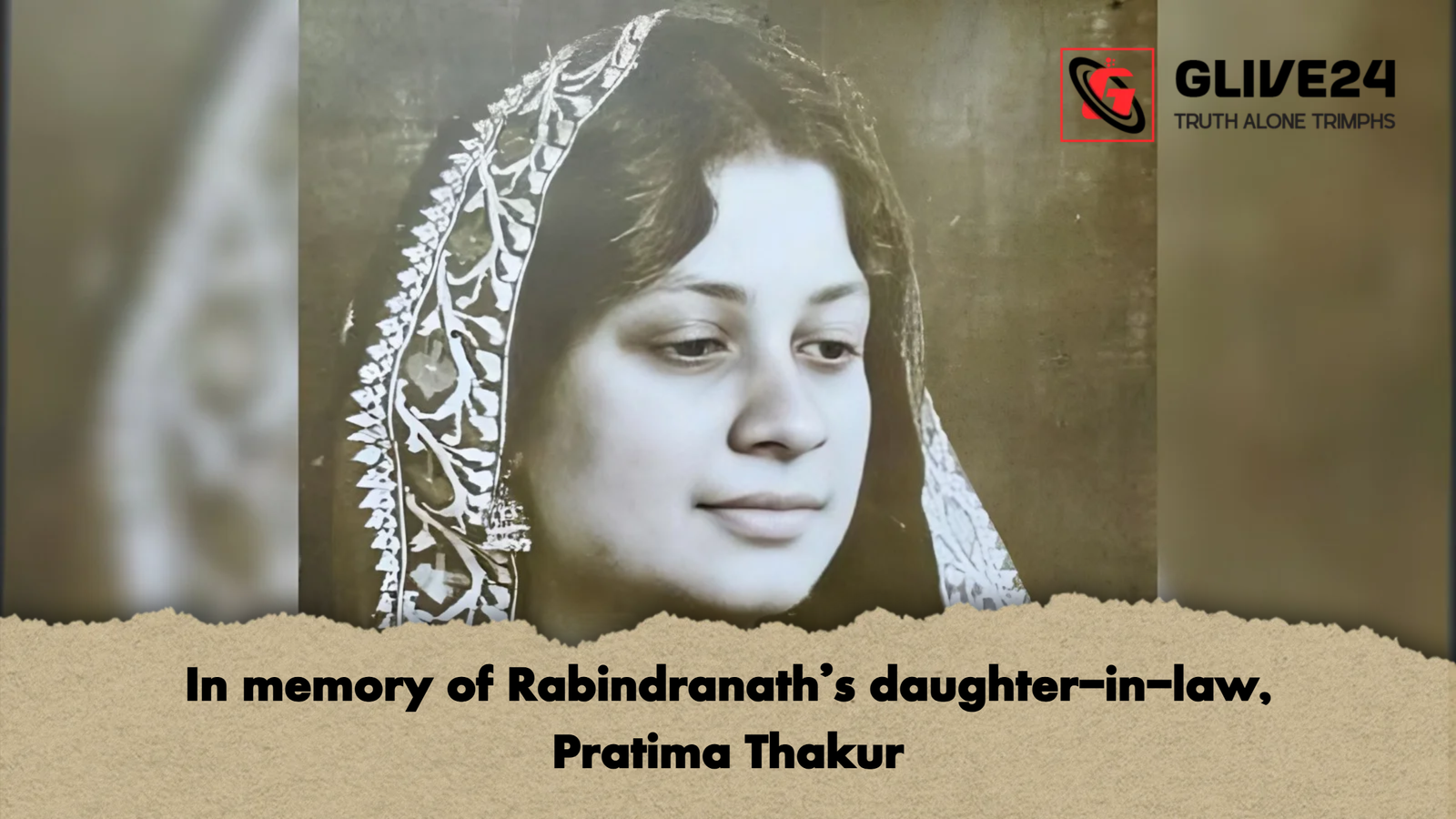
Pratima Thakur was a woman of extraordinary creative versatility—a writer, poet, painter, and accomplished dancer. She is remembered not merely as the daughter-in-law of Rabindranath Tagore or the wife of Rathindranath Tagore, but as an indispensable figure in the artistic and cultural history of Shantiniketan and its pioneering dance drama traditions.
Born on 5 November 1893 to Shashindranath Chattopadhyay and Binayini Devi, Pratima’s early life was marked by tragedy. At the tender age of eleven, she married Neelkanth, who tragically drowned while swimming in the Ganges, leaving her widowed at a young age. Rabindranath Tagore’s wife, Mrinalini Devi, had initially wished for Pratima to become her daughter-in-law, but her untimely death prevented this plan. Later, upon returning from England, Rathindranath Tagore married Pratima, disregarding prevailing social conventions—marking the first widow marriage in the Jorasanko Tagore household, a bold step in that era.
Following her marriage, Pratima devoted herself entirely to the work of Visva-Bharati and Shantiniketan. She was a trusted collaborator of Rabindranath across diverse spheres—art, education, and cultural initiatives. She played a pivotal role in promoting craftsmanship and contributed closely to the choreography of Rabindranath’s dance dramas.
A talented painter, Pratima studied under the Italian artist Gilhardi and developed a keen aesthetic sensibility for stage design, costume planning, and dance movements. Shortly after her marriage, she acted in Shantiniketan’s first girls’ performance, portraying the character of Kshiri in the play Laxmir Pariksha. She actively participated in dance dramas such as Balmiki-Pratibha and Maya’r Khela, inspiring Rabindranath to conceptualise productions like Chitrangada and Pujarini.
Her unwavering dedication shaped the staging of numerous dance dramas over fourteen years, meticulously designing costumes, sets, and choreography, thereby preserving Shantiniketan’s unique theatrical heritage. She also translated several of Rabindranath’s stories into tableau-style pantomime, demonstrating her imaginative versatility.
Pratima Thakur was also a literary figure, writing poetry under the pseudonym Kalpitadevi, with Rabindranath occasionally refining her work. Her prose exhibits a distinctive style, evident in works such as Nirvana, Smritichitra, Nritya, and Chitralekha. She was deeply committed to women’s education and welfare, establishing initiatives like the Alapini Samiti, which empowered girls at the Ashram to teach health, hygiene, and creative arts to rural women.
Pratima Thakur passed away on 9 January 1969, leaving behind a legacy of silent yet profound influence in art, literature, dance, and social welfare—resonating still in the corridors of Shantiniketan.
Key Life Events of Pratima Thakur
| Year | Event |
|---|---|
| 1893 | Born to Shashindranath Chattopadhyay and Binayini Devi |
| 1904 | First marriage to Neelkanth (widowed shortly after) |
| 1910s | Married Rathindranath Tagore, first widow marriage in Jorasanko family |
| 1920s–1930s | Acted and choreographed numerous dance dramas at Shantiniketan |
| 1930s | Encouraged Rabindranath to create Chitrangada and other productions |
| 1969 | Passed away on 9 January |