
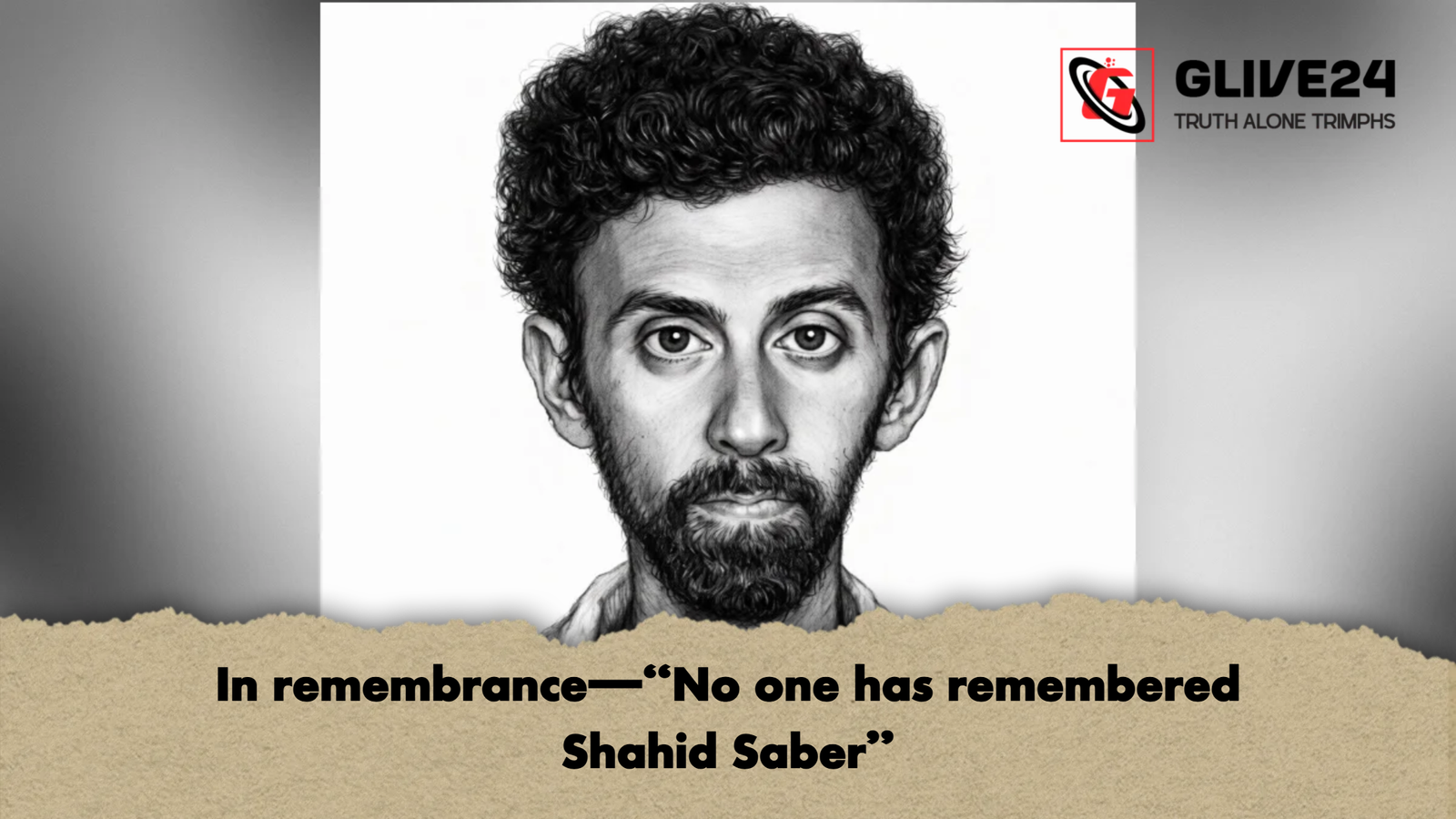
In the vast and often turbulent landscape of South Asian history, certain lives—rich in talent, sacrifice, and promise—fade quietly into obscurity. One such figure is Shahid Saber, a journalist, author, and dreamer whose life story reflects both the creative spirit and tragic fate of a generation shaped by political upheaval and war.
Born as AKM Shahidullah on 18 December 1930 in Eidgaon, Cox’s Bazar, Saber displayed intellectual brilliance and cultural curiosity from an early age. His educational journey began at a local primary school before moving to Calcutta (now Kolkata), where he enrolled at the renowned Hare School. Following the partition of the Indian subcontinent in 1947, he returned to East Pakistan (now Bangladesh) and completed his matriculation in 1949 from Chittagong Collegiate School.
Saber’s early years were marked by an enduring passion for literature and the arts. While in Calcutta, he was actively involved with children’s cultural organisations, serving as a librarian and editing a wall magazine titled Chhandashikha. Later, in Chittagong, he became associated with progressive youth movements such as Mukul Fauj, combining cultural engagement with social awareness.
His university years saw him drawn into progressive politics—a decision that would profoundly shape his life. In 1950, amid growing political repression by the Pakistani authorities, Saber was arrested. Yet imprisonment did not halt his intellectual pursuits. While incarcerated at Rajshahi Central Jail, he completed his Intermediate (IA) examination in 1951. After spending nearly four years in detention, he was released in 1954.
Upon completing his Bachelor’s degree from Jagannath College in 1955, Saber briefly entered the teaching profession before transitioning into journalism. He joined the influential Bengali daily The Daily Sangbad as an assistant editor. Despite demonstrating exceptional merit—evidenced by securing first place in the Federal Information Service examination—his political past denied him entry into government service, a setback that underscored the systemic barriers faced by many intellectuals of his time.
Tragedy struck again in the late 1950s when Saber developed a severe mental illness. From 1958 onwards, he was never able to fully recover, living much of his remaining life in fragile health. Nevertheless, his literary contributions endured, revealing a deeply sensitive and perceptive mind.
Key Facts About Shahid Saber
| Category | Details |
|---|---|
| Full Name | AKM Shahidullah |
| Date of Birth | 18 December 1930 |
| Birthplace | Eidgaon, Cox’s Bazar |
| Education | Hare School; Chittagong Collegiate School; Jagannath College |
| Profession | Journalist, Writer |
| Notable Works | Arek Duniya Theke, Ek Tukro Megh, Khude Goyendar Abhijan |
| Translations | Iskabaner Bibi, Pagoler Diary, Kalo Meyer Shopno |
| Death | 31 March 1971 |
Saber’s writings—particularly Arek Duniya Theke (“From Another World”), composed during his imprisonment—offer poignant insights into confinement, resilience, and the human condition. His short stories and children’s literature similarly reflect empathy, imagination, and a distinctive narrative voice.
His life met a tragic and abrupt end during the early days of the Bangladesh Liberation War. On the morning of 31 March 1971, the offices of The Daily Sangbad in Dhaka were set ablaze by the Pakistani military. Saber, unable to escape, perished in the flames—his death as quiet and solitary as much of his life had been.
Today, Shahid Saber remains an under-recognised figure in Bangladesh’s intellectual and cultural history. Yet his legacy—marked by courage, creativity, and sacrifice—demands remembrance. Revisiting his life is not merely an act of tribute, but a necessary step towards restoring a forgotten voice to its rightful place in history.