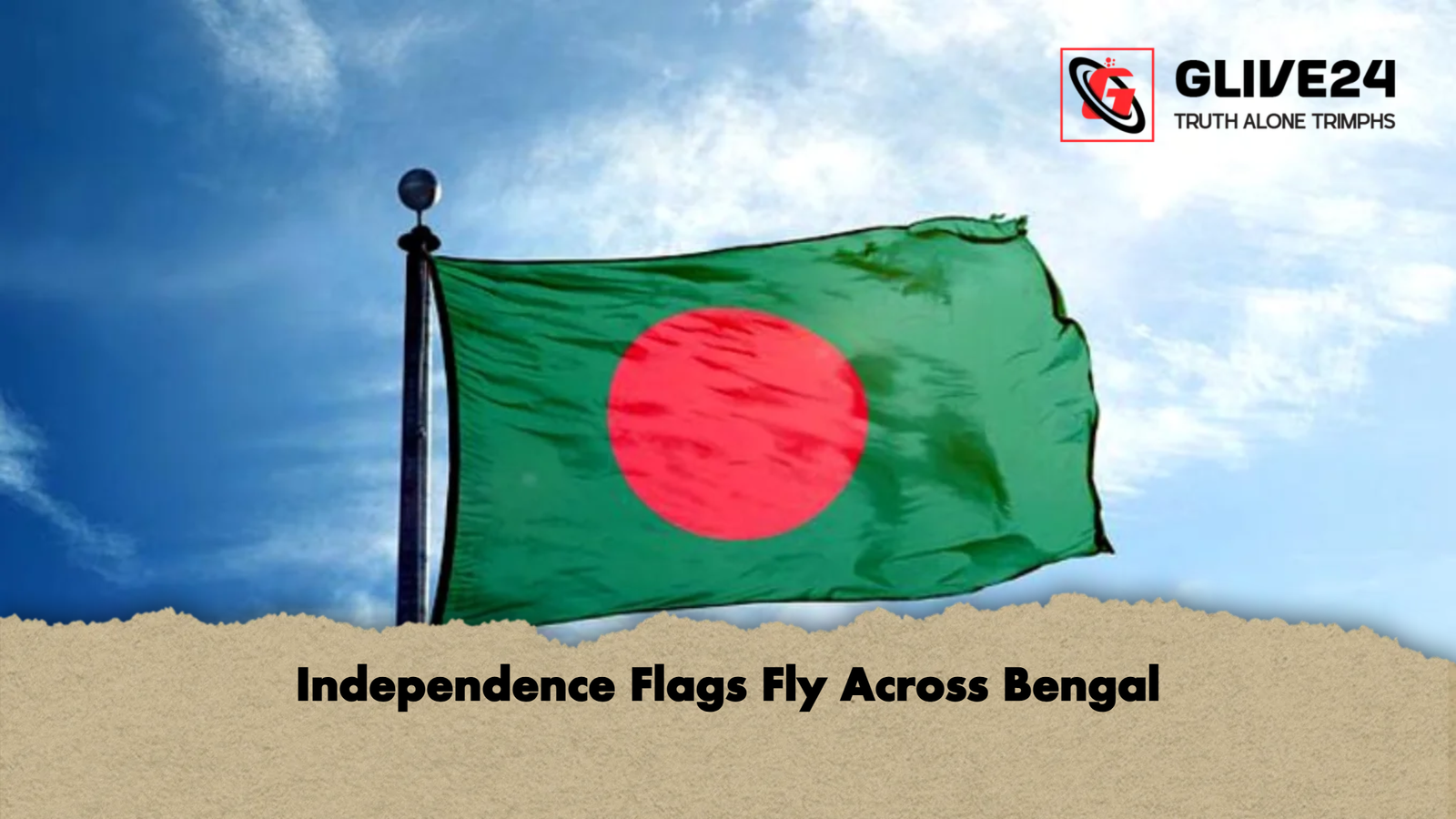
On 10 March 1971, the political atmosphere across East Pakistan grew increasingly charged as the movement for self-determination gained further momentum. Widespread defiance, political mobilisation, and symbolic demonstrations of national identity marked the day, with the flag representing an independent Bengal being raised in homes, institutions, and public spaces throughout the region.
The developments occurred amid the continuing non-cooperation movement led by Sheikh Mujibur Rahman, which had effectively paralysed the administrative structure and transformed the political landscape of East Pakistan.
Table of Contents
Sheikh Mujibur Rahman Meets Foreign Journalists
In the morning, Sheikh Mujibur Rahman met a group of foreign journalists at his residence in Dhaka. During the meeting, he emphasised that the seventy million people of Bengal had become fully aware of their political rights and were firmly determined to secure those rights under any circumstances.
He noted that the Bengali people had already sacrificed greatly in their struggle for justice and dignity. According to Rahman, the nation now hoped to conclude that painful chapter by achieving its legitimate political and national aspirations.
His remarks reflected the rising confidence among Bengalis following the political crisis that emerged after the general elections of 1970, in which the Awami League secured a decisive majority but was denied the opportunity to form the government.
Non-Cooperation Movement Continues
Across East Pakistan, government and semi-government employees continued to observe the non-cooperation movement for the tenth consecutive day by abstaining from official duties. As a result, administrative functions were largely guided by the directives issued by the Awami League leadership rather than by the central government in West Pakistan.
One of the most visible expressions of the movement was the widespread display of the flag bearing the map of Bengal. The banner of independence appeared on residential buildings, shops, educational institutions, and numerous public facilities.
In the capital, the flag was reportedly raised on both private and institutional buildings, symbolising a growing assertion of Bengali national identity. The national flag of Pakistan, by contrast, was seen primarily within military cantonments, highlighting the widening political divide between the central authorities and the people of East Pakistan.
Political Gatherings and Cultural Demonstrations
In the afternoon, the National Awami Party faction associated with Abdul Wali Khan organised a public rally in the New Market area of Dhaka. The gathering called for the establishment of a free and exploitation-free Bengal and was chaired by Professor Muzaffar Ahmed, a respected political leader.
At the same time, writers and artists organised protest marches in the capital under the banner of the Liberation Struggle Writers and Artists Committee. Their participation demonstrated the growing involvement of intellectual and cultural communities in the wider political movement.
Student Mobilisation at Dhaka University
Earlier in the day, a meeting organised by student leaders took place at Sergeant Zahurul Haq Hall on the Dhaka University campus. A statement issued at the meeting called upon Bengali members of the armed forces, the border security forces, and the police to refrain from cooperating with what they described as the colonial administration operating from West Pakistan.
The appeal reflected the increasing efforts by student organisations to mobilise support for the autonomy movement within state institutions and security forces.
Demonstrations Abroad
The growing international dimension of the movement was also evident. Bengali students living in New York staged a demonstration outside the headquarters of the United Nations.
During the protest, the students demanded international intervention to halt the killing of unarmed Bengali civilians. They submitted a memorandum to United Nations Secretary-General U Thant urging the organisation to address the worsening political and humanitarian situation in East Pakistan.
Political Reactions in Karachi
Political reactions also emerged in Karachi. Speaking to journalists, Abdul Wali Khan announced that he planned to visit Dhaka on 13 March in order to hold discussions with Sheikh Mujibur Rahman. He emphasised that drafting a constitution would be necessary to enable the transfer of power to the elected majority party.
In a separate statement, former Air Marshal Asghar Khan warned that the political situation was changing rapidly and that urgent measures were needed to prevent the possible division of the country.
Emergence of a Parallel Authority
Observers in Dhaka noted that Sheikh Mujibur Rahman was effectively exercising authority through directives that were widely followed by civil servants and institutions throughout the region. This situation created what many analysts described as a de facto parallel administration.
Political commentators suggested that the crisis could only be resolved through the transfer of power to the leader of the majority party in the national assembly. Without such a step, they warned, tensions between the central government and the population of East Pakistan would likely escalate further.
Key Developments on 10 March 1971
| Location | Event |
|---|---|
| Dhaka | Sheikh Mujibur Rahman meets foreign journalists |
| Across East Pakistan | Civil servants continue the non-cooperation movement |
| New Market, Dhaka | National Awami Party rally demanding a free Bengal |
| Dhaka University | Student leaders call for non-cooperation with central authorities |
| New York | Bengali students demonstrate outside United Nations headquarters |
| Karachi | Political leaders comment on the evolving crisis |
The events of 10 March 1971 demonstrated how the movement for autonomy had evolved into a broad national mobilisation involving political leaders, civil servants, students, intellectuals, and expatriate communities. Together, these groups increasingly voiced a unified demand for political rights, democratic governance, and self-determination.
Source: Liberation War Museum