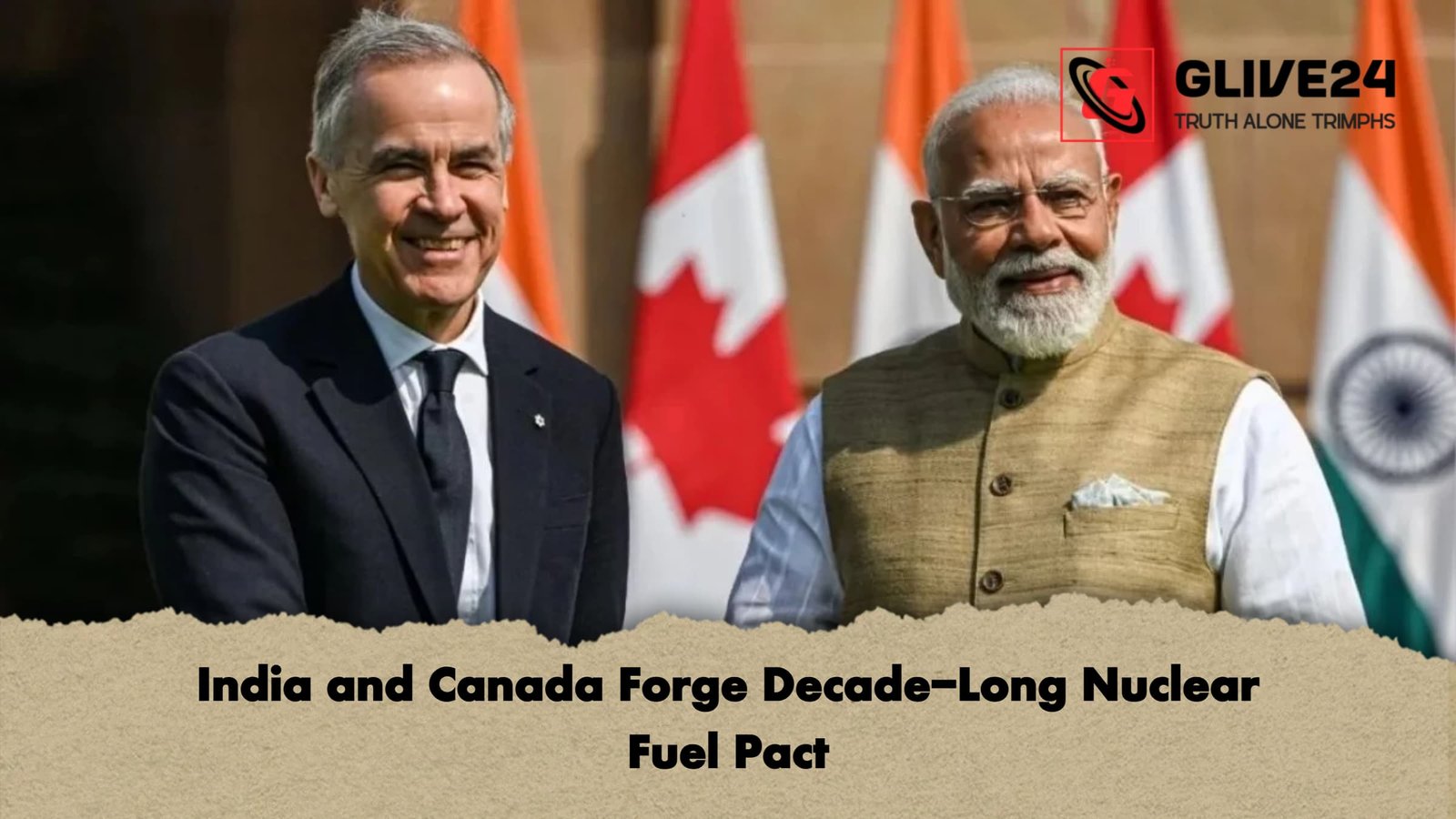
In a profound recalibration of diplomatic relations, India and Canada have formalised a historic ten-year nuclear fuel supply agreement, effectively signaling the end of a protracted period of bilateral frostiness. The deal was struck during a high-stakes summit in Delhi between Indian Prime Minister Narendra Modi and his Canadian counterpart, Mark Carney, marking a decisive pivot toward strategic and economic synergy.
The centrepiece of this rapprochement is a milestone contract ensuring a long-term supply of uranium to power India’s expanding civilian nuclear programme. Beyond raw materials, the two nations have pledged to collaborate on the cutting edge of energy technology, specifically focusing on Small Modular Reactors (SMRs) and advanced reactor design. Prime Minister Modi hailed the partnership as “natural,” noting that the fusion of Canadian resources and Indian innovation would extend into artificial intelligence, supercomputing, and semiconductor manufacturing.
A New Chapter in Strategic Cooperation
Prime Minister Carney, whose administration has actively sought to repair the damage of previous years, emphasised Canada’s pivotal role in meeting India’s surging energy demands. The leaders jointly launched a Strategic Energy Partnership, designed to insulate both economies from global supply chain shocks.
| Sector | Key Agreement Details |
| Nuclear Energy | 10-year Uranium supply & joint SMR development |
| Trade Target | Increase bilateral trade to $50 billion |
| Technology | Collaboration on AI, Semiconductors, and Supercomputing |
| Free Trade | Goal to finalise CEPA by the end of 2026 |
| Space & Defence | Enhanced intelligence sharing and satellite tech cooperation |
Moving Beyond the Nijjar Shadow
The diplomatic thaw comes after a tumultuous period sparked in 2023, following allegations made by the previous Trudeau administration regarding the death of Sikh separatist leader Hardeep Singh Nijjar. The ensuing “visa war” and tit-for-tat diplomat expulsions brought bilateral engagement to a near standstill.
However, under the leadership of Mark Carney, the narrative has shifted. The Canadian government recently stated it found no current evidence linking New Delhi to ongoing violent activities on Canadian soil, allowing both nations to focus on a “future-oriented partnership.” While legal proceedings against four individuals accused in the Nijjar case remain sub judice, the political focus has clearly migrated toward economic security.
Economic Diversification as a Shield
Analysts suggest that this sudden acceleration of ties is partially a defensive manoeuvre against shifting American trade policies. By strengthening the Indo-Canadian corridor, both nations are seeking to diversify their portfolios and reduce reliance on single-market trade routes.
Prime Minister Carney’s itinerary—which includes subsequent visits to Australia and Japan—underscores a broader Canadian strategy to embed itself within the Indo-Pacific’s high-growth economies. With the Comprehensive Economic Partnership Agreement (CEPA) now slated for completion by late 2026, the era of diplomatic silence has officially been replaced by a chorus of industrial cooperation.