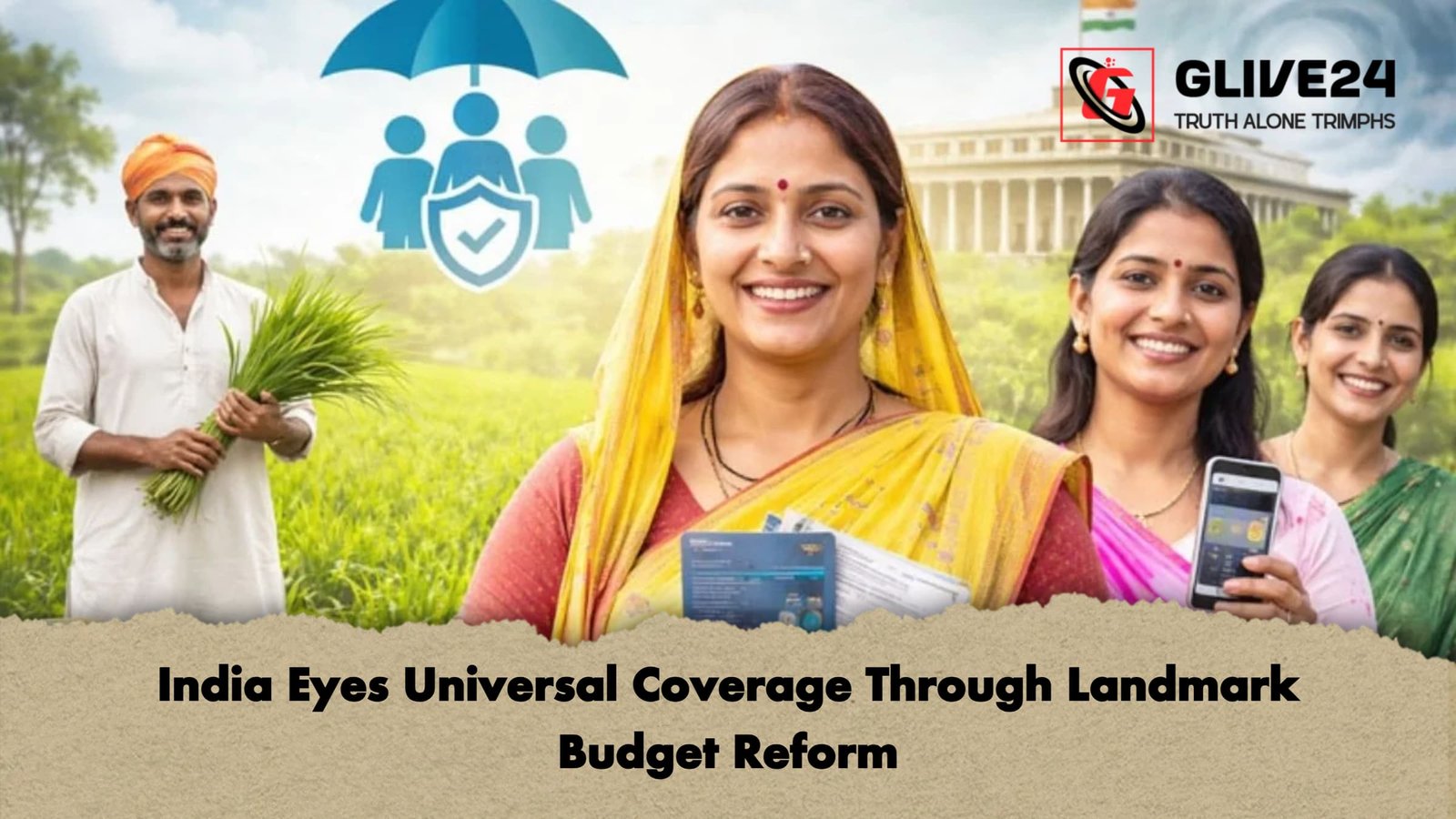
As the Indian government prepares to table the Union Budget 2026 this February, policy architects are reportedly crafting a transformative “insurance push” aimed at achieving universal coverage by 2047. The proposed strategy represents a paradigm shift, moving insurance from a niche urban financial product to a foundational pillar of rural social security. Central to this vision is the strategic integration of insurance products with the Pradhan Mantri Jan Dhan Yojana (PMJDY), specifically targeting the financial empowerment of rural women.
Table of Contents
The ‘Jan Dhan’ Multiplier Effect
The government’s plan hinges on the unprecedented reach of the Jan Dhan ecosystem. With over 550 million accounts now active, the platform provides a ready-made digital highway for insurance delivery. By linking specialised insurance products directly to these accounts, the state can eliminate the traditional friction points of enrolment—such as exhaustive documentation and physical branch visits—that have historically deterred rural populations.
For rural women, this integration offers more than just convenience; it provide a vital safety net. In the event of health crises or the loss of a family provider, insurance payouts via Jan Dhan accounts ensure that immediate financial shocks do not compromise the household’s long-term investments in nutrition and children’s education.
Climate Resilience and the Agrarian Economy
Beyond individual protection, the 2026 Budget is expected to bolster India’s agricultural sector against the escalating threats of climate change. With weather patterns becoming increasingly erratic, the focus is shifting toward “parametric” or disaster-linked insurance. By expanding the definition of climate risk and increasing budgetary allocations for crop protection, the government aims to ensure that liquidity reaches distressed farmers within days of a flood or heatwave.
Projected Insurance Strategic Pillars (Budget 2026)
| Strategic Focus | Proposed Intervention | Intended Outcome |
| Gender Inclusion | PMJDY-linked female-centric plans | Empowerment through direct financial indemnity. |
| Affordability | Potential GST reduction on premiums | Lowering the 18% tax barrier for low-income tiers. |
| Climate Risk | Broadened Crop Insurance definitions | Rapid compensation for extreme weather events. |
| Claim Efficiency | ‘Bima Sugam’ digital integration | Transparent, paperless, and swift settlements. |
Overcoming the Last-Mile Hurdle
While the infrastructure is robust, industry experts emphasise that the success of an “Insurance for All” mandate depends on the transparency of claim settlements. The 2026 Budget may introduce incentives for digital-first insurance providers who utilise the Bima Sugam platform—a digital marketplace designed to simplify the entire insurance lifecycle.
Furthermore, there is a growing consensus that the 18% GST rate on life and health insurance premiums remains a significant hurdle. A rationalisation of this tax, coupled with automated premium debits for PMJDY account holders, could significantly narrow the “protection gap” that currently leaves millions of Indian households vulnerable to poverty-inducing events.
By placing rural women and climate-hit farmers at the centre of its fiscal policy, the 2026 Budget seeks to transition the Indian insurance sector from a defensive financial tool into a proactive engine for national resilience.