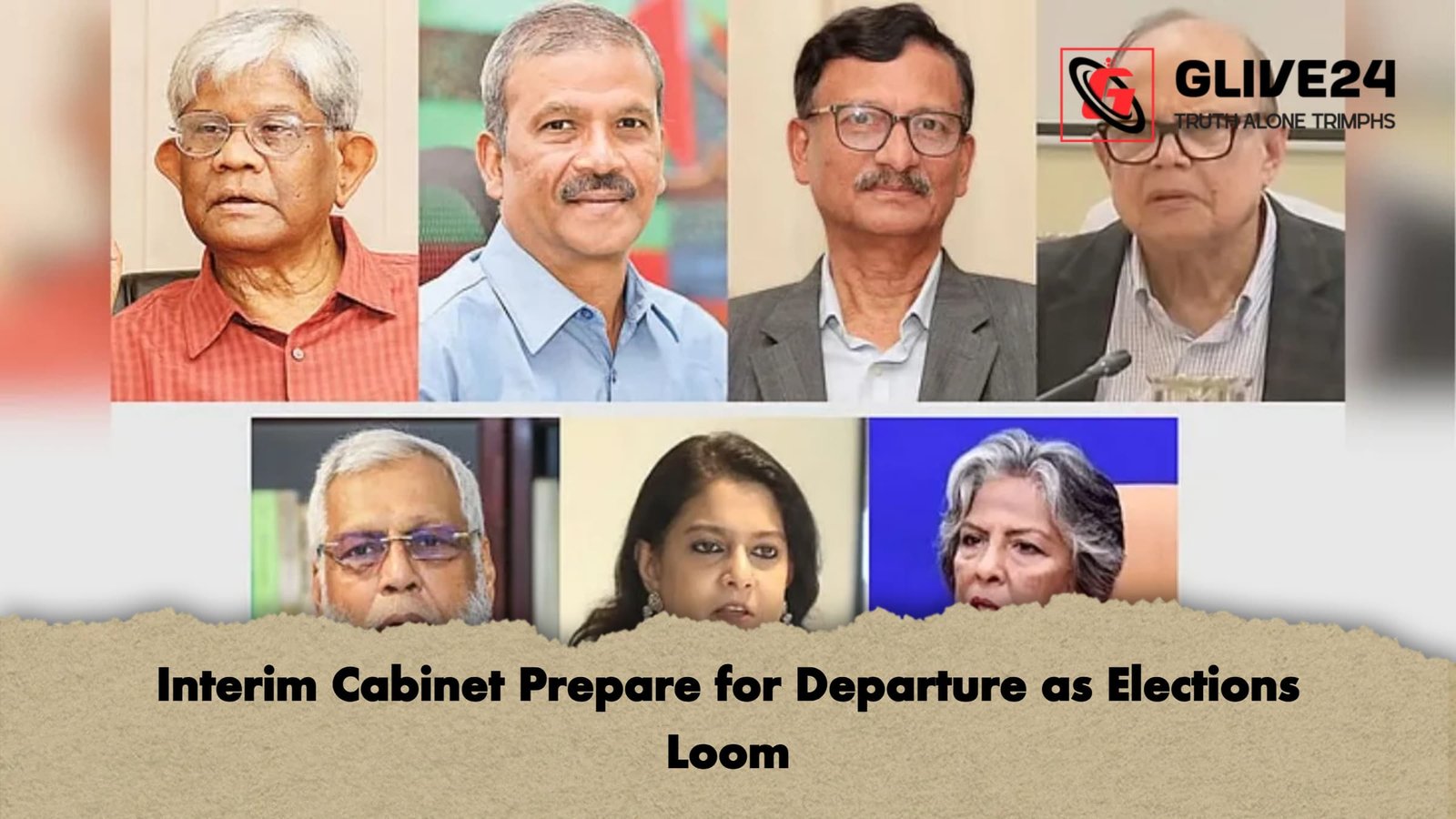
The curtain is set to fall on Bangladesh’s interim administration as the nation prepares for the 13th National Parliamentary Elections and a pivotal national referendum tomorrow, Thursday. Following the student-led mass uprising on 5 August 2024, which led to the fall of the Awami League regime, the interim government led by Nobel Laureate Professor Muhammad Yunus assumed office on 8 August.
After eighteen months of transitional governance, the cabinet is preparing to hand over the reins to an elected government. Although the formal dissolution will occur following the swearing-in of the new administration, the air of departure was palpable as early as Tuesday, the final official working day before the polls.
Table of Contents
A Transition to Private Life
The current advisory council consists of 21 members, supported by four special assistants and envoys holding ministerial rank. As their tenure nears its conclusion, many advisors have shared their post-governance plans, ranging from a return to academia to literary pursuits.
| Advisor | Portfolio | Post-Tenure Plans |
| Prof. Muhammad Yunus | Chief Advisor | Likely to continue global social business advocacy. |
| Salehuddin Ahmed | Finance | Returning to BRAC University as a Professor. |
| Asif Nazrul | Law & Justice | Returning to Dhaka University; focusing on research. |
| Md. Touhid Hossain | Foreign Affairs | Taking a brief hiatus followed by creative writing. |
| Syeda Rizwana Hasan | Environment | Returning to the Bangladesh Environmental Lawyers Association (BELA). |
| Sharmin S. Murshid | Social Welfare | Returning to ‘Brotee’; documenting her governance experiences. |
| Ali Imam Majumder | Food & Land | Columnist and involvement in socio-cultural organisations. |
| Fouzul Kabir Khan | Power & Energy | Focused on religious devotion during Ramadan, then authorship. |
Key Highlights of the Final Days
The Chief Advisor’s Final Engagements
Despite the impending transition, Professor Muhammad Yunus maintained a rigorous schedule at the State Guest House, Jamuna. He recently hosted a seven-member delegation from the Asian Network for Free Elections (ANFREL), led by Rohana Hettiarachchi, alongside other international observers. The Chief Advisor is scheduled to cast his vote tomorrow at the Gulshan Model School and College centre.
Academic Returns and Literary Ambitions
The interim cabinet, largely comprised of technocrats and civil society leaders, seems eager to return to their original vocations. Dr Salehuddin Ahmed confirmed he will rejoin BRAC University in March after a short rest. Similarly, Professor Asif Nazrul expressed a poignant longing for his “previous life” at Dhaka University, intending to immerse himself in fundamental legal research.
Ensuring a Smooth Exit
Fouzul Kabir Khan has already begun the process of returning government assets, including his official vehicle. Beyond his administrative exit, he remained active in ensuring that the mass exodus of voters from the capital was managed efficiently, issuing directives to mitigate congestion on the Padma and Jamuna bridges.
Syeda Rizwana Hasan reflected on the challenges of the past year, noting that despite “apprehension and propaganda,” the successful arrival of election day is a victory for the transitional process. She plans to resume her lifelong mission of environmental advocacy immediately after the new government takes its oath.
As these leaders prepare to vacate their offices, their departure marks the end of a unique chapter in Bangladeshi political history—a period defined by reformist zeal and the heavy burden of restoring democratic stability.