
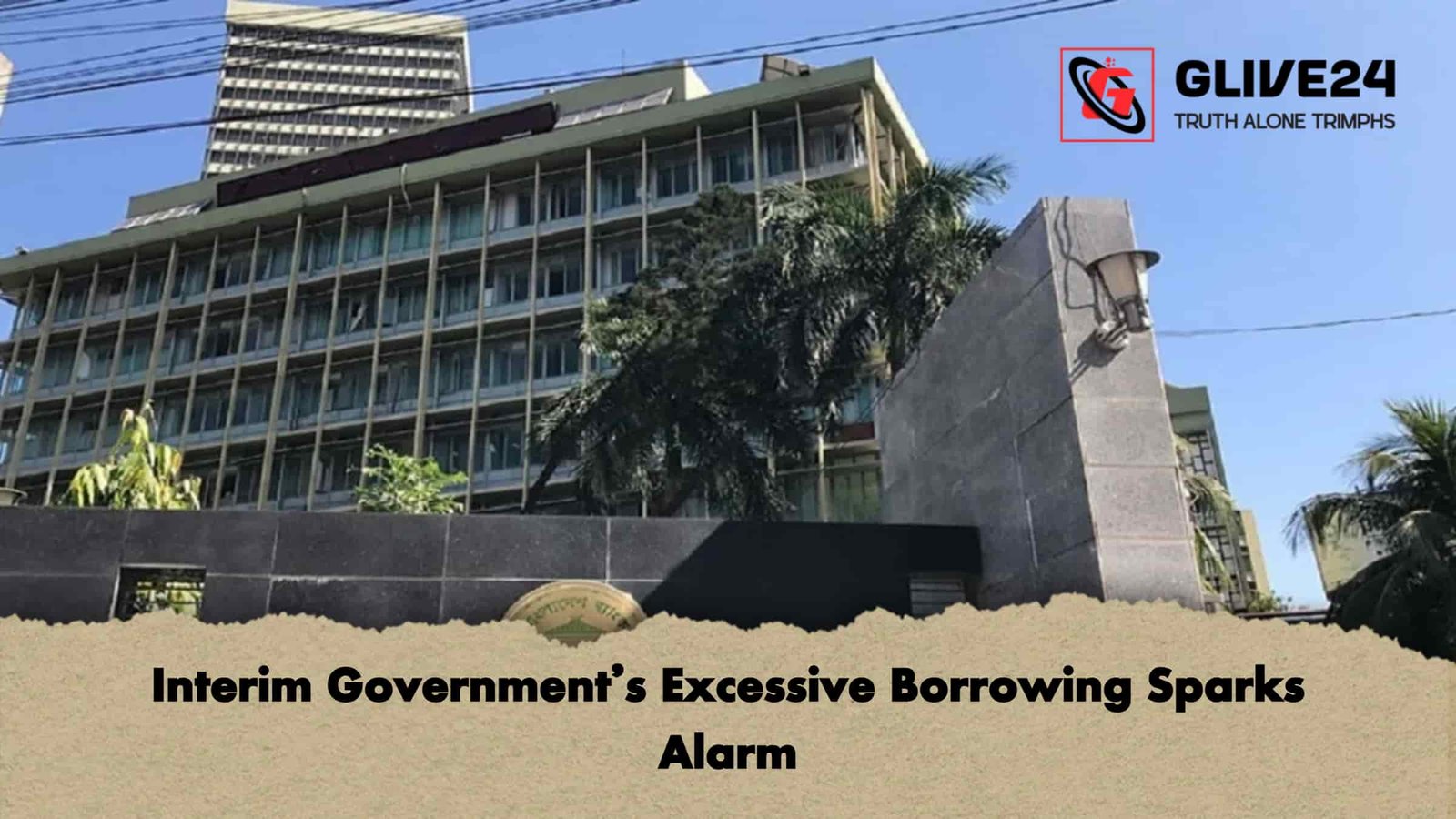
The interim government has leaned heavily on the domestic banking system to meet its fiscal obligations, borrowing in excess of Tk73,000 crore during the first seven months of the 2025–26 financial year. The latest data from Bangladesh Bank reveals a pronounced shift in the composition of public borrowing, with banks emerging as the principal source of funds.
From July to January, the government’s total net borrowing—combining both domestic and foreign sources—stood at approximately Tk90,000 crore. Notably, around 81 per cent of this amount originated from the banking sector, underscoring a growing dependence that has drawn scrutiny from economists and financial analysts alike.
Experts caution that such extensive borrowing from banks risks constraining credit availability for private enterprises. This “crowding out” effect may suppress investment and place upward pressure on lending rates, particularly at a time when private sector credit growth is already subdued. Political uncertainty in the run-up to the 13th national elections has further dampened investor confidence, exacerbating the slowdown in business activity.
Several underlying factors have contributed to the surge in bank-based borrowing. A key driver has been the government’s financial intervention to stabilise the newly formed Combined Islamic Bank, which emerged through the consolidation of five struggling institutions. In December, authorities injected nearly Tk20,000 crore into the bank, with a substantial share financed through borrowing from the domestic banking network.
Simultaneously, revenue mobilisation has lagged behind projections during the first half of the fiscal year, while public expenditure—particularly administrative and operational costs—has continued to rise. This widening fiscal gap has compelled the government to intensify its reliance on readily available bank financing.
The national budget for FY2025–26 set an ambitious expenditure target of Tk7.90 lakh crore, alongside a deficit of Tk2.21 lakh crore, equivalent to 3.5 per cent of gross domestic product. To finance this deficit, the government initially planned to secure Tk1.25 lakh crore from domestic sources, with Tk1.04 lakh crore expected from banks and Tk21,000 crore from non-bank instruments. However, actual borrowing patterns have diverged significantly from these projections.
Borrowing Trends at a Glance
| Category | FY2025–26 (Jul–Jan) | FY2024–25 (Jul–Jan) |
|---|---|---|
| Net borrowing from banks | Tk73,035 crore | Tk9,442 crore |
| Non-bank borrowing | Tk7,216 crore | Tk25,864 crore |
| Net foreign borrowing | Tk9,832 crore | Tk27,964 crore |
| Share of bank borrowing | 81% | Significantly lower |
The figures illustrate a dramatic escalation in bank borrowing—nearly eight times higher than in the same period of the previous fiscal year. In contrast, non-bank borrowing has declined sharply, while foreign financing has diminished considerably, accounting for less than one-tenth of total loans.
Moreover, the country’s domestic public debt stock climbed to Tk10.37 lakh crore by January, marking an increase of over Tk1.51 lakh crore within a year.
Economists argue that a more balanced borrowing framework is essential to sustain economic stability. Strengthening revenue collection, revitalising non-bank financing avenues, and enhancing access to concessional external funds could help reduce pressure on the banking system. Without such adjustments, continued overreliance on banks may hinder private sector expansion and pose longer-term risks to economic growth.