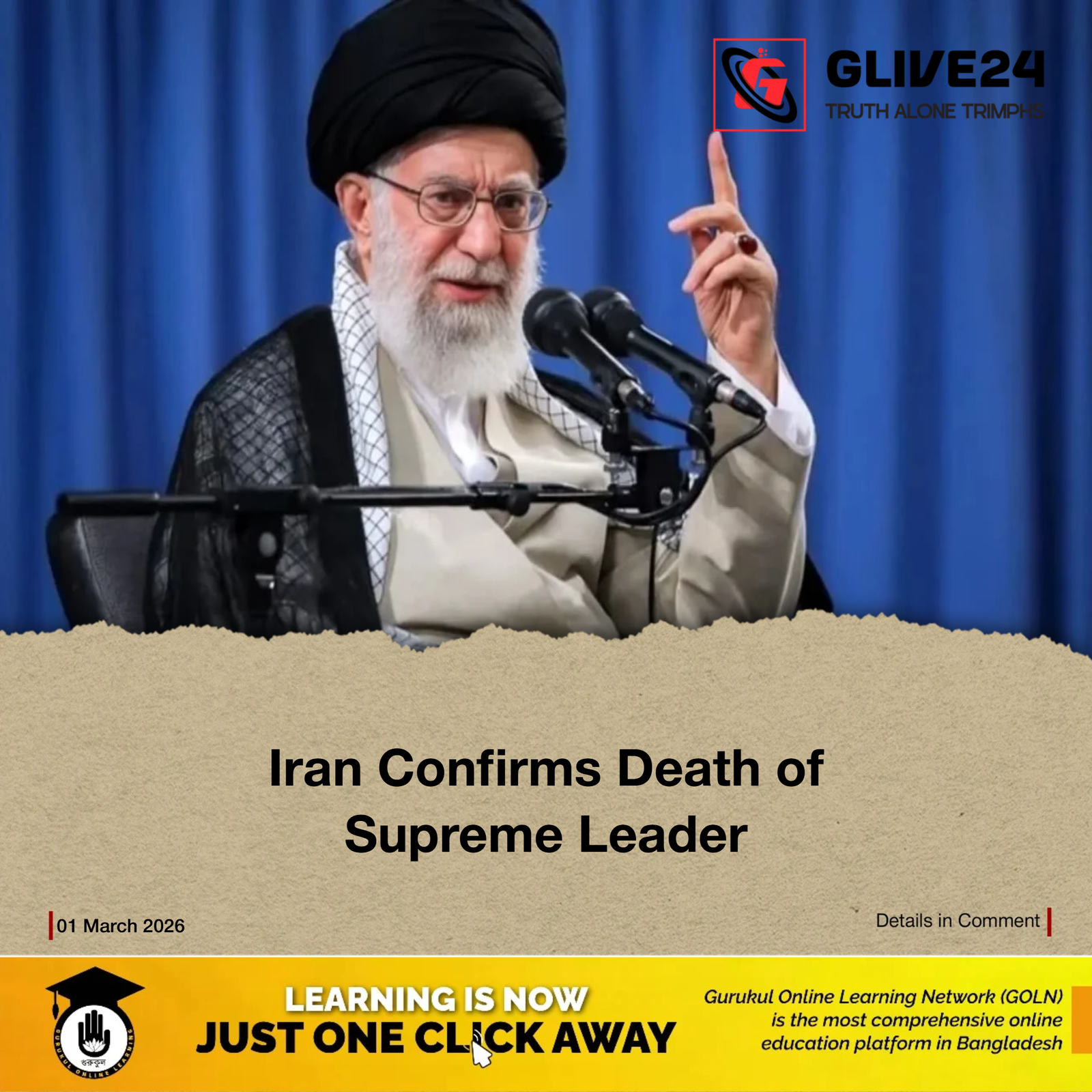
The Government of Iran has formally confirmed the death of its Supreme Leader, Ali Khamenei, following what officials described as a targeted attack on his administrative office in the capital, Tehran. The announcement was delivered in a special state broadcast on Sunday morning, marking one of the most consequential moments in the history of the Islamic Republic.
According to the official statement, the attack occurred on Saturday within the secured compound of the Supreme Leader’s office. While authorities characterised the incident as a “planned and precision operation”, further details regarding the method of attack or those responsible have not yet been disclosed. Security agencies have launched a full investigation, and heightened security measures have been implemented across major cities nationwide.
A period of forty days of national mourning has been declared. Black flags have been raised above government buildings, and mosques throughout the country have been instructed to hold special prayers and memorial gatherings. Large crowds assembled in Tehran, as well as in the holy cities of Qom and Mashhad, to express their grief. Government offices observed moments of silence, and public ceremonies are expected to continue throughout the mourning period.
The death of Ayatollah Khamenei concludes more than three decades of concentrated political, religious, and military authority. Born in 1939, he assumed the position of Supreme Leader in 1989, succeeding Ruhollah Khomeini following the latter’s death. Over approximately thirty-five years in office, Khamenei oversaw periods of regional conflict, prolonged tensions with Western powers, and critical negotiations concerning Iran’s nuclear programme.
Earlier, former United States President Donald Trump had claimed on social media that Khamenei had died; however, official confirmation came only with the state broadcast. International reaction has been swift, with analysts warning that the development could usher in renewed uncertainty across the Middle East.
Under Iran’s constitution, the Assembly of Experts is responsible for appointing a new Supreme Leader. Political and religious circles have already begun deliberations regarding potential successors, as the nation confronts a pivotal transition in leadership.
Below is a summary of key details concerning Ayatollah Khamenei’s life and tenure:
| Subject | Information |
|---|---|
| Full Name | Ayatollah Sayyid Ali Khamenei |
| Year of Birth | 1939 |
| Assumed Office as Supreme Leader | 1989 |
| Length of Tenure | Approximately 35 years |
| National Mourning Period | 40 days |
The passing of Iran’s Supreme Leader marks the end of a defining chapter in the country’s post-revolutionary era. The forthcoming succession process is expected to shape the Islamic Republic’s political trajectory and regional diplomacy for years to come, as authorities urge citizens to remain calm and united during this period of national reflection.