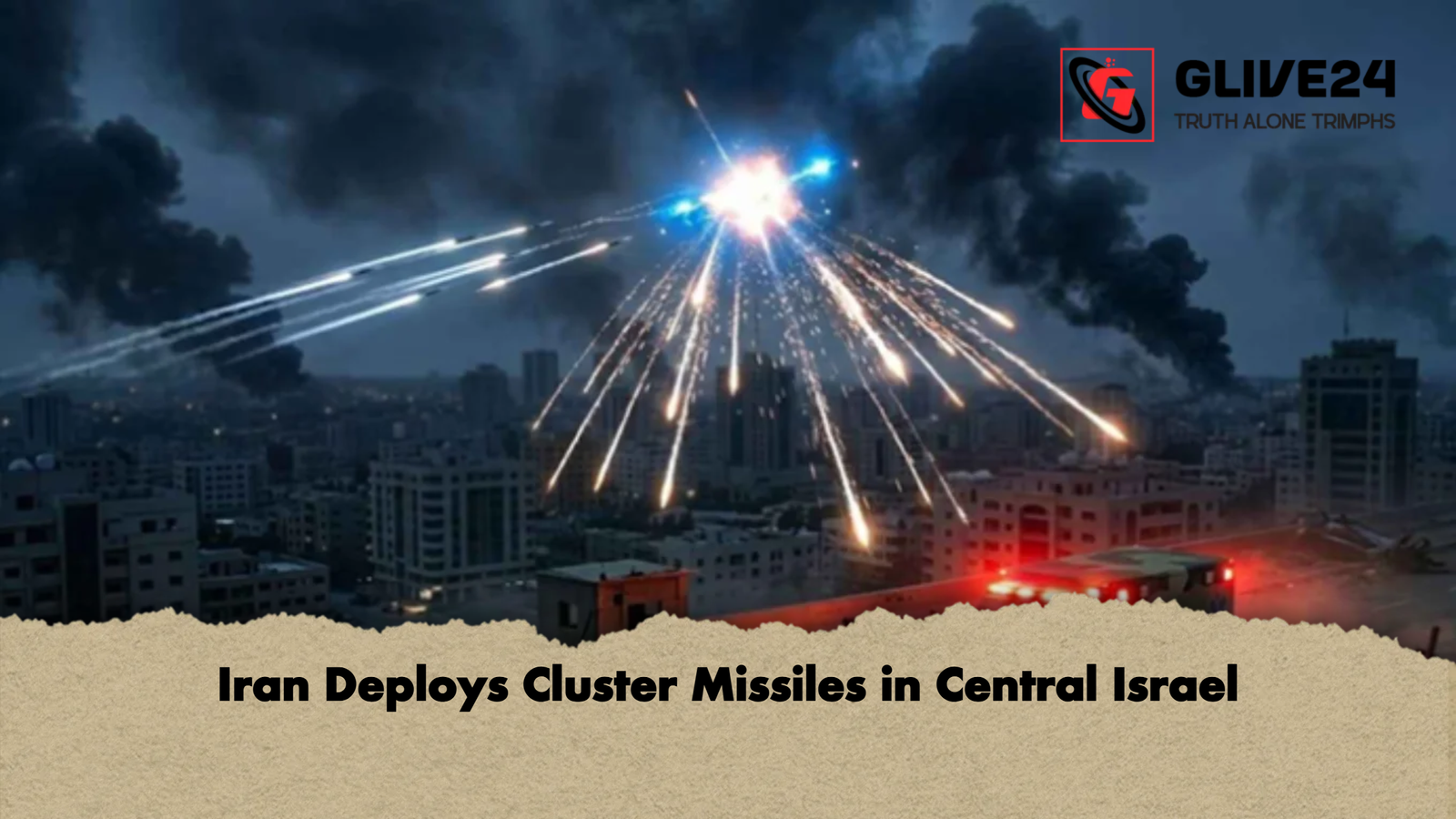
Dramatic footage circulating on social media appears to show submunitions from an Iranian ballistic missile descending over central Israel, signalling a sharp escalation in tensions between Tehran and Jerusalem. The Israeli military has confirmed that some of the missiles fired by Iran contained cluster bomb warheads, a weapon type considered particularly indiscriminate and hazardous.
Live coverage by The Times of Israel shows multiple small explosive devices falling from the sky, believed to be submunitions released from a cluster warhead mid-flight. The Israeli Defence Forces (IDF) explained that these warheads open in mid-air, dispersing around 20 smaller explosives over a wide area. Each submunition contains roughly 2.5 kilograms of explosive material and can scatter across an area with a radius of up to 8 kilometres, making them extremely dangerous to both civilians and infrastructure.
Cluster Missile Details
| Component | Detail |
|---|---|
| Warhead type | Cluster bomb |
| Number of submunitions | ~20 per missile |
| Explosive content per submunition | 2.5 kg |
| Dispersal radius | ~8 km |
| Risk factor | High; unexploded submunitions remain hazardous to civilians |
Experts warn that cluster munitions pose long-term dangers because many submunitions fail to detonate on impact, remaining as hidden explosives. These unexploded ordnances have historically caused injuries and fatalities long after conflicts have ended, making the weapons highly controversial.
While the 2008 Convention on Cluster Munitions prohibits their use, not all nations, including Iran and Israel, are signatories. This legal gap leaves civilians in conflict zones highly vulnerable whenever such weapons are deployed.
The latest strike comes amid ongoing military tensions between Iran and Israel. Both nations have conducted reciprocal attacks in recent weeks, heightening security concerns throughout the region. The use of cluster warheads represents a significant escalation, prompting alarm from international observers and humanitarian organisations.
Israeli authorities have urged residents in central regions to remain vigilant and report any unexploded devices. Specialised security teams are being deployed to locate and safely neutralise submunitions, reducing the risk of accidental civilian casualties.
The international community has reiterated calls for restraint and adherence to established norms regarding indiscriminate weaponry. Analysts caution that continued exchanges involving cluster munitions could lead to civilian harm and further destabilisation of an already volatile region.
This incident underscores the deadly potential of modern ballistic weapons and highlights the urgent need for diplomatic engagement. Without careful management, the escalation risks broadening regional instability and causing humanitarian crises.
Sources: The Times of Israel; Israeli Defence Forces