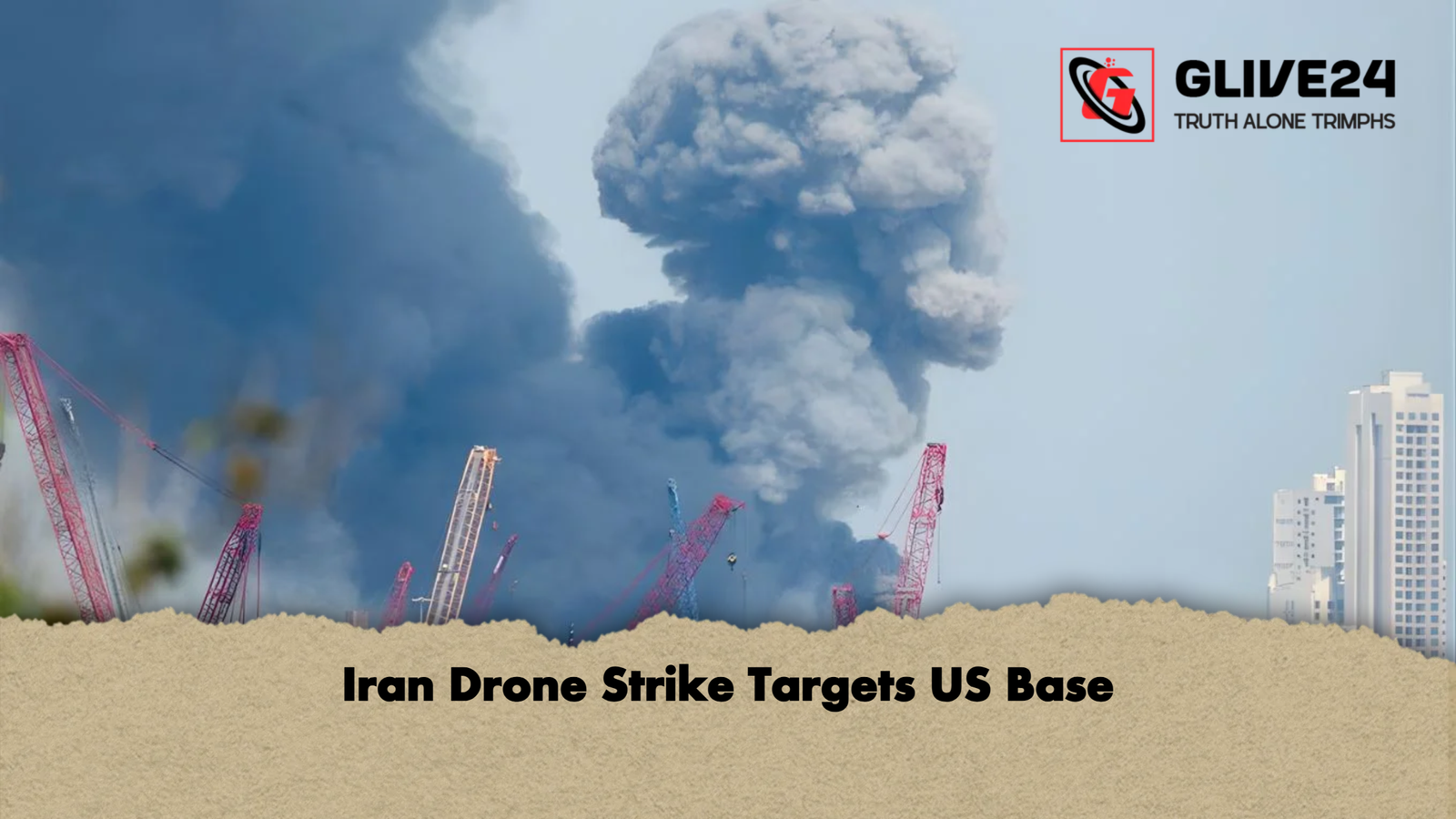
Iran has reportedly carried out another drone strike targeting a United States military installation in Kuwait, intensifying already strained relations between Tehran and Washington. According to the Iranian news agency Tasnim, the attack involved unmanned aerial vehicles that struck the American military facility at Camp Arifjan, one of the United States’ key logistical bases in the Gulf region.
Although Iranian media confirmed the strike, detailed information regarding the operational tactics used or the scale of damage inflicted has not yet been disclosed. Officials from both sides have remained cautious in their initial public statements, and independent verification of the impact remains limited.
Security analysts view the latest incident as a significant escalation in the ongoing tensions between Iran and the United States. The attack follows a previous confrontation last Saturday in which an Iranian strike reportedly resulted in the deaths of six American soldiers stationed in Kuwait. Washington has acknowledged the fatalities, describing them as part of a broader regional security challenge.
Camp Arifjan, located south of Kuwait City, serves as a vital logistical hub for United States military operations across the Middle East. The base supports supply distribution, troop coordination, and equipment deployment for American forces operating in the region. Because of its strategic role, it has long been regarded as a high-value target in any conflict involving regional powers.
Below is a summary of key information regarding the recent Iranian attacks:
| Date | Location | Type of Attack | Target | US Casualties | Source |
|---|---|---|---|---|---|
| Last Saturday | Camp Arifjan, Kuwait | Drone and missile strike | US military personnel | 6 killed | Tasnim News Agency |
| Today | Camp Arifjan, Kuwait | Drone strike | US military installation | Unknown | Tasnim News Agency |
Military experts suggest that Iran’s increasing reliance on drones reflects a broader shift in modern warfare. Unmanned systems allow forces to strike targets from considerable distances while minimising direct risk to personnel. Moreover, drones are relatively inexpensive compared with conventional aircraft, enabling repeated strikes that can gradually erode an adversary’s operational security.
Beyond the military dimension, analysts believe the attacks carry a clear geopolitical message. By targeting American assets in the Gulf, Iran may be seeking to exert pressure on United States policy in the region and demonstrate its capacity to respond to perceived provocations. Tehran has previously stated that its recent operations were conducted in retaliation for joint United States–Israeli actions earlier in the week.
In response to the latest developments, the United States has reportedly increased security measures around its installations in Kuwait and other nearby locations. Intelligence agencies have begun gathering information to identify those responsible for planning and executing the strike, while additional air defence systems are believed to have been placed on heightened alert.
Diplomatically, Washington and its regional allies are working to prevent the situation from spiralling into a wider conflict. Regional stability in the Middle East remains fragile, and any sustained escalation between Iran and the United States could have far-reaching consequences, including disruptions to global energy markets and international trade routes.
Experts warn that if retaliatory attacks continue, tensions could intensify further in the coming weeks. As a result, international attention is now increasingly focused on Kuwait and the broader Gulf region, where the balance between deterrence and escalation remains precariously delicate.