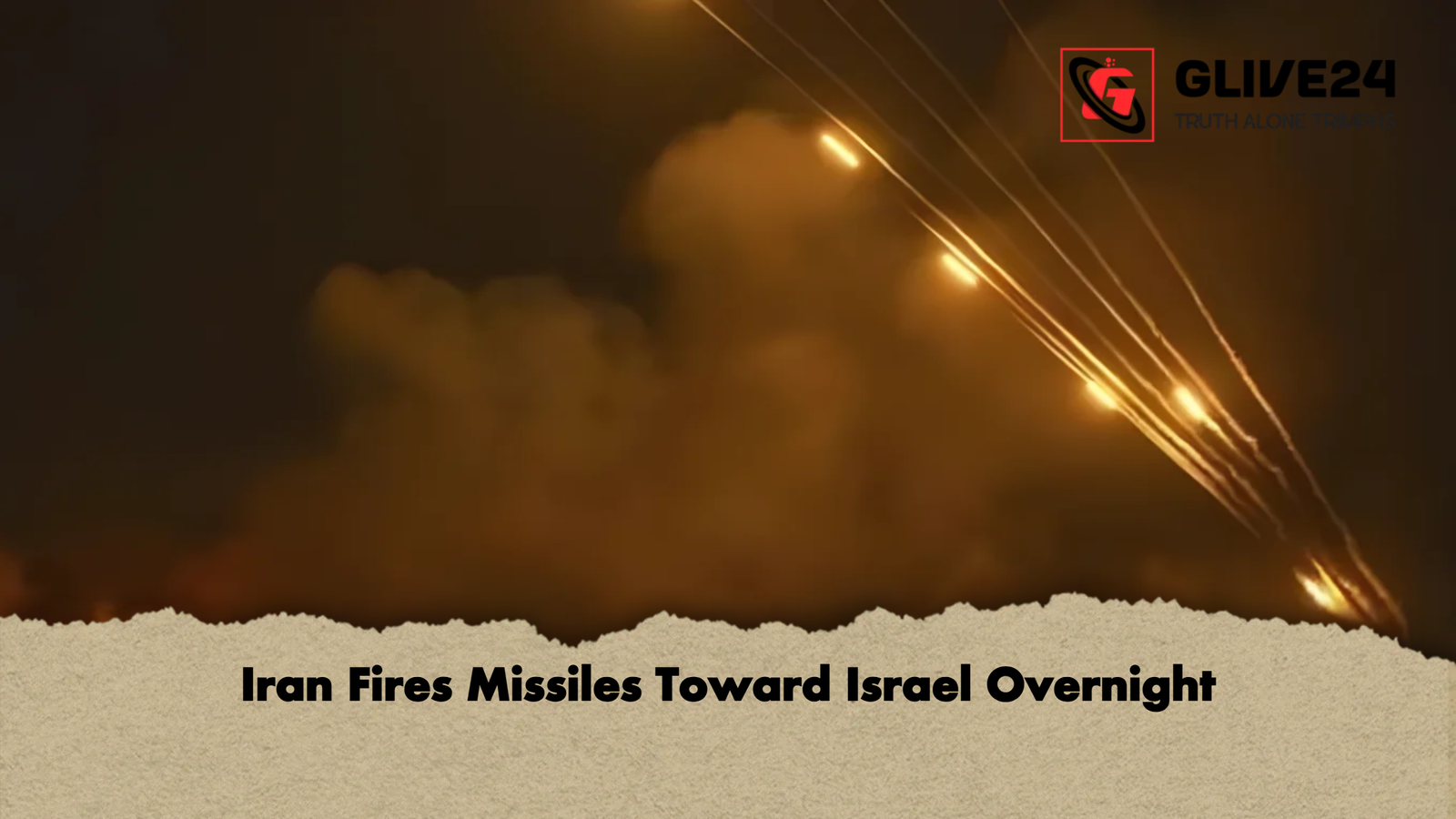
Iran launched another round of missiles towards Israel late on Saturday night, further intensifying the already fragile security situation in the Middle East. Several missiles were reportedly directed at the Israeli city of Tel Aviv, prompting air raid alerts and emergency precautions across parts of the country.
According to reports from The Times of Israel, warning sirens sounded early on Sunday morning throughout central and northern Israel as authorities urged residents to move to protected areas. The alerts indicated the possibility of incoming projectiles and triggered immediate defensive measures by Israeli security forces.
Although the pace of the missile launches reportedly slowed as the night progressed, Iranian forces continued targeting Israeli territory intermittently for several hours. At the time of reporting, officials had not confirmed whether any of the missiles struck populated areas or caused damage to infrastructure. Israeli defence agencies are still assessing the situation to determine the precise impact of the attacks.
Table of Contents
Civil Defence Measures Activated
Following the missile alerts, Israel’s emergency and civil defence systems were activated across the affected regions. Residents in several cities and towns were instructed to remain in shelters or protected rooms until authorities issued further instructions. Emergency services were also placed on standby in case of casualties or structural damage.
Schools, public offices, and several businesses in areas where sirens were triggered temporarily suspended operations as a precautionary measure. Public transport services were also briefly disrupted in certain districts while security officials evaluated the threat level.
Military observers suggest that the repeated missile launches are designed not only to test Israel’s defensive systems but also to exert psychological and political pressure. Even when missiles do not cause direct damage, the persistent threat can create widespread disruption and anxiety among civilians.
Overview of the Missile Incident
| Detail | Description | Notes |
|---|---|---|
| Date of attack | Saturday night | Missiles launched over several hours |
| Main target | Tel Aviv | Major urban and economic centre |
| Regions affected | Central and northern Israel | Warning sirens activated |
| Casualties | Not confirmed | Investigations ongoing |
| Duration | Several hours | Intermittent launches overnight |
| Strategic objective | Pressure and deterrence | Demonstration of missile capability |
Broader Security Implications
The renewed missile launches highlight the continuing hostility between Iran and Israel, two regional rivals whose confrontation has often played out through indirect and direct military actions. Analysts warn that repeated exchanges of this nature could significantly raise the risk of a broader regional conflict.
Israel maintains one of the most advanced missile defence networks in the region, designed to intercept incoming projectiles before they reach populated areas. Defence officials are believed to have placed additional systems on heightened readiness following the overnight attack in order to strengthen protection for major cities and strategic sites.
Regional governments and international observers are closely monitoring the situation, concerned that further military actions could escalate tensions beyond bilateral confrontation. Diplomatic efforts aimed at preventing wider conflict may face additional challenges if such missile attacks continue.
Situation Remains Uncertain
As investigations continue, Israeli authorities have urged the public to remain vigilant and follow official safety guidance. Security forces are expected to maintain an elevated alert status in the coming days while assessing whether additional attacks might occur.
The overnight missile launches underline the volatile nature of the Middle Eastern security environment. Even limited strikes have the potential to trigger wider repercussions, making the situation one of the most closely watched geopolitical flashpoints in the region.