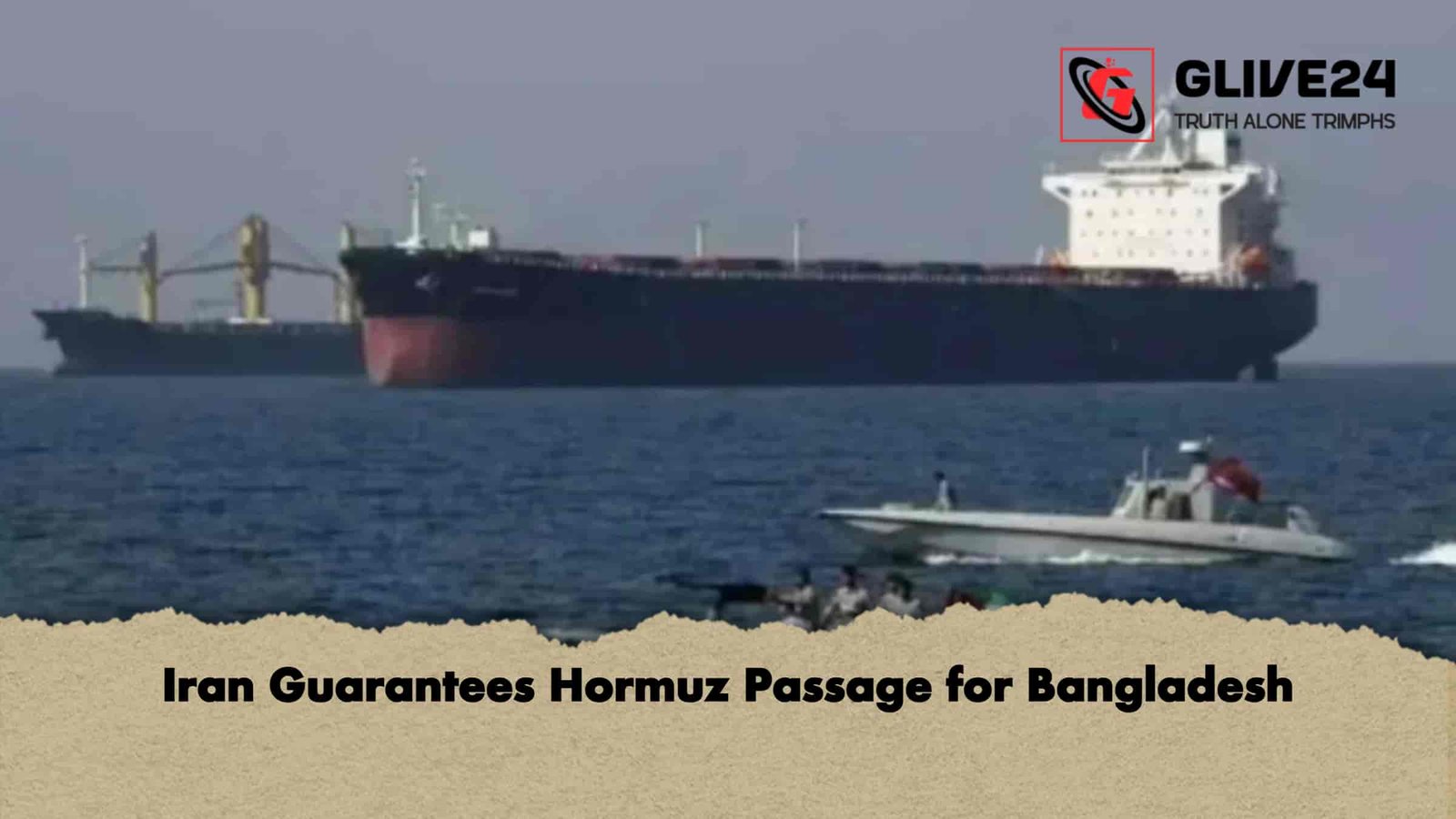
Iran has assured Bangladesh that ships carrying fuel and energy supplies will not be obstructed while passing through the Strait of Hormuz, offering reassurance to Dhaka amid growing concern about the impact of tensions in the Middle East on global energy transport routes.
Officials at Bangladesh’s Ministry of Power, Energy and Mineral Resources confirmed that the government recently contacted Iranian authorities after fears emerged that instability in the region could disrupt shipping through the narrow but critically important maritime corridor. The Strait of Hormuz is widely regarded as one of the world’s most strategic energy transit routes, linking the Persian Gulf with international waters and facilitating the movement of large volumes of oil and liquefied natural gas.
According to Bangladeshi officials, Iran responded positively to the request for clarification. Tehran indicated that vessels transporting oil or liquefied natural gas destined for Bangladesh would be permitted to travel through the strait without obstruction. Iranian authorities asked that Bangladesh inform them in advance when energy-carrying ships are scheduled to enter the waterway so that their safe passage can be ensured.
The development comes at a time when global markets remain sensitive to geopolitical risks in the Middle East. Analysts estimate that around twenty per cent of the world’s traded petroleum passes through the Strait of Hormuz each day. Any interruption in shipping along this route could lead to significant disruptions in global fuel supply and rapid increases in energy prices.
Bangladesh, whose economy has expanded steadily over the past decade, relies heavily on imported fuel to meet the demands of electricity generation, manufacturing, and transport. Ensuring uninterrupted maritime access to energy supplies has therefore become a key priority for policymakers in Dhaka.
At present, Bangladesh imports refined petroleum products from a diverse group of suppliers across Asia and the Middle East. This diversified import network is intended to reduce dependency on a single source and improve supply stability.
| Supplier Country | Type of Energy Supply |
|---|---|
| Malaysia | Refined petroleum products |
| United Arab Emirates | Refined petroleum products |
| China | Refined petroleum products |
| Indonesia | Refined petroleum products |
| Thailand | Refined petroleum products |
| India | Refined petroleum products |
| Oman | Refined petroleum products |
| Kuwait | Refined petroleum products |
In parallel with diplomatic engagement with Iran, Bangladesh has also received signals of support from regional partners. Both China and India have expressed interest in assisting Bangladesh should the country face difficulties in securing sufficient energy supplies.
Finance Minister Amir Khosru Mahmud Chowdhury said the government is maintaining active communication with several countries to safeguard national fuel reserves. He noted that Bangladesh currently sees no immediate threat to its energy supply but continues to monitor international developments closely.
Chinese Ambassador to Bangladesh Yao Wen also stated that Beijing is prepared to cooperate with Dhaka in addressing any potential energy challenges. According to the envoy, China is willing to work with Bangladesh to ensure stability in fuel supply and may provide additional assistance if required.
Energy experts believe that Iran’s assurance, combined with the willingness of other regional partners to extend support, may help Bangladesh avoid major disruptions to its fuel supply chain even if geopolitical tensions in the Middle East persist. Maintaining secure access through the Strait of Hormuz will remain vital for the country’s economic stability and energy security in the months ahead.