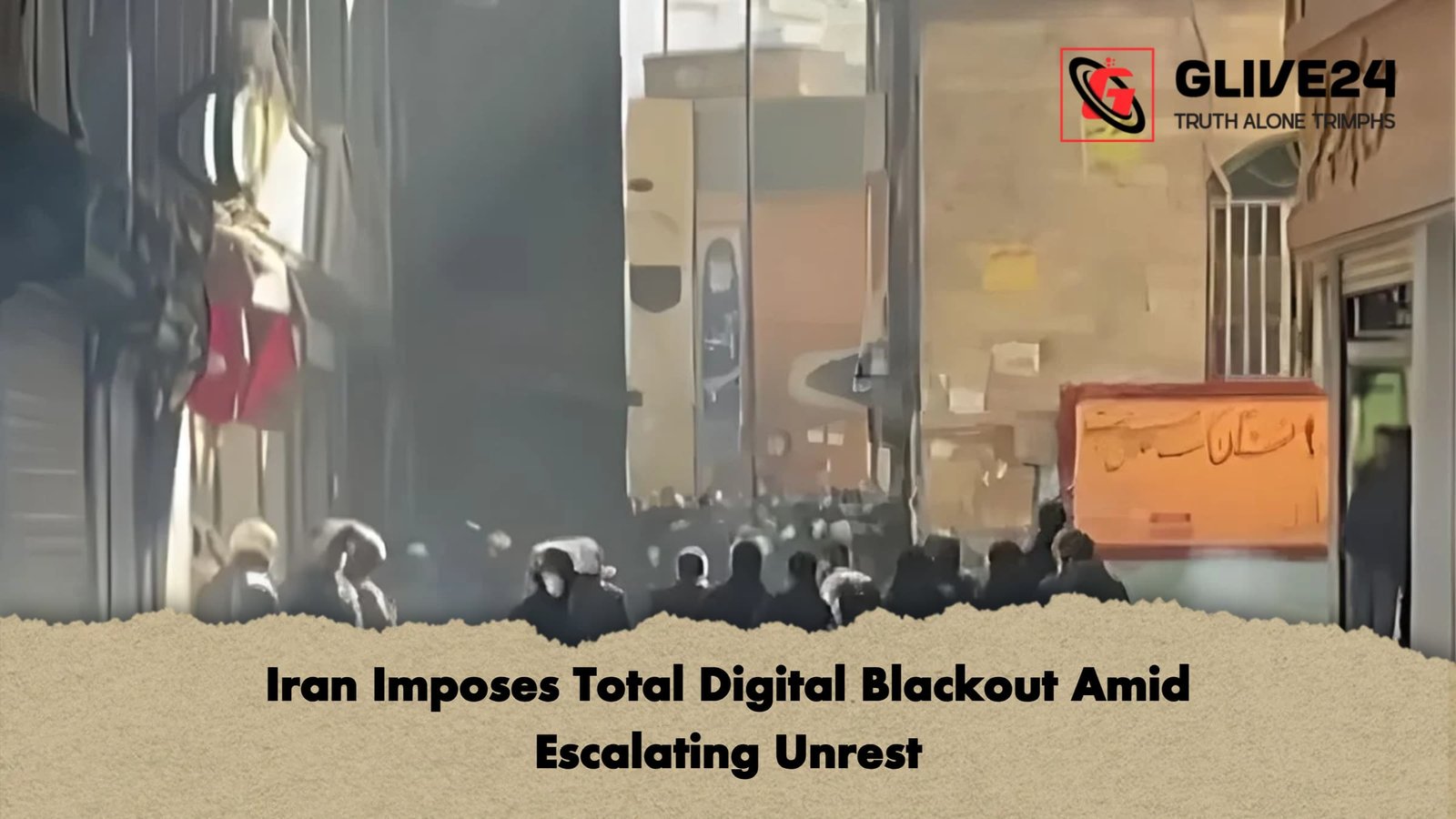
The Islamic Republic of Iran has been plunged into digital darkness as nationwide protests entered their twelfth consecutive day on Thursday. According to the internet monitoring organisation NetBlocks, authorities have implemented a near-total nationwide internet shutdown, a move widely viewed as a desperate measure to sever the coordination of demonstrators and mask the scale of a mounting crackdown.
From Market Strike to National Defiance
The unrest, which has now reached a fever pitch, originated late last month within the historic Grand Market of Tehran. Merchants, crippled by the catastrophic devaluation of the Iranian Rial, systemic economic mismanagement, and the cumulative weight of Western sanctions, shuttered their businesses in a rare display of defiance. That economic spark has since ignited a broader political conflagration.
The Human Rights Activists News Agency (HRANA), a US-based monitoring group, reports that the protests have achieved an unprecedented geographic reach. Demonstrations have been documented in 348 separate locations across 25 of Iran’s 31 provinces.
Digital Censorship and State Violence
NetBlocks confirmed that the total blackout was preceded by a period of “curated digital censorship,” where social media platforms were throttled before the entire network was pulled offline. This strategy is frequently deployed by the Iranian state to prevent the viral spread of footage showing clashes between citizens and security forces.
Table: Current Crisis Metrics in Iran (January 2026)
| Metric | Status / Quantity | Reporting Agency |
| Duration of Unrest | 12 Consecutive Days | International Media |
| Confirmed Fatalities | Minimum 21 Deaths | AFP / Official Sources |
| Geographic Scope | 25 of 31 Provinces | HRANA |
| Connectivity | Near-Total Shutdown | NetBlocks |
| Primary Economic Catalyst | Collapse of the Rial | Market Analysis |
Reports from the ground, filtered through the few remaining satellite links, describe chaotic scenes. In the capital, Tehran, protesters have set fires to block major thoroughfares. Meanwhile, in the Caspian coastal town of Tonekabon, security forces reportedly used tear gas and batons to disperse thousands of marchers.
A Fractured Leadership Response
The Iranian government’s rhetoric remains inconsistent, reflecting potential internal friction. While President Masoud Pezeshkian has made public appeals for “maximum restraint,” the Supreme Leader, Ayatollah Ali Khamenei, has taken a more bellicose stance, declaring that “rioters must be taught a lesson.”
Chief Justice Gholam-Hossein Mohseni-Ejei echoed this hardline sentiment, accusing the protesters of acting as proxies for the United States and Israel. He warned that those orchestrating “instability” would face severe judicial consequences. Adding to the tension, Reza Pahlavi, the exiled son of the late Shah, urged Iranians to continue their resistance, warning that the regime is using the internet blackout as a shroud for impending violence.