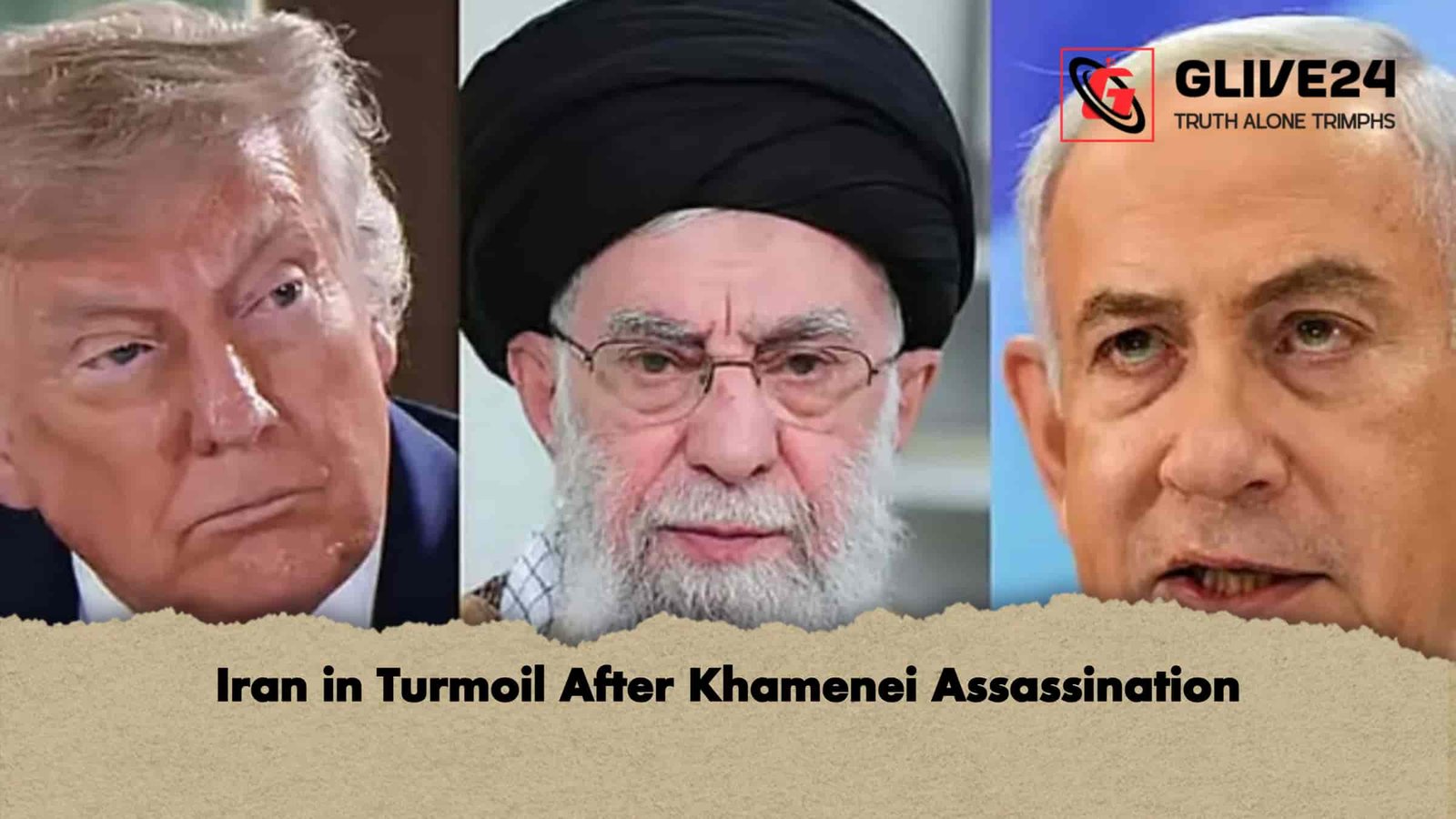
The reported killing of Iran’s Supreme Leader, Ayatollah Ali Khamenei, in a joint United States–Israel military operation has thrown the country into deep political uncertainty. Analysts and intelligence officials caution that despite the dramatic assassination, the entrenched power structures of the Islamic Republic may remain largely intact.
U.S. officials have expressed concern over the potential outcomes, highlighting that the death of Khamenei does not automatically herald a change in Iran’s ruling elite. Former U.S. President Donald Trump had repeatedly suggested, both before and after the strike, that America’s goals included dismantling Iran’s nuclear and missile capabilities, alongside the removal of the current regime. He also publicly encouraged Iranian citizens to mobilise for greater political freedom.
However, intelligence assessments indicate that the theocratic governance system established since 1979 is unlikely to collapse rapidly. According to a CIA briefing submitted to the White House, Khamenei’s replacement could be a senior figure from the Islamic Revolutionary Guard Corps (IRGC) or a high-ranking cleric. Yet, security analysts warn that the IRGC is unlikely to voluntarily cede power.
Overview of Iran’s Current Political and Security Situation
| Aspect | Details | Current Status |
|---|---|---|
| Interim Leadership | President Masoud Pajeshkian, Guardian Council members, Judiciary chief | Temporary authority assumed by the ‘Leadership Council’ |
| Security Apparatus | Islamic Revolutionary Guard Corps, national security forces | Strong control maintained; ready to suppress unrest |
| Popular Sentiment | Civil protests, public anger | Past January uprisings suppressed; public discontent rising |
| Foreign Interference | United States, Israel | Recent strikes: school bombing, Jebel Ali port fire; ~150 casualties |
State media reports that Ali Larijani, head of national security, issued stern warnings to the United States and Israel, condemning any attempts to destabilise Iran. Meanwhile, the Israeli strike destroyed a primary school, resulting in at least 150 fatalities, most of whom were children. Smoke from the Jebel Ali port has also been reported, further complicating the situation.
Jonathan Pankoff, a U.S.-based former intelligence officer, observed: “The trajectory of any public uprising will largely depend on whether ordinary members of the security forces side with the population or with the ruling elite.”
Despite ongoing foreign interventions and political pressure, U.S. officials privately acknowledge that orchestrating a rapid regime change in Tehran remains highly improbable. The country’s immediate future hinges on the resilience of the ruling class, the strategies of security forces, and the Iranian people’s response, all of which will determine whether Iran remains under the current theocratic order or faces gradual transformation.