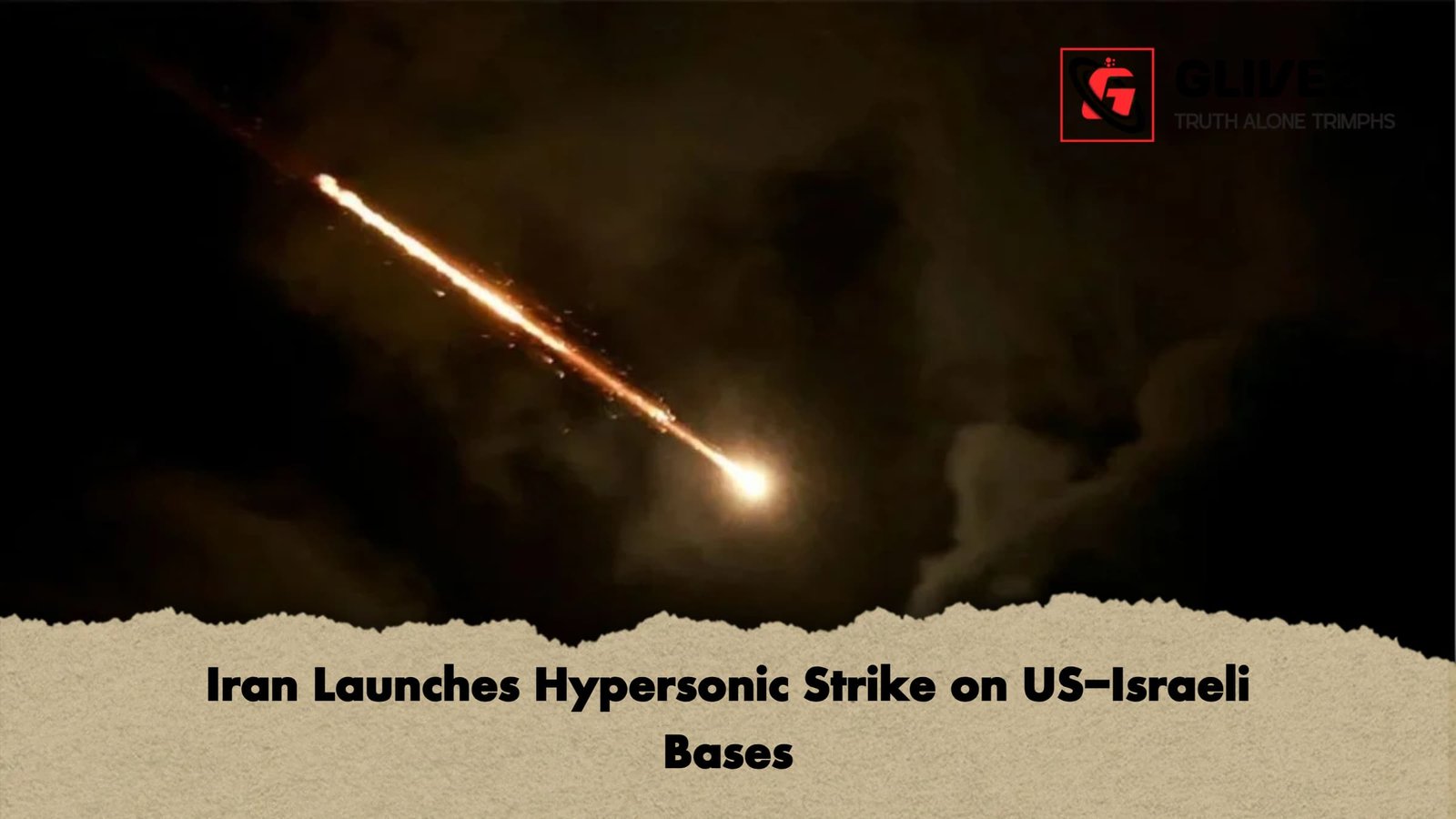
In a dramatic and dangerous escalation of regional hostilities, Iran’s Islamic Revolutionary Guard Corps (IRGC) has conducted a large-scale aerial offensive targeting both Israeli territory and United States military installations across the Middle East. According to reports from the semi-official Mehr News Agency, the IRGC confirmed the deployment of sophisticated weaponry, including hypersonic missiles—projectiles capable of travelling at velocities exceeding five times the speed of sound (Mach 5).
Strategic Scope of the Offensive
The IRGC’s statement characterized this operation as the 34th phase of its ongoing campaign against “adversarial targets.” This particular strike was notable for its technological diversity, utilising three distinct classes of conventional missiles alongside the aforementioned hypersonic units. The inclusion of hypersonic technology represents a significant tactical shift, as these weapons are specifically designed to evade traditional radar systems and sophisticated anti-ballistic missile batteries.
The geographic reach of the strike was expansive, simultaneously targeting Israeli infrastructure and high-value American assets in the Persian Gulf.
Table: Primary Targets Identified in the IRGC Offensive
| Target Category | Geographic Location | Specific Installation |
| US Military Assets | Abu Dhabi, UAE | Al-Dhafra Air Base |
| US Naval Assets | Juffair, Bahrain | NSA Bahrain (Juffair Base) |
| Israeli Air Power | Northern Israel | Ramat David Airbase |
| Civilian Infrastructure | Haifa, Israel | Haifa International Airport |
| Israeli Strategic Sites | East of Tel Aviv | Classified Missile Launch Facilities |
The Battle in the Skies
The IRGC claimed that their “formidable projectiles” successfully penetrated Israeli air space, specifically striking “clandestine missile launchers” situated to the east of Tel Aviv. In response, the Israel Defense Forces (IDF) confirmed that a massive barrage had been detected crossing into sovereign territory. The IDF stated that their multi-layered aerial defence systems—which include the Iron Dome, David’s Sling, and Arrow batteries—were immediately activated to intercept the incoming threats.
While the full extent of the damage remains subject to military censorship and assessment, the targeting of Al-Dhafra and Juffair indicates a clear intent by Tehran to challenge the American military presence in the Gulf. Al-Dhafra is a critical hub for US Air Force operations, while Juffair serves as a vital logistical base for the US Navy’s Fifth Fleet.
A New Epoch of Warfare
The use of hypersonic missiles is particularly concerning for international observers. By travelling at extreme speeds with the ability to manoeuvre mid-flight, these missiles negate the reaction time of standard defence protocols. This development suggests that the regional arms race has reached a “hyper-velocity” threshold, significantly increasing the risk of a miscalculation that could lead to a full-scale conflagration.
As of Wednesday morning, US Central Command (CENTCOM) has yet to release a detailed casualty or damage report from the bases in Bahrain and the UAE, though the regional alert level remains at its highest peak in years.