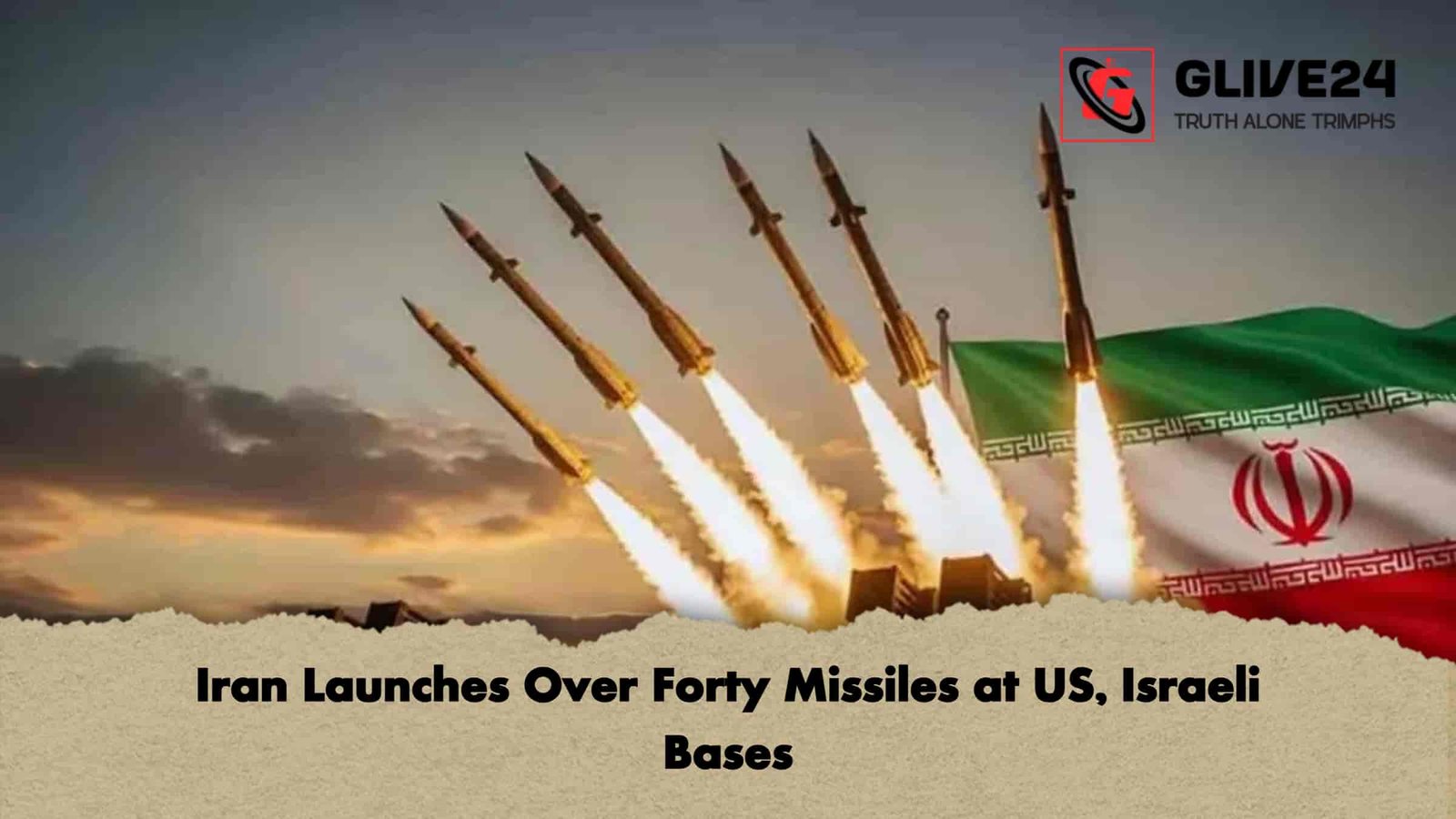
Amid escalating tensions in the Middle East, Iran has announced via state television that it launched over forty missiles targeting United States and Israeli military installations. The operation, named “Cautious Promise-4”, is being described by Iranian officials as the largest coordinated missile campaign since the current wave of hostilities began five days ago.
According to Iranian sources, the strike was orchestrated by the Islamic Revolutionary Guard Corps’ (IRGC) Aerospace and Missile Division. Officials reported that the missiles were launched at staggered intervals over several hours, marking the seventeenth phase of ongoing military operations. Tehran has stated that the operation specifically targeted US and Israeli military bases, though no official figures regarding casualties or material damage have been released.
Iranian authorities presented the operation as part of a sustained effort to safeguard national sovereignty and security. Military analysts note that the missiles employed are domestically produced, long-range, and equipped with high-precision guidance systems. Over recent years, Iran has invested heavily in both short- and medium-range ballistic missiles as well as unmanned aerial vehicle technology. These developments have significantly altered regional security dynamics, heightening concerns among neighbouring states and Western powers.
Key Operation Details
| Aspect | Details |
|---|---|
| Conflict Day | Fifth day of hostilities |
| Number of Missiles | Over 40 |
| Operation Name | Cautious Promise-4 |
| Operation Phase | Seventeenth |
| Announced Targets | US and Israeli military bases |
| Casualty/Damage Reports | Not officially disclosed |
In response, the United States and Israel have heightened alert levels at their bases across Iraq, Syria, and the Red Sea littoral. Regional sources indicate that air defence systems were actively engaged during the missile strikes. As of Wednesday evening, neither Washington nor Tel Aviv had issued detailed public statements regarding the incident.
Security experts have warned that these ongoing missile attacks could jeopardise overall stability in the Middle East. Disruptions to maritime shipping lanes, particularly in the Red Sea and Persian Gulf, may impact global energy markets and international trade. Tehran has further cautioned that any additional attacks on its territory or interests will provoke an even stronger retaliatory response. With no immediate signs of de-escalation, observers suggest that without urgent diplomatic intervention, the conflict risks further intensification, potentially plunging the already volatile region into deeper instability.