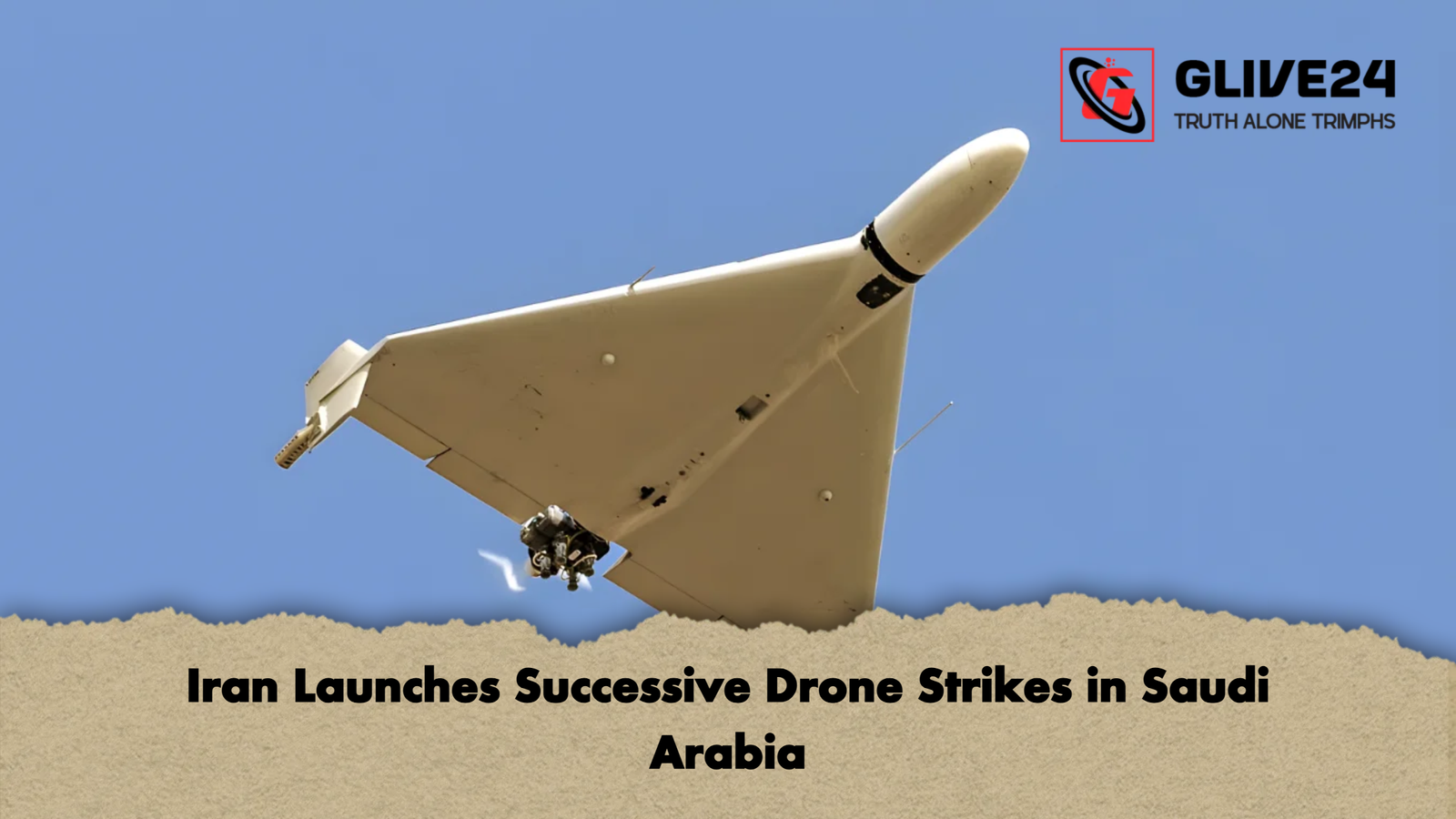
Tensions in the Middle East have intensified as Iran continues a series of drone attacks targeting Saudi Arabia, amid ongoing friction with the United States. On Sunday, 8 March, by 6:30 a.m. Bangladesh time, the Saudi Ministry of Defence reported that at least seven drones were intercepted and destroyed over the eastern outskirts of Riyadh.
This followed an earlier claim that eight other Iranian drones had been neutralised just an hour before, highlighting a sharp escalation in aerial incursions and raising concerns over regional stability.
Table of Contents
Background and Escalation
Iranian President Masoud Pezeshkian had publicly stated on Saturday that Iran would refrain from retaliatory action provided U.S. forces did not conduct operations using Gulf countries’ airspace. Despite this assurance, reports of Iranian drone activity targeting Saudi territory emerged within hours, marking a sudden intensification of hostilities.
Tehran has since reportedly employed both drones and ballistic missiles against Saudi Arabia and neighbouring states. Analysts indicate that these operations are likely aimed at U.S. military installations stationed across the Middle East, signalling Iran’s capacity to retaliate rapidly if provoked.
The Saudi Ministry of Defence confirmed that all incoming drones had been intercepted by the Kingdom’s air defence systems. No casualties or material damage have been officially reported, although the full scale of the attacks remains uncertain.
Regional Security Concerns
The repeated drone incursions have sparked fears of broader conflict across the Gulf. Iran has previously warned that nations allowing U.S. forces access to airspace or military facilities could face retaliatory measures, heightening anxiety among Gulf Cooperation Council (GCC) members and neighbouring countries.
The international community has called for urgent diplomatic intervention to prevent escalation. Observers have warned that continued attacks could disrupt regional trade routes and energy supplies, particularly given Saudi Arabia’s pivotal role in global oil production.
Drone Strike Summary
| Date | Location | Number of Drones Intercepted | Target | Casualties / Damage |
|---|---|---|---|---|
| 8 March | Eastern Riyadh | 7 | Urban outskirts / strategic sites | None reported |
| 8 March | Riyadh airspace (earlier) | 8 | Not specified | None reported |
The situation reflects the precarious nature of U.S.-Iran relations and the broader security challenges facing the Gulf region. Saudi Arabia and its allies have increased surveillance and strengthened air defence measures, while international actors continue to advocate restraint and dialogue.
Outlook
Military analysts caution that further drone or missile activity is likely, particularly if U.S. or allied operations in the region continue. The risk of accidental escalation remains high, raising concerns over civilian safety and regional stability. Despite international calls for de-escalation, Iran’s continued operations indicate a willingness to project military power across the Gulf.
The events of 8 March illustrate the fragile security landscape in the Middle East, where a single miscalculation could trigger broader conflict. Diplomatic efforts are critical to mitigating tensions and averting a potential escalation involving Iran, the United States, and regional partners.