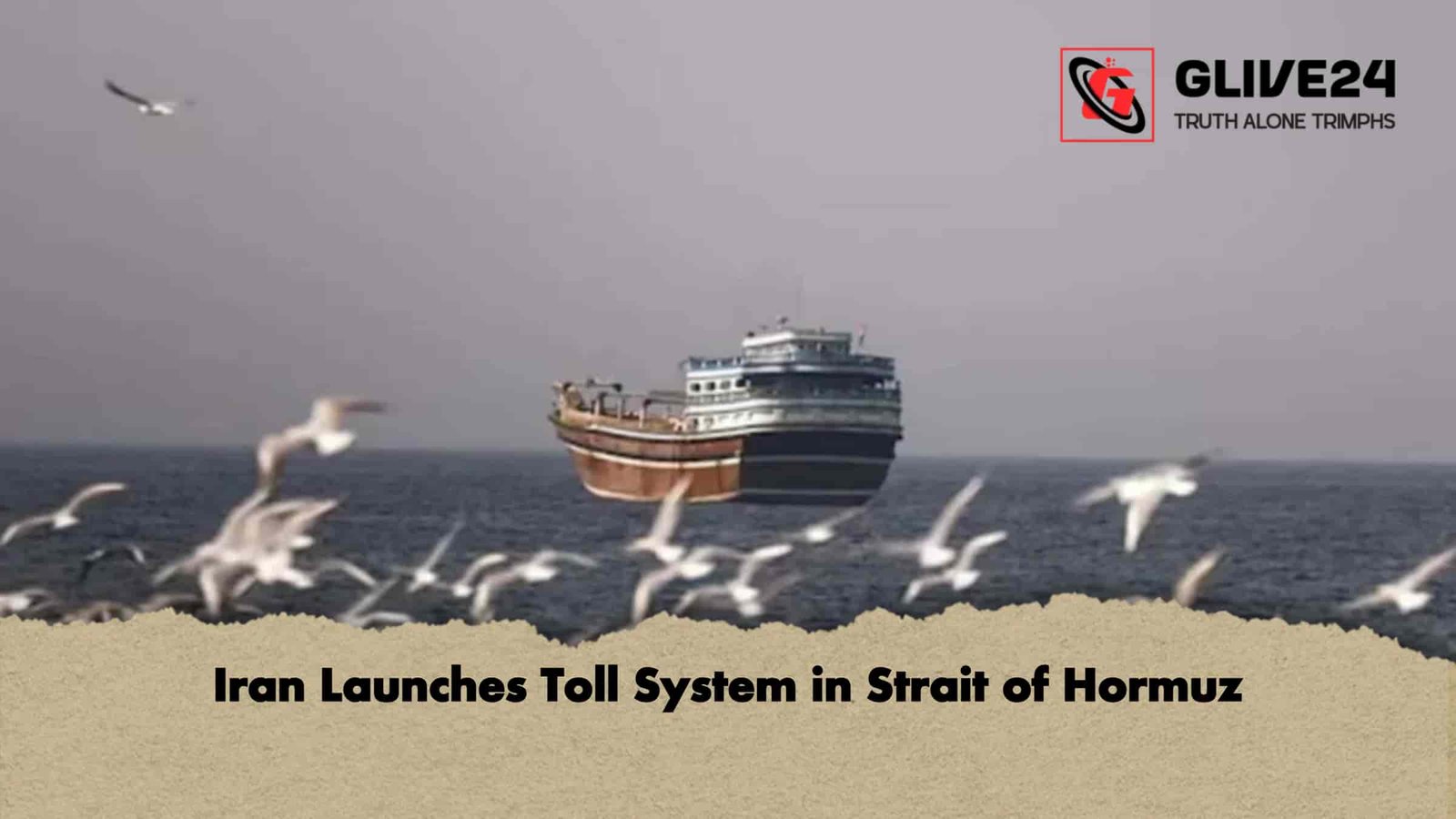
Iran has officially implemented a toll system in the Strait of Hormuz, the vital maritime corridor that links the Persian Gulf to international waters. The Islamic Revolutionary Guard Corps (IRGC) recently collected $2 million from a single oil tanker, marking the first operational use of the new toll framework. This development has sparked concern among global energy analysts, as nearly one-fifth of the world’s seaborne oil passes through this narrow strait.
The Strait of Hormuz is not only crucial for crude oil shipments but also carries a substantial portion of global natural gas. Political tensions and increased military activity in the region have prompted Iran to assert tighter control over the waterway. Any disruption or regulatory action in this strait can have an immediate impact on international energy markets, affecting supply security and pricing.
Under the new system, all vessels must register in advance and pay a designated fee to gain transit permission. The IRGC has stated that this vetting and verification process is designed to strengthen security while maintaining oversight of commercial shipping.
Certain countries, including China, Pakistan, Bangladesh, and India, have been granted exemptions, allowing their vessels to navigate the strait without delays or additional inspection. This selective approach underscores Tehran’s strategic calculation in balancing economic gain with diplomatic considerations.
Toll System Overview
| Aspect | Details |
|---|---|
| Authority implementing toll | Islamic Revolutionary Guard Corps (IRGC) |
| First toll collected | $2 million from a single oil tanker |
| Strategic significance | Handles ~20% of global seaborne oil and large volumes of natural gas |
| Transit requirement | Mandatory pre-registration and fee payment |
| Exempted countries | China, Pakistan, Bangladesh, India |
Experts note that the toll system is not solely about revenue generation. It also serves as a means for Iran to exert geopolitical influence, controlling access to a key shipping lane that directly affects global oil and gas flows. By regulating passage, Tehran can shape market conditions and strengthen its regional leverage.
The strategic importance of the Strait of Hormuz to global energy security cannot be overstated. Even minor changes to toll collection or transit controls may introduce market uncertainty, forcing shipping operators to adjust routes and increasing overall energy costs in the long term.
In summary, Iran’s new toll system in the Strait of Hormuz represents a calculated strategic measure that adds complexity to the management of global energy resources. Its implementation highlights the delicate interplay between regional authority, international trade, and market stability, reinforcing the strait’s central role in the global energy supply chain.