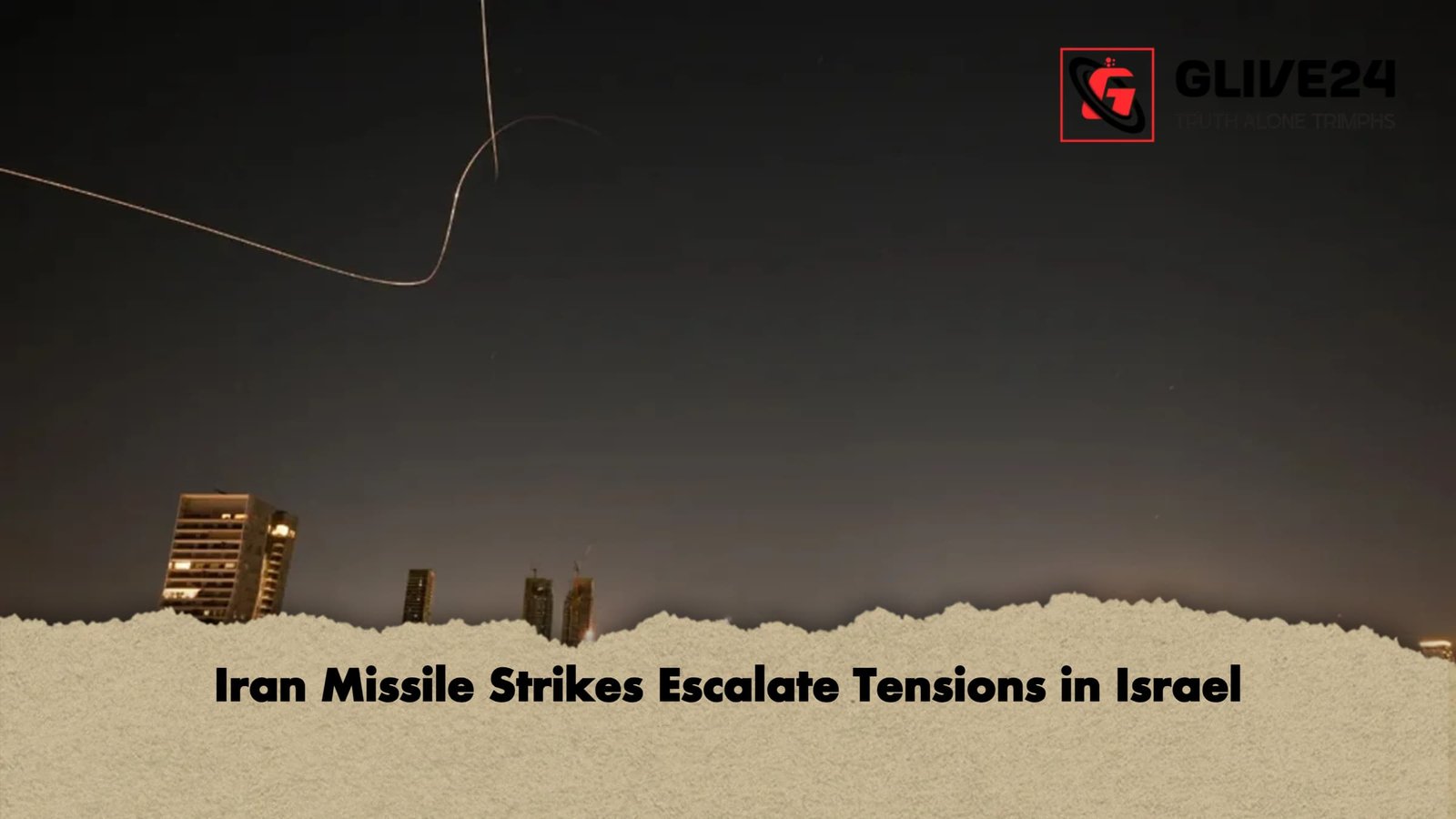
In a dramatic escalation of regional hostilities, several key Israeli cities and military sites have come under intense missile attack from Iran over the past few hours. The strikes targeted major urban centres including Haifa, Tel Aviv, West Jerusalem, and Be’er Ya’akov, alongside select American military installations in the region. Iranian state media described the operation as “one of the strongest attacks since the onset of hostilities.”
Details of the Attacks
The Islamic Revolutionary Guard Corps (IRGC) launched the assault late on Tuesday night, employing the ‘Khoramshahr’ missile system. According to the IRGC, a satellite communications facility south of Tel Aviv was struck for the second time, while military installations in Haifa, West Jerusalem, and Be’er Ya’akov also sustained direct hits.
Additionally, the IRGC claimed to have targeted a U.S. military base in Erbil, Iraq, and the headquarters of the U.S. Fifth Fleet in Manama, Bahrain. These attacks have sparked significant international concern and are being closely monitored as a serious indicator of potential instability across the Middle East.
Meanwhile, Israeli authorities reported that most incoming missiles were successfully tracked and intercepted, and citizens were allowed to leave emergency shelters as the situation remained relatively under control. Saudi Arabia’s defence forces also confirmed that two drones heading towards a local oil facility were destroyed mid-air.
Targets and Weaponry
| Target | Location | Weapon/Drone | Remarks |
|---|---|---|---|
| Satellite communications centre | Tel Aviv, Israel | Khoramshahr missile | Struck for the second time |
| Military installations | Haifa, West Jerusalem, Be’er Ya’akov, Israel | Khoramshahr missile | Major urban sites targeted |
| U.S. military base | Erbil, Iraq | Khoramshahr missile | Regional U.S. presence targeted |
| Fifth Fleet headquarters | Manama, Bahrain | Khoramshahr missile | Strategic naval headquarters |
| Oil facility | Saudi Arabia | Drone | Intercepted mid-air |
Strategic Implications
Analysts suggest that the latest strikes are intended to showcase Iran’s military capabilities while extending its influence across the region. The attacks have heightened tensions in the Middle East and present significant security and diplomatic challenges for the international community.
In response, Israel, Saudi Arabia, and the United States have adopted heightened alert measures, while international observers continue to monitor the situation closely. The ongoing Iran–Israel conflict is increasingly complex, with potential ramifications for the stability of the wider Middle East.
The current volatile environment underscores the fragility of regional peace, with experts warning that any further escalation could trigger widespread instability. The international community remains deeply concerned about the unfolding crisis, recognising it as a serious signal of both military and diplomatic volatility in the region.