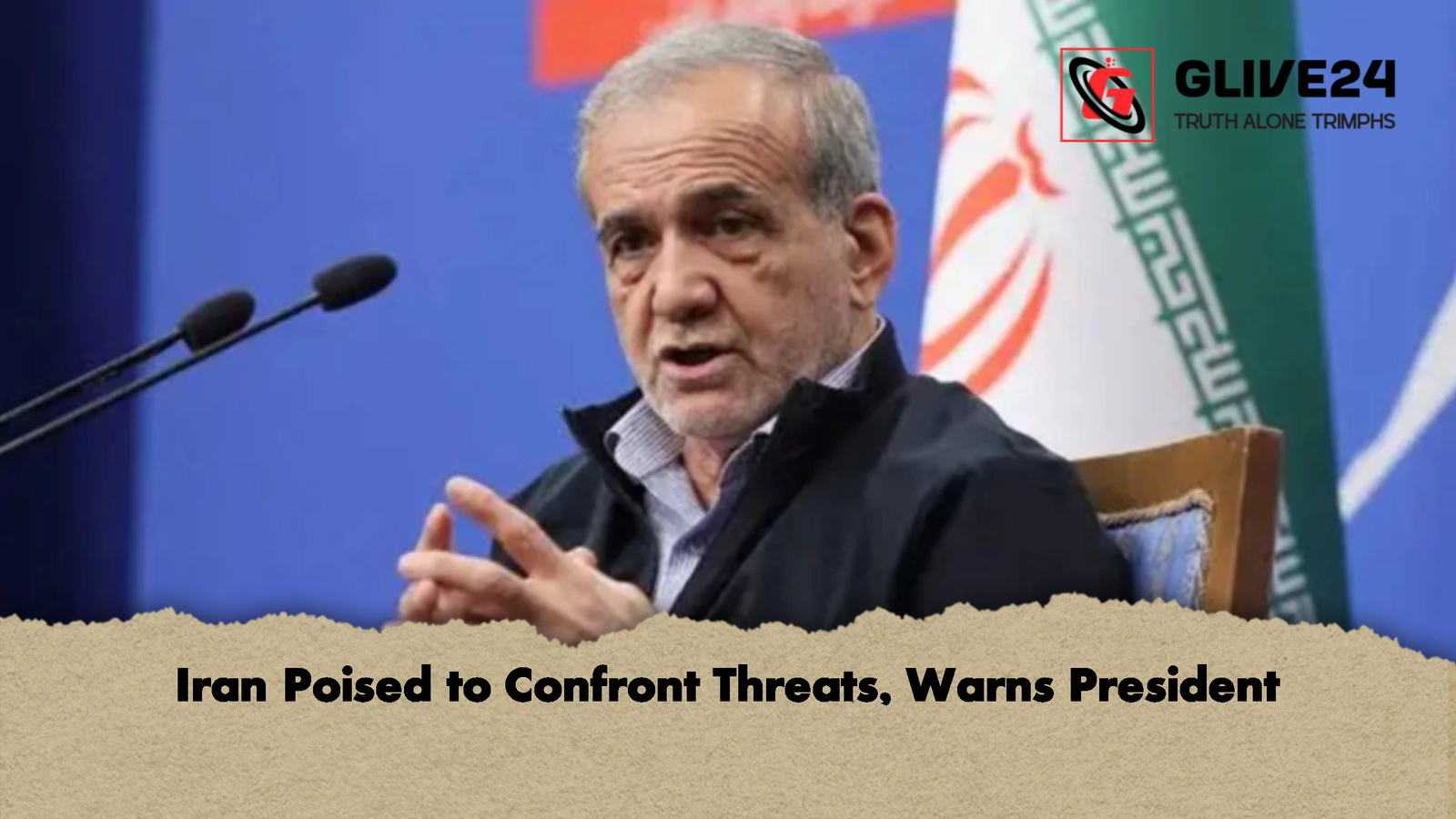
Tehran, Iran – Iranian President Masoud Pezeshkian has asserted that the country is fully prepared to confront any threats or acts of terrorism on the battlefield, signalling Tehran’s unwavering stance amid rising tensions with the United States.
Table of Contents
Background
Pezeshkian’s statement follows a stark ultimatum from former U.S. President Donald Trump, who threatened military strikes on Iranian power infrastructure if the nation did not fully reopen the Strait of Hormuz without intimidation. Trump’s warning, posted on the social media platform Truth Social, set a 48-hour deadline, sparking fears of potential military escalation in the strategically critical Gulf region. The Strait of Hormuz is a key maritime chokepoint, handling nearly 20 percent of the world’s oil and gas exports.
In response, President Pezeshkian emphasised that such threats or coercion would only strengthen Iranian national unity and resolve.
Presidential Statement
In a post shared on X (formerly Twitter), Pezeshkian said:
“Iran is fully prepared on the battlefield to confront any reckless or irrational threat. The Strait of Hormuz remains open to all, except those who violate our sovereignty or trespass on Iranian territory.”
His remarks indicate a zero-tolerance approach toward actions perceived as encroaching upon Iran’s territorial integrity or vital energy infrastructure. Pezeshkian reaffirmed Tehran’s determination to protect its geopolitical and strategic interests without compromise.
Strategic and Economic Significance
Iran’s firm position underscores the critical importance of the Strait of Hormuz, not only to regional security but also to global energy markets. Any disruption along this waterway could result in sharp spikes in oil prices and heightened instability in the Gulf.
| Issue | Details |
|---|---|
| Iranian Position | Prepared to counter threats and terrorism on the battlefield |
| U.S. Ultimatum | Threatened attacks on Iranian power plants if the Strait remains closed |
| Strait of Hormuz | Open to all, except perceived violators of Iran’s sovereignty |
| Strategic Significance | 20% of global oil and gas exports pass through this waterway |
| Domestic Effect | Threats strengthen national unity and resolve |
| Geopolitical Implications | Heightened regional tension; potential energy market volatility |
Regional and Geopolitical Tensions
Analysts interpret Pezeshkian’s comments as a strategic deterrence signal: Iran is demonstrating both resilience against external pressure and a readiness to protect its national interests. The timing of the statement coincides with growing international attention on maritime trade security, particularly the safe passage of oil tankers through the Persian Gulf.
Iran has made clear that while the Strait of Hormuz remains open for lawful passage, access is restricted for nations considered hostile. This position introduces a layer of selective control, reinforcing Tehran’s sovereignty while simultaneously maintaining a semblance of global trade continuity.
Potential Consequences
Experts warn that any miscalculation or aggressive action in this sensitive region could have far-reaching implications for global energy markets and regional stability. The combination of strategic maritime control, energy infrastructure protection, and the potential for military escalation underscores the high stakes involved.
Outlook
The ongoing standoff reflects a broader interplay between domestic political dynamics and international geopolitics. As Iran asserts its readiness to confront threats and safeguard its energy assets, the international community continues to monitor developments closely. Any escalation could impact not only energy prices but also the broader security architecture of the Middle East.
Source: Al Jazeera