
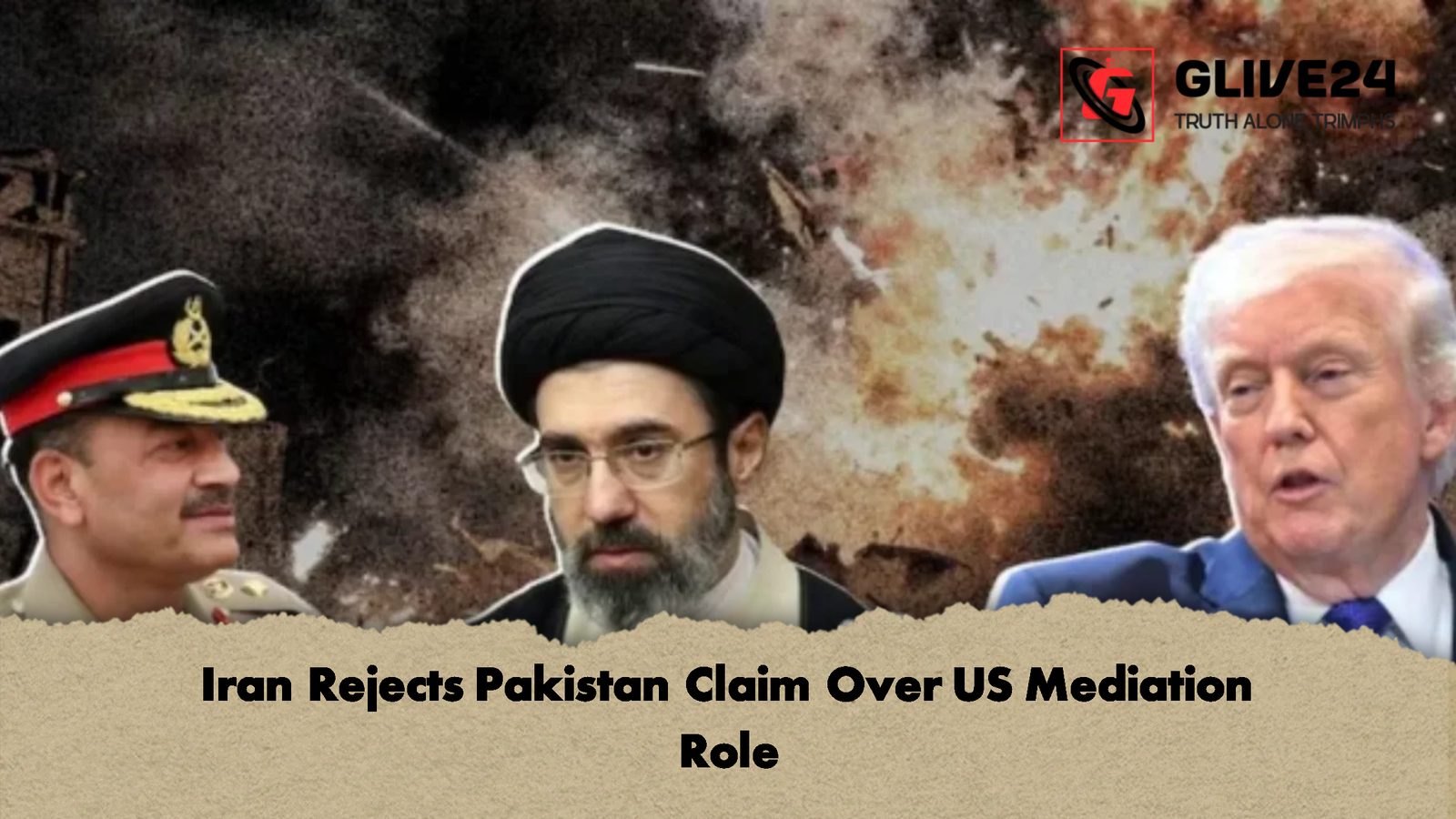
Iran has firmly rejected Pakistan’s assertion that it is acting as a mediator in facilitating indirect talks between Tehran and Washington, amid a deepening regional crisis marked by heightened military activity and increasingly conflicting diplomatic narratives across the Middle East.
In a strongly worded statement issued on Monday (30 March) by the Consulate General of Iran in Mumbai, Tehran categorically denied any involvement in what it described as a purported mediation framework attributed to Islamabad. The Iranian mission emphasised that no direct negotiations are currently underway with the United States, directly contradicting recent remarks made by senior Pakistani officials.
The statement further clarified that while intermediary channels have occasionally been used to transmit messages from Washington, these communications have consisted of what Iran described as “excessive and unreasonable demands,” rather than any structured or formal diplomatic dialogue.
Table of Contents
Tehran distances itself from Pakistani initiative
Iran rejected the suggestion that Pakistan is formally mediating between Iran and the United States, stressing that any such initiative is solely a matter for Islamabad and does not involve Iranian participation or endorsement.
The consulate added that Iran remains open to any genuine initiative aimed at promoting regional stability, but warned that discussions of peace must not ignore historical realities. It emphasised that the origins of the current tensions cannot be overlooked in any meaningful diplomatic process.
Islamabad’s diplomatic claims under scrutiny
The dispute follows a high-level diplomatic meeting held in Islamabad on Sunday, where Pakistan’s Deputy Prime Minister and Foreign Minister Ishaq Dar met counterparts from Saudi Arabia, Egypt and Türkiye.
Following the talks, Dar claimed that visiting delegations had expressed full support for a potential initiative aimed at facilitating direct dialogue between the United States and Iran. He further stated that both Pakistani Prime Minister Shehbaz Sharif and himself had held telephone conversations with Iranian President Masoud Pezeshkian and Foreign Minister Abbas Araghchi.
However, no officials from the United States, Israel or Iran were physically present at the meeting, which was conducted under strict security arrangements.
Conflicting narratives over back-channel diplomacy
According to Iran’s Tasnim News Agency, while Tehran continues to deny any direct negotiations with Washington, it has responded to a 15-point proposal reportedly associated with former US President Donald Trump. The response, the agency claims, was conveyed through the United States Embassy in Islamabad.
These contrasting accounts underline growing inconsistencies in regional diplomatic messaging, with various stakeholders presenting differing interpretations of back-channel communication efforts intended to ease tensions.
Escalating military developments across the region
Despite ongoing diplomatic manoeuvring, the security situation across the region has continued to deteriorate. On Monday, reports indicated that US and Israeli forces maintained strikes on Iranian-linked positions, further intensifying already volatile conditions.
In retaliation, Iranian forces are reported to have expanded their operational reach, including an attack on a strategic water and electricity installation in Kuwait and a strike on an oil refinery in northern Israel. These developments reflect a widening scope of confrontation, increasingly affecting civilian infrastructure and critical energy assets across multiple states.
US warnings and military posture
Amid rising tensions, US President Donald Trump stated that Iran had agreed to permit 20 oil tankers to pass through the Strait of Hormuz beginning Monday, describing the move as a positive gesture. However, he simultaneously warned that Washington could consider seizing Iran’s Kharg Island oil terminal in the event of further escalation.
The United States has also significantly reinforced its military presence in the region, with approximately 2,500 Marines already deployed across key Gulf positions. A further deployment of similar size is reportedly underway, signalling heightened preparedness amid fears of a broader regional conflict.
Key developments at a glance
| Category | Development |
|---|---|
| Pakistan’s position | Claimed mediation role in US–Iran dialogue |
| Iran’s response | Fully rejected involvement or consent |
| Diplomatic activity | High-level meeting in Islamabad with regional states |
| Military situation | Continued US-Israeli operations and Iranian retaliation |
| US stance | Tanker passage approval and threat regarding Kharg Island |
| Regional outlook | Rising multi-front tensions across the Gulf |
As competing diplomatic accounts continue to emerge alongside sustained military escalation, prospects for immediate de-escalation remain uncertain, with Iran firmly rejecting any suggestion that it is engaged in mediated negotiations with Washington.